
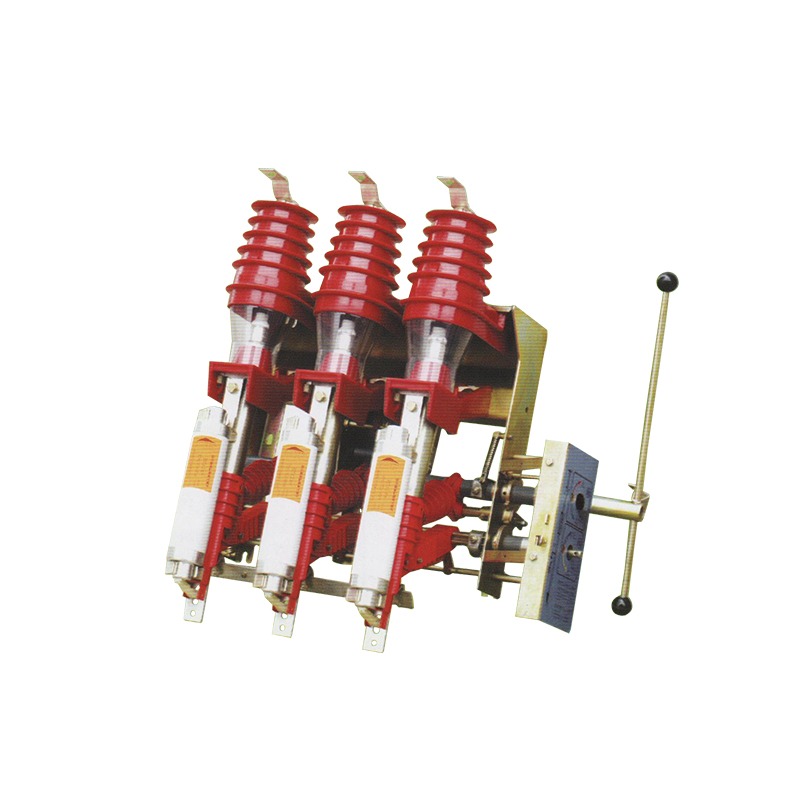
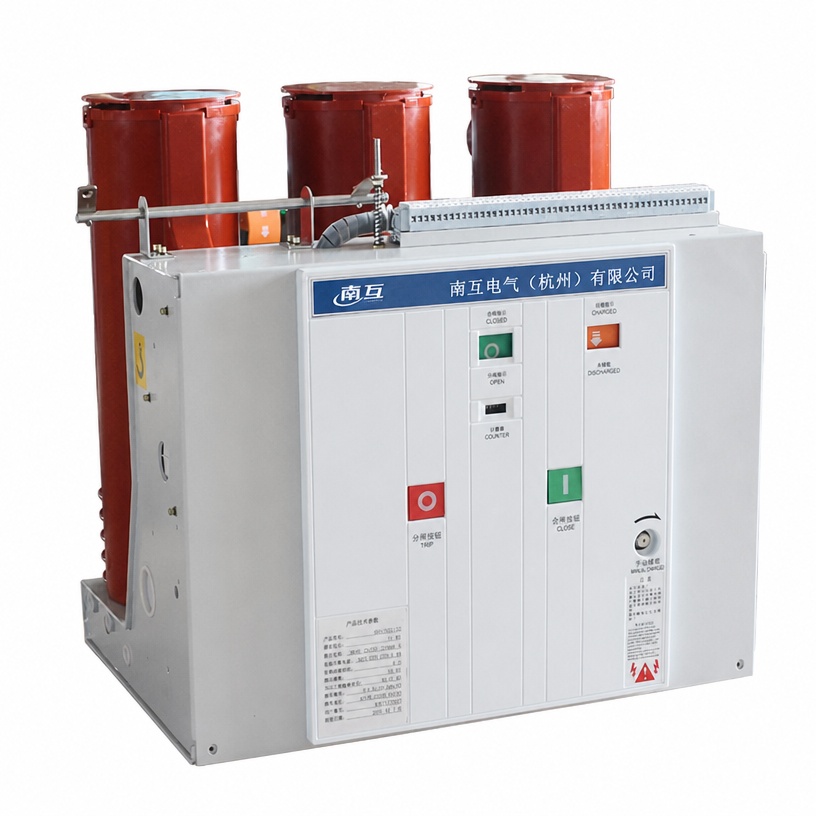
The load break switch vs circuit breaker decision comes down to one question: who clears the fault current. A load break switch makes and breaks load current, closes onto a fault but cannot interrupt it, and relies on a fuse or an upstream device to cut the short circuit. A circuit breaker interrupts fault current itself, and costs more because it has to — an arc-quenching chamber proven to break kA, plus current transformers, a relay and a tripping supply.
Below is the comparison as a specifying engineer needs it: what each device can break, how the protection is coordinated, and where the money actually goes.
Breaking Capacity: What Each Device Can Interrupt
Rated current is not the dividing line — short-circuit breaking capacity is. In IEC terms, a load break switch is a switch per IEC 62271-103, while a circuit breaker is proved under IEC 62271-100, and the two test regimes ask for different proof.
| Duty | Load break switch | Circuit breaker |
|---|---|---|
| Rated current, continuous | Yes | Yes |
| Making and breaking load current | Yes | Yes |
| Transformer and cable charging current | Yes, stated in the ratings | Yes |
| Closing onto a fault (making capacity) | Yes — short-circuit making is a rated quantity | Yes |
| Interrupting short-circuit current | No | Yes, up to rated short-circuit breaking current |
| Auto-reclosing | Not applicable | Yes, if the mechanism and duty allow |
| Earth-fault and overcurrent protection | Via fuse or upstream relay | Via its own CTs and relay |
The fourth row is where specifications go wrong. A load break switch can be closed onto a fault — that is a rated making duty — but it cannot open it again. If the scheme relies on the switch to clear what it just closed into, the design is wrong, not just optimistic.
Protection Coordination: Fuse, Relay or Both
With a load break switch, the interrupting duty moves to a fuse. That fixes the fault level at the fuse rating, keeps the cost low, and gives a definite, visible break — but it also means the fault level the bay can clear is whatever the fuse can, and the coordination must be checked against the upstream device so that a downstream fault does not take out the incomer.
- Switch-fuse combination. The switch-fuse combination is a defined assembly under IEC 62271-105, with its own transfer-current requirement — the current at which the switch can safely take over from a fuse that is not clearing. The transfer current setting rules decide whether the combination works or trips the incomer.
- Circuit breaker plus relay. Adjustable, resettable, remotely indicated — and it needs CTs, a trip supply and a settings study. The advantage is selectivity: you can grade the relay against the upstream device instead of accepting the fuse curve.
- Fuse plus relay. Common on RMU feeders and perfectly legitimate, provided the settings study assumes the fuse curve and not an idealised one.
Cost: Where the Difference Actually Goes
A circuit breaker bay is not simply a more expensive switch. The premium buys four things, and only the first is the device itself.
| Cost element | Load break switch bay | Circuit breaker bay |
|---|---|---|
| Interrupting device | Switch with load-breaking capability | Vacuum interrupter and operating mechanism |
| Fault clearing | Fuse, replaced after operation | Relay clears and resets, no consumable |
| Measurement | CTs only if metering or indication needs them | Protection CTs plus, usually, a VT |
| Control | Manual or simple motor operation | Relay, trip coil, battery or DC supply, wiring |
As a planning rule, a fault-breaking feeder bay commonly lands at roughly one and a half to two and a half times the cost of a load-break feeder bay at the same voltage and current, and the spread widens where protection CTs, a VT and a DC system are not already provided. Treat that as a budgeting range, not a quotation: run the bay-by-bay comparison for your own scheme, because the relay and CT scope varies more between projects than the switchgear does.
Where Each Device Belongs in a Distribution Scheme
- Load break switch. Ring main units, transformer feeders with a fuse, sectionalising points, and any position where the fault is cleared by a fuse or by the upstream breaker and the duty here is switching.
- Circuit breaker. Incomers and bus sections, outgoing feeders where the fault level exceeds a practical fuse rating, positions that need reclosing, and anywhere remote indication or SCADA control is required.
- Both, in one scheme. The usual arrangement: a breaker at the incomer, switch-fuse or switch feeders downstream. The breaker handles the busbar fault and the grading; the switches handle switching and transformer protection cheaply.
The medium inside the switch is a separate decision from the duty it performs; if the choice is between SF6 and vacuum for the switching positions, the comparison in the SF6 versus vacuum load break switch guide covers it. The general behaviour of the device family is set out in the load break switch overview.
Selection Mistakes and Their Commercial Consequence
- A switch specified where fault current must be interrupted. The bay cannot clear the fault, the upstream device operates, and the whole board goes out instead of one feeder. The fix is a new device, not a settings change.
- Fuse coordination never checked. The fuse and the upstream relay both see the fault, the faster one wins at random, and selectivity is discovered to be theoretical during the first outage report.
- Breaker bought without the control scope. The device arrives without CTs, relay, trip supply or interlocking, and the "cheaper" breaker bay is completed on site at variation-order prices.
- Fuse cost ignored over the life. A fuse is cheap to buy and costs an outage plus a replacement every time it operates; on a feeder that trips twice a year the breaker pays back sooner than the capital comparison suggests.
What to Write Into the RFQ
| Requirement | Value to state |
|---|---|
| System and ratings | U_m, rated current, rated short-time withstand current and duration, peak withstand |
| Duty required | Load breaking only, or fault current interruption — state the fault level in kA |
| Making capacity | Rated short-circuit making current, if the device may be closed onto a fault |
| Protection | Fuse rating and type, or relay functions and CT ratios; state which device must clear the fault |
| Control and indication | Manual, motor, remote trip, SCADA protocol, auxiliary contacts required |
| Tests and documents | Type test reports to IEC 62271-103 or IEC 62271-100 as applicable, routine test report, drawings for approval |
| Environment | Ambient maximum, pollution level, altitude, IP rating of the enclosure |
Frequently Asked Questions
Can a load break switch clear a short circuit?
No. It can make and break load current and it can be closed onto a fault, because short-circuit making is a rated quantity, but it cannot interrupt the fault current. A fuse or an upstream circuit breaker clears the fault. Specifying a switch for a position where it must interrupt fault current is a design error, not a setting problem.
How much more does a circuit breaker bay cost?
As a planning range, roughly one and a half to two and a half times a load-break feeder bay at the same rating, driven by the interrupter, protection CTs, relay, trip supply and wiring. The ratio moves with scope: if the DC system and relay panel already exist, the gap narrows; if they do not, it widens.
Which standard covers each device?
Load break switches and switch-disconnectors are covered by IEC 62271-103, circuit breakers by IEC 62271-100, and switch-fuse combinations by IEC 62271-105. The type test report should name the standard and the ratings it covers; a report for a different rating does not prove the unit you are buying.
Is a switch-fuse combination as selective as a breaker?
It can be, within the limits of the fuse curve and the transfer current of the combination. Selectivity has to be checked against the upstream device using the fuse characteristic, and the transfer current must be set so the switch takes over correctly. Beyond a certain fault level a practical fuse no longer exists and the breaker becomes the only option.
Can a load break switch be upgraded to a breaker later?
Rarely in the same cubicle. The breaker needs an interrupter with fault-breaking proof, protection CTs, a trip coil and clearances the switch cubicle was not built for. Plan the fault-clearing device at the design stage; retrofitting it usually means replacing the panel, not adding a component.
Where Nahu Group Fits
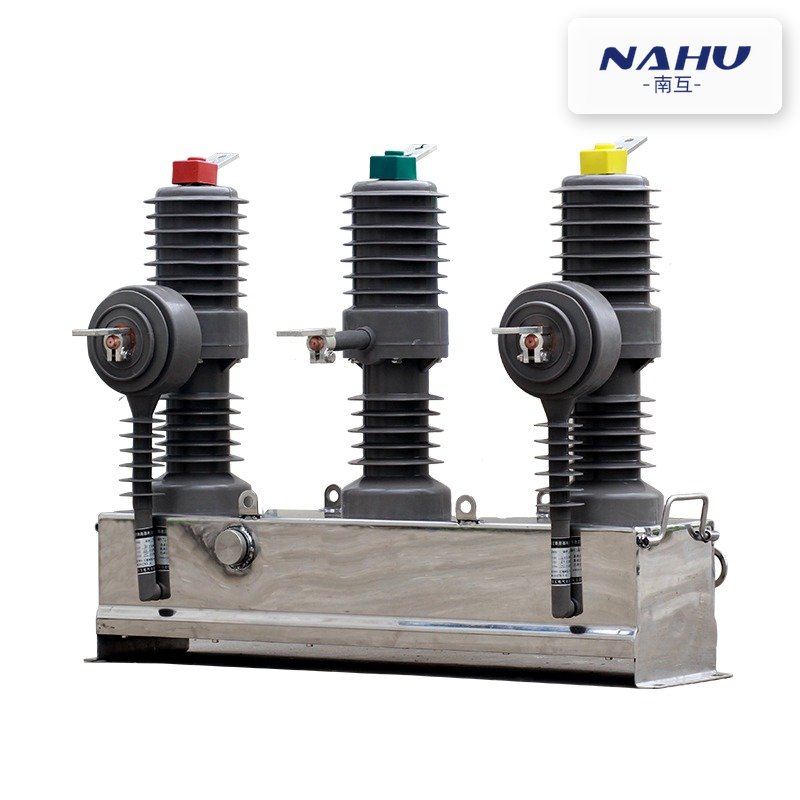
Nahu Group manufactures both sides of this decision: load break switches — the FZN25-12 and FZRN25-12 vacuum load switch and the FKN12A-12 and FKRN12A-12 compressed-air load switch, both available as switch-fuse combinations — and vacuum circuit breakers for the positions that must interrupt fault current. The load break switch and the vacuum circuit breaker are built for 12 kV ring network and terminal applications.
To get a configuration, send U_m, rated current, the fault level in kA, whether the device must interrupt fault current, the fuse rating or relay functions, the control and indication required, and the enclosure or RMU arrangement. That set of answers decides the family before price is discussed — the FZN25-12 vacuum load switch is the usual starting point for a switching position.
Sources and Further Reading
- IEC 62271-103 — High-voltage switchgear and controlgear, Part 103: Switches for rated voltages above 1 kV up to and including 52 kV — the ratings and tests that define what a load break switch may make, break and carry
- IEC 62271-100 — High-voltage switchgear and controlgear, Part 100: Alternating-current circuit-breakers — short-circuit breaking duty, operating sequences and the type tests a breaker must pass
- IEC 62271-105 — AC switch-fuse combinations for rated voltages above 1 kV up to and including 52 kV — the combination ratings and the transfer current that makes fuse-switch coordination work
Published Nov 16, 2026 · Nahu Group (NAHU Electric Technology)