
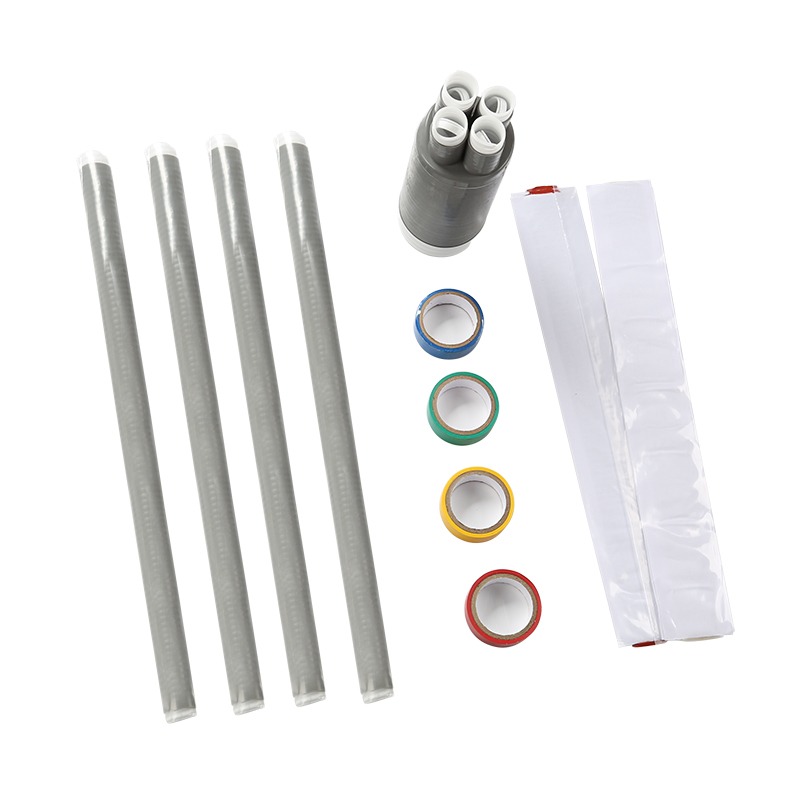
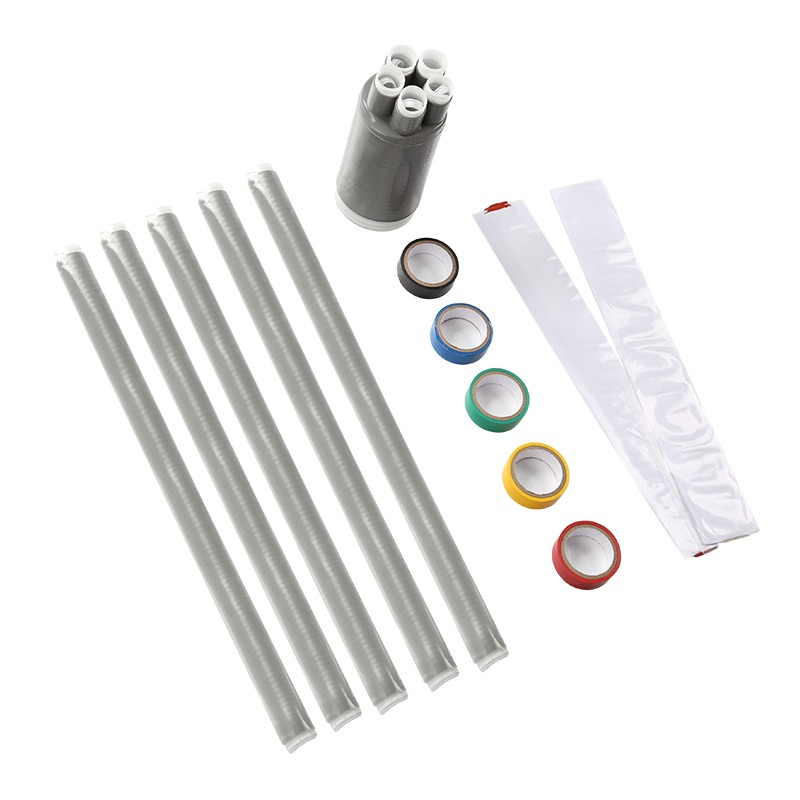
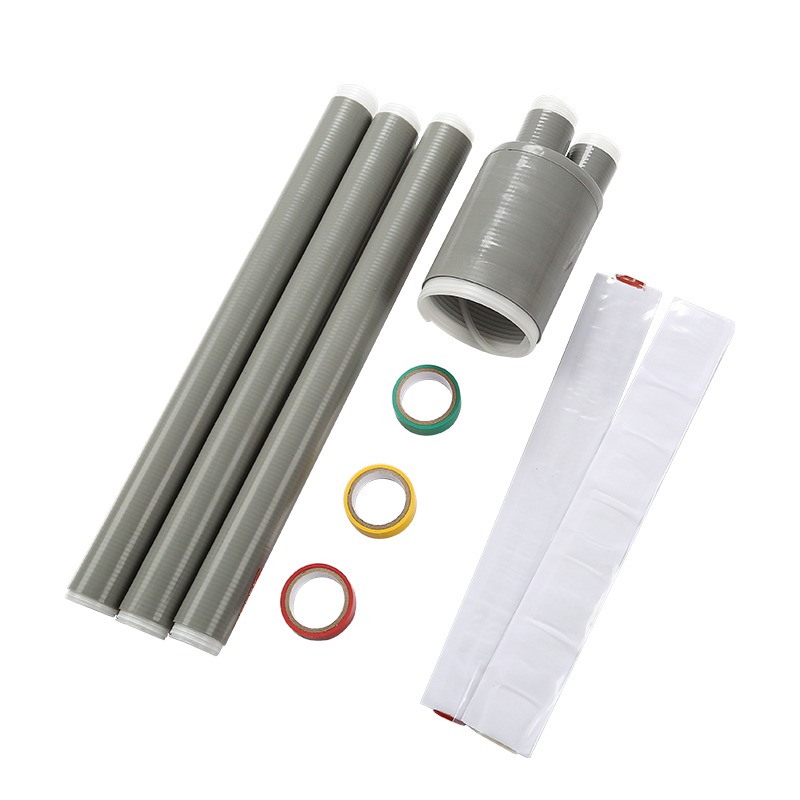
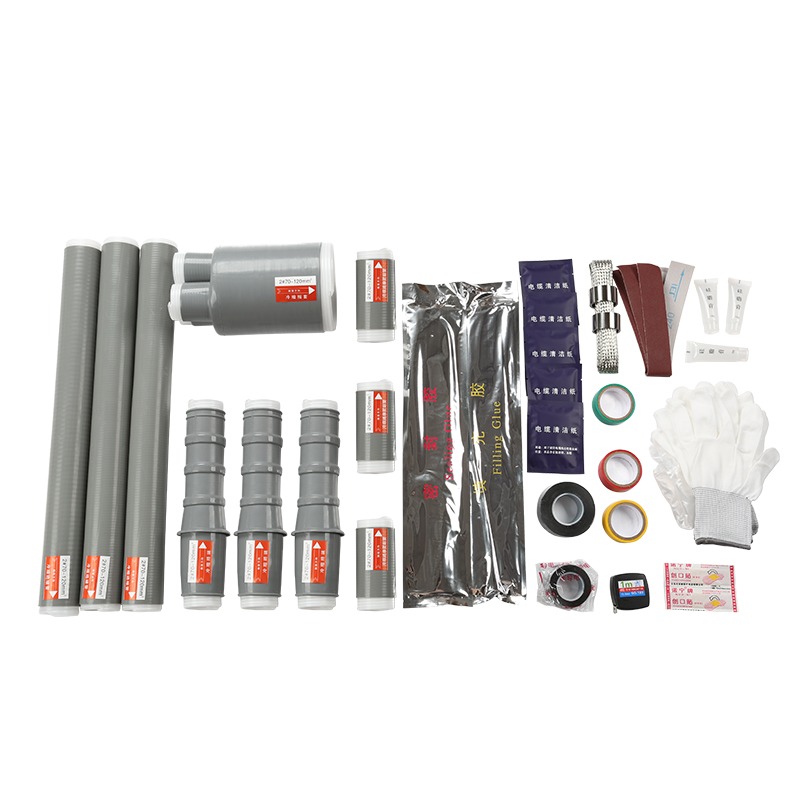
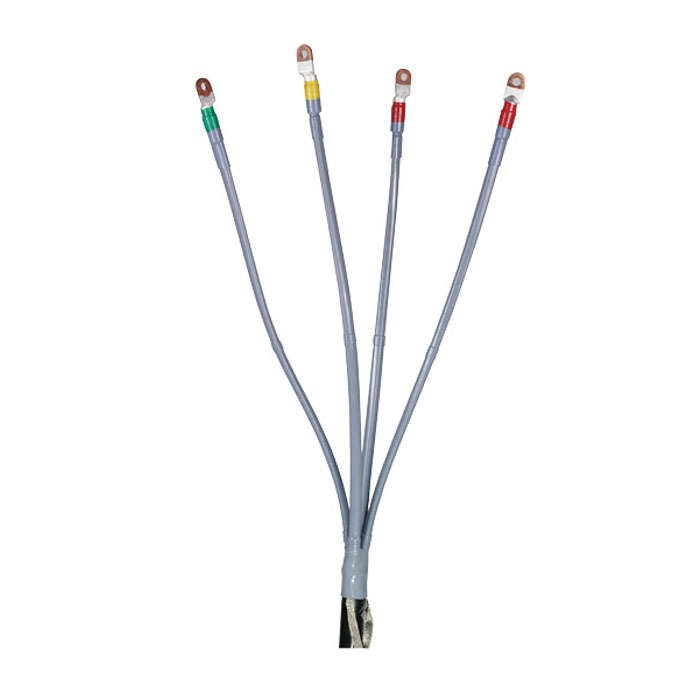
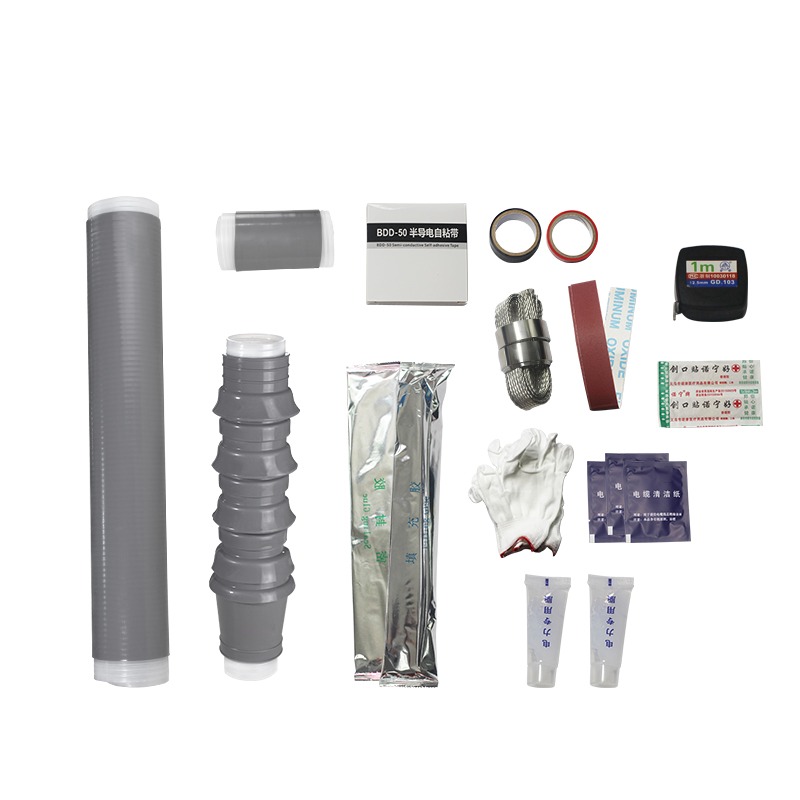
Every medium-voltage cable has to end somewhere — at a switchgear panel, a transformer, or an overhead line. The point where the cable stops is where its construction has to be finished properly: the screen cut back, the insulation dressed, the outside sealed. The component that does this is the cable termination, and there are two fundamentally different ways to make one: cold shrink and heat shrink.
Both technologies have served distribution networks for decades, and both appear in the Nahu range for 0.6/1 kV to 35 kV cables. The difference is not which one "works" — it is how each behaves during installation and in service, and how much care each demands from the fitter on site.
Why Cable Terminations Matter
A terminated cable is more than a cable with its end stripped. At the point where the cable screen is cut back, the electric field concentrates and, without a control element, would stress the insulation until it failed. The termination has three jobs:
- Control the electric stress at the screen cut — by grading the field, typically with a stress-control layer, so no point sees more voltage than the insulation can hold
- Seal out moisture — water that creeps along the screen cut or into the insulation is the classic cause of premature cable failure
- Provide creepage distance — the termination's exposed surface must be long enough that surface leakage current does not track across it, especially outdoors
On cables from 0.6/1 kV (low voltage) up to 35 kV (medium voltage), getting these three things right is what separates a termination that lasts decades from one that fails within months.
How Cold-Shrink Works
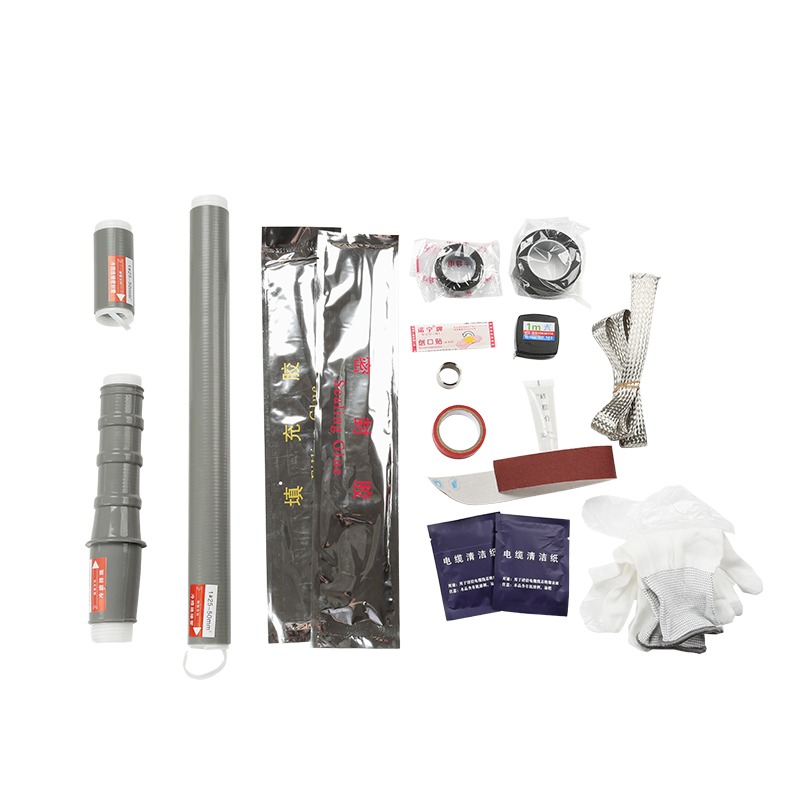
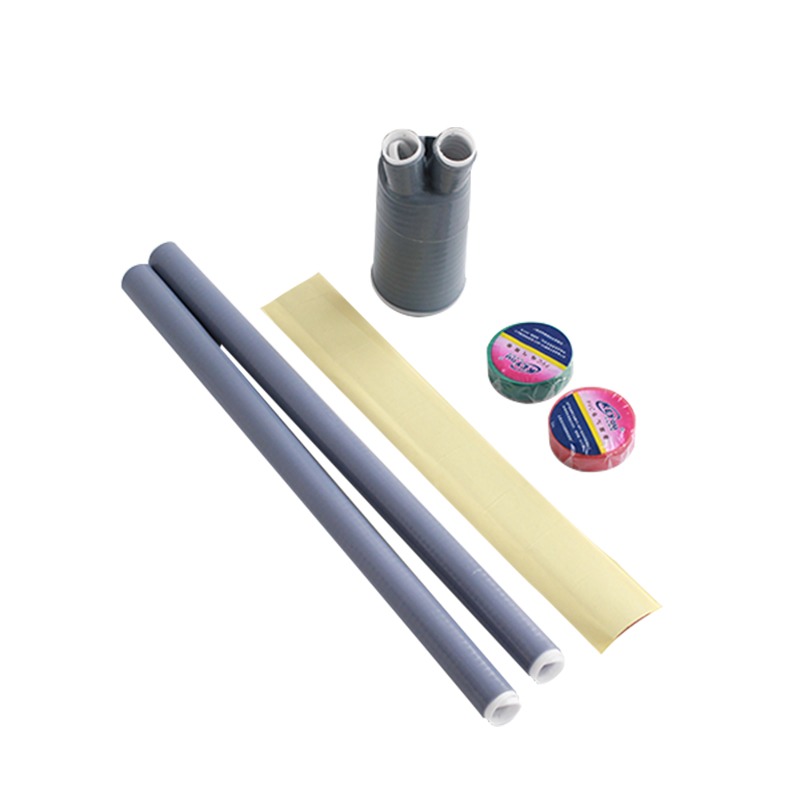
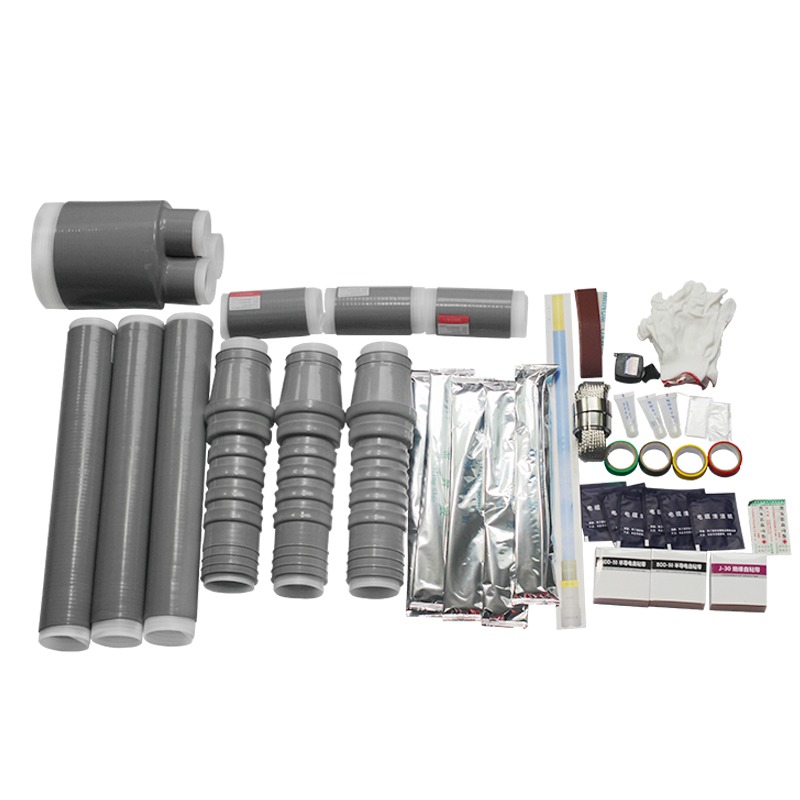
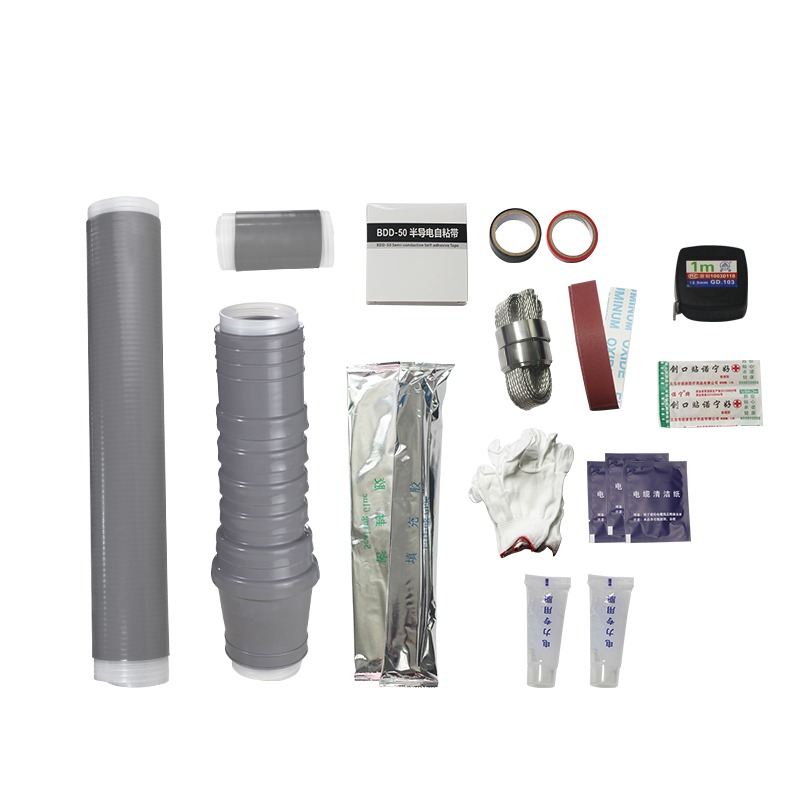
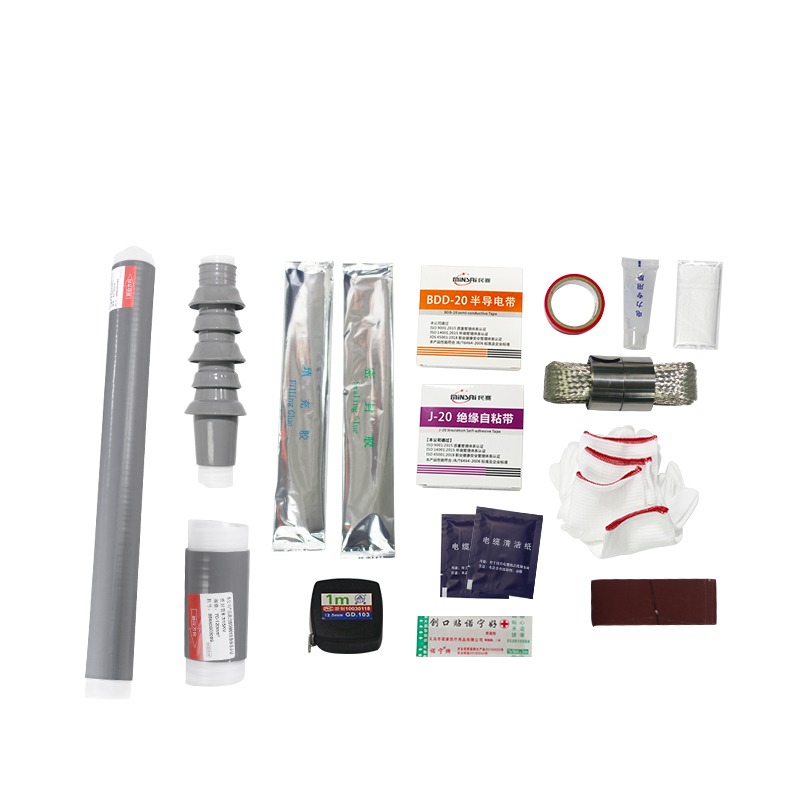
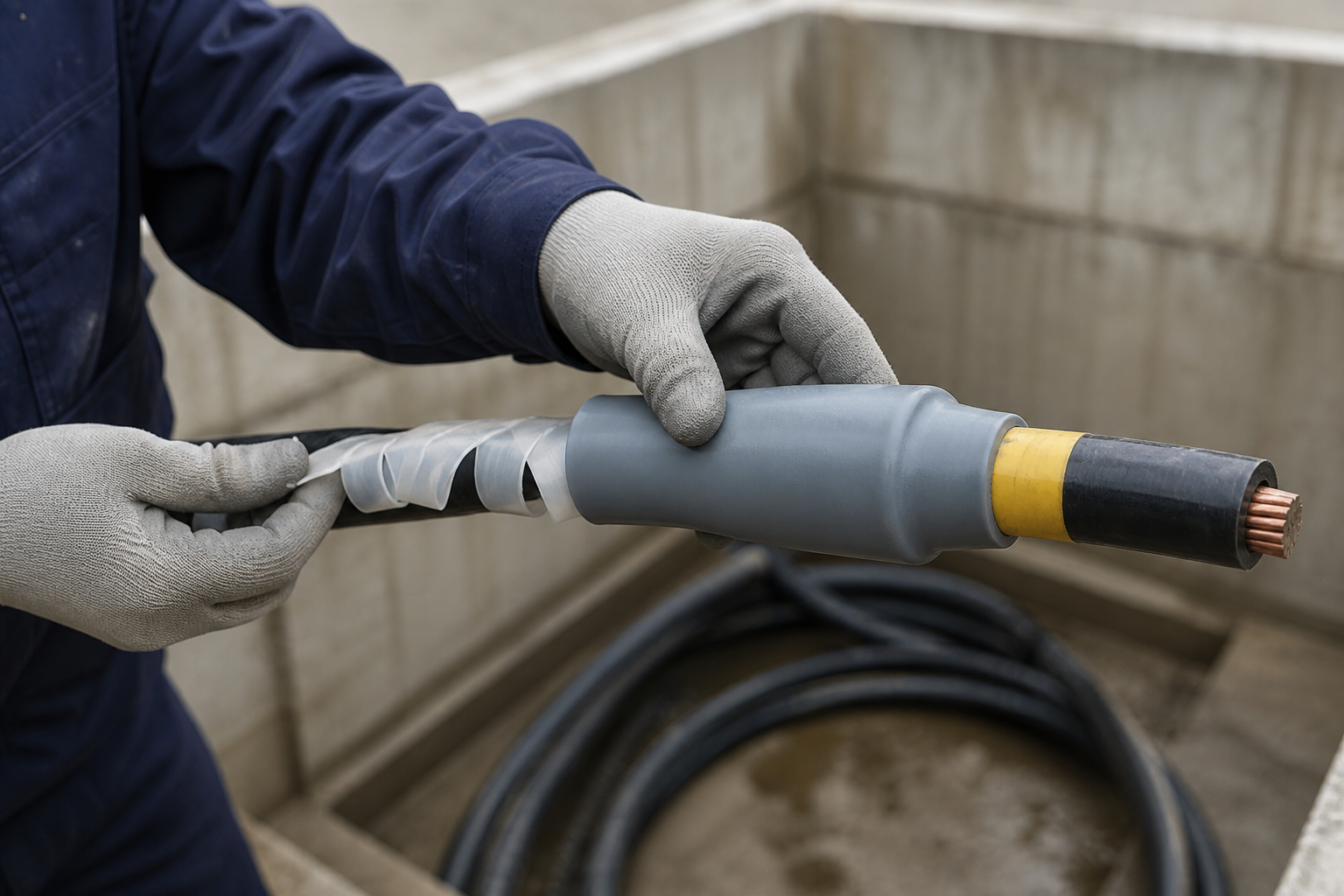
A cold-shrink termination is built around a pre-stretched silicone rubber tube held open by a removable spiral core. The tube is sized to fit over the prepared cable end; when the fitter pulls the core out, the tube relaxes and shrinks evenly onto the cable — no heat source, no flame, no temperature control.
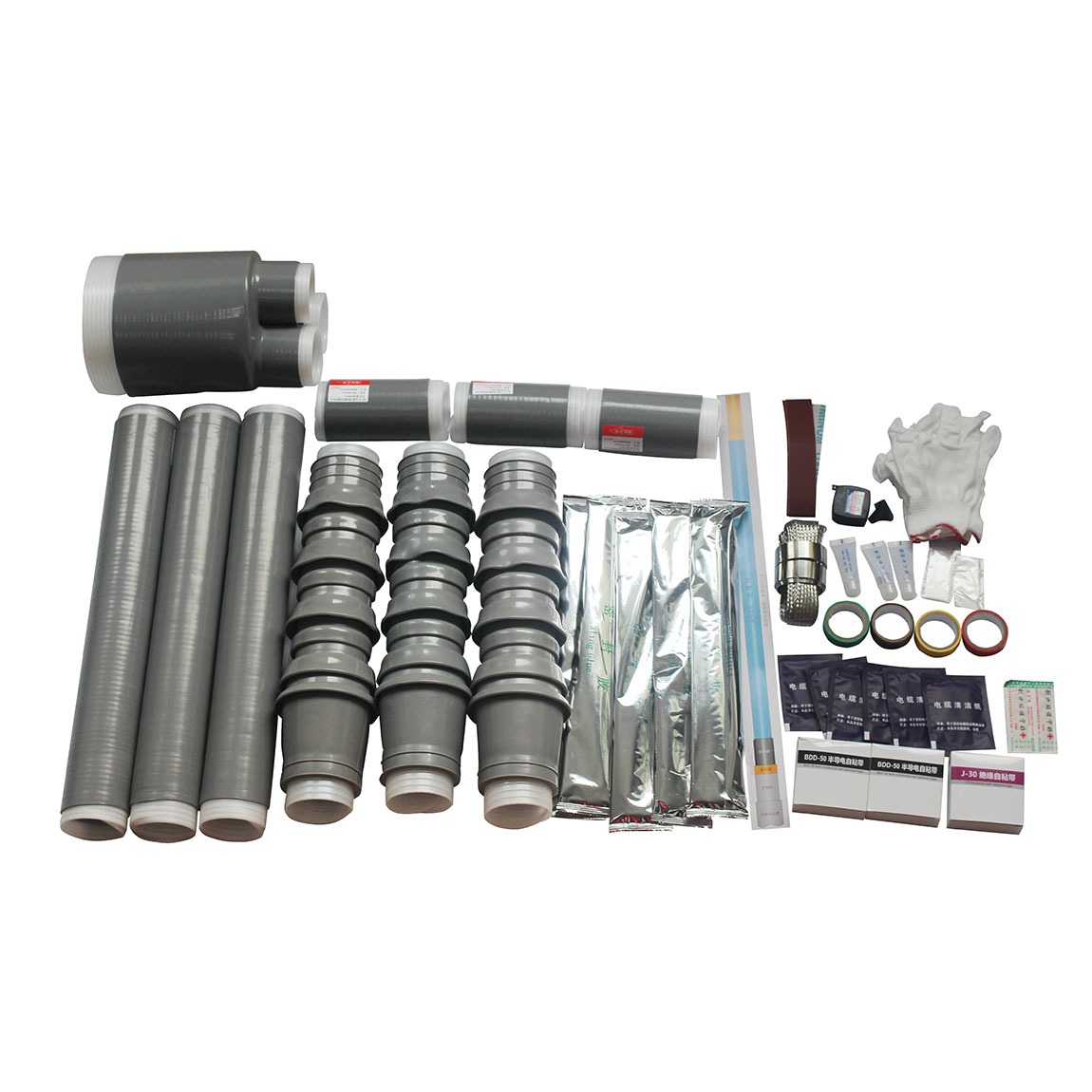
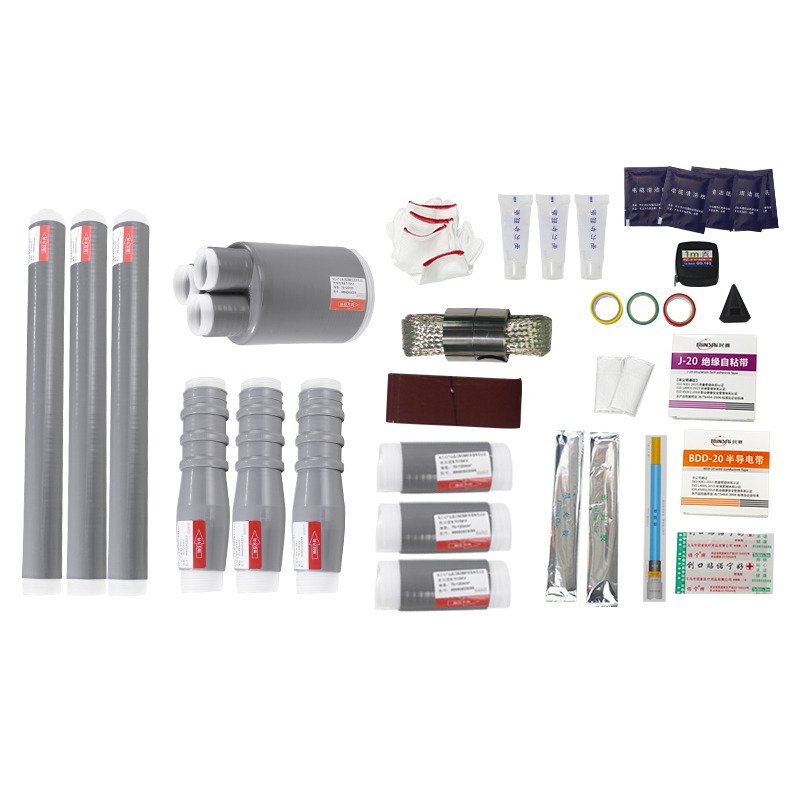
Because silicone rubber is elastic, the tube keeps a uniform radial pressure on the cable over its whole service life, and it stays flexible as the cable moves, breathes and heats. The same principle runs through the Nahu range: the WLS series for indoor and outdoor terminations and the NLS-35 series for single-core and three-core terminations up to 35 kV.
The practical result is fewer variables on site. There is nothing to heat, nothing to shrink unevenly, and no risk of overheating the insulation during installation.
How Heat-Shrink Works
A heat-shrink termination uses cross-linked polyolefin tubes that contract when heated. The fitter slides the tubes over the prepared cable in a specific order — typically a stress-control layer, an insulation tube, and an outer weathershed tube — and shrinks each one with a torch or hot-air gun at 120–140 °C.
Heat-shrink technology is mature and widely installed, and it is forgiving in some ways: the tubes grip tightly and the multiple layers give a robust mechanical build. What it asks in return is careful installation. Each layer must be shrunk evenly, from the centre outwards, without overheating one spot or under-shrinking another — a skill that comes with training and practice.
Cold Shrink vs Heat Shrink: What Changes
Seen side by side, the two technologies differ in ways that matter on site and in service:
- Heat source needed — none for cold shrink; a torch or heat gun at 120–140 °C for heat shrink
- Installation time — cold shrink is typically faster, especially on three-core cables, because there is no heating step per layer
- Skill sensitivity — cold shrink is more forgiving of fitter technique; heat shrink depends on even, controlled heating
- Uniform radial pressure — the cold-shrink silicone tube keeps even pressure for life; heat-shrink tubes are firm after installation but do not "give" with cable movement
- Flexibility and tracking resistance — silicone rubber stays flexible and resists tracking outdoors; polyolefin is stiffer
- Shelf life — silicone cold-shrink tubes have a defined storage life and must stay in their packaging until use; heat-shrink tubes are effectively inert in storage
- Re-workability — neither is repositionable once shrunk; a cold-shrink tube that is cut or damaged must be replaced with a new kit
Indoor vs Outdoor Terminations
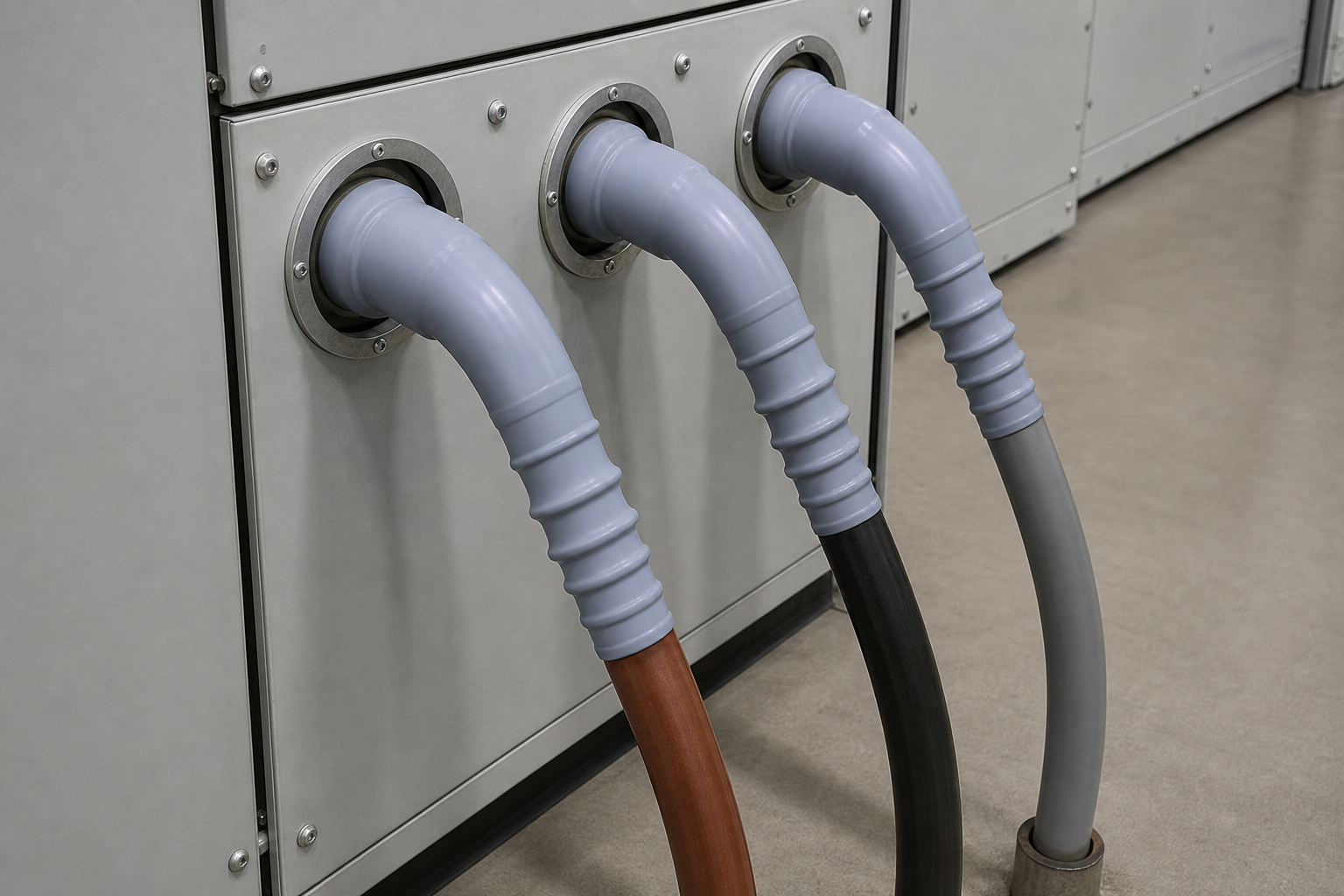
The outdoor environment adds pollution and rain, so outdoor terminations carry rain sheds or skirts that lengthen the creepage path and break up water films. An indoor termination has no sheds — its shorter, cleaner surface is enough indoors, where the termination usually lives inside a switchgear panel or cabinet anyway.
Pollution level matters when you choose: heavy industrial or coastal sites need more creepage distance and a termination design rated for that severity. The same cable and voltage can be terminated with an indoor or outdoor kit; the difference is the external profile, not the cable preparation.
How to Choose
Working through a termination selection is a short, ordered checklist:
- System voltage — 0.6/1 kV LV, or MV classes such as 10 kV and 35 kV; the kit must match the cable's voltage class
- Cable type and conductor size — XLPE or paper-insulated, and the conductor cross-section, since the kit is sized to the cable diameter
- Indoor or outdoor — sheds for outdoor, plain profile for indoor
- Core count — single-core or three-core kits; three-core cables often use one three-core termination or three single-core ones
- Lug and connector type — bolted, crimped or mechanical lugs must suit the conductor and the equipment the cable feeds
Q&A
Question: Is cold shrink always better than heat shrink?
Short answer: Not always — it depends on the site and the installer. Cold shrink removes the heat source and is more forgiving to install, which is why many utilities standardise on it; heat shrink is a proven, lower-cost option where installers are well trained and heating is controlled.
Question: Can a cold-shrink termination be repositioned after shrinking?
Short answer: No. Once the spiral core is pulled and the tube relaxes onto the cable, it cannot be slid or repositioned. If the fitter needs to redo the job, the tube is cut off and a new kit is used.
Question: How long does a cable termination last?
Short answer: A correctly installed termination should outlive the cable's own service life — typically 20–30 years in distribution service. Most premature failures trace back to installation errors or moisture ingress, not the termination material itself.
Question: Do outdoor terminations really need rain sheds?
Short answer: Yes. The sheds increase creepage distance and interrupt water films so surface leakage current cannot track to earth. In polluted or coastal environments, sheds — and enough of them — are essential.
Nahu Group (NAHU Electric) manufactures cold-shrink terminations and joints for 0.6/1 kV to 35 kV cables — WLS indoor/outdoor terminations and NLS-35 single- and three-core terminations, complete with kits and accessories. For ratings and cable-preparation drawings, see our cable accessories range, or contact our engineering team.
Published August 20, 2026 · Nahu Group (NAHU Electric Technology)