
Control gear and switchgear are not rival product families. IEC 60947-1 uses "switchgear and controlgear" as one term, and the split is functional: switchgear makes, carries and breaks the main circuit; control gear commands, protects and indicates it. The one hard number is 1 kV — below it the IEC 60947 series applies, above it IEC 62271.
That boundary decides which type test file a bid is judged on, and why a 12 kV cabinet is quoted against two standards regimes at once. It is also why "switchgear" alone on a bill of quantities is an incomplete specification.
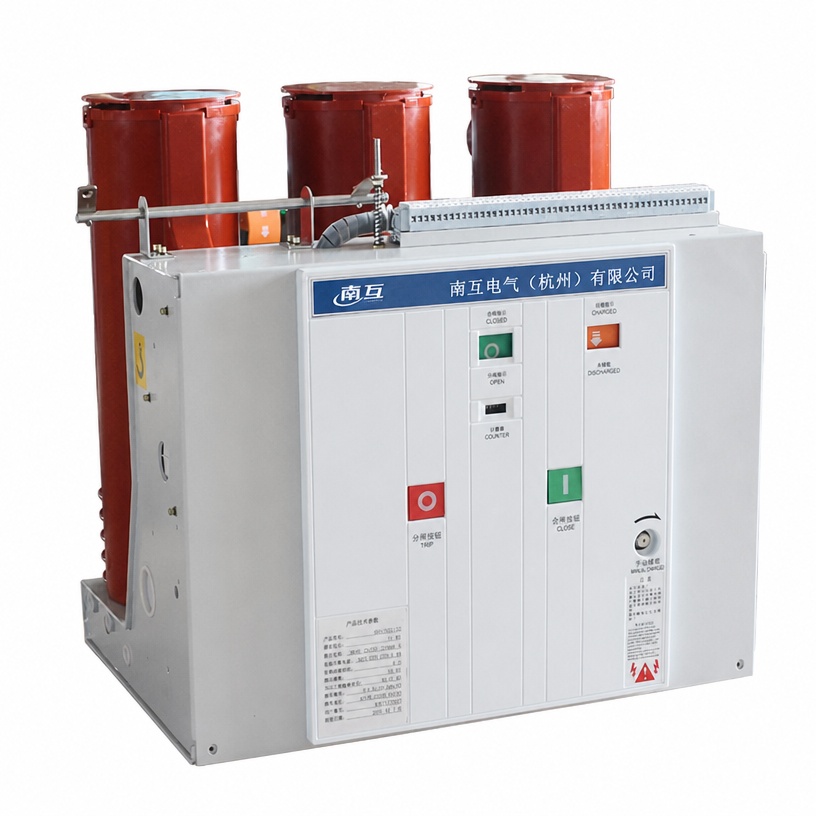
What Is the Difference Between Control Gear and Switchgear?
Switchgear makes, breaks, carries or isolates current in a main circuit. Control gear governs how that switching happens: contactors and starters, protection and auxiliary relays, control switches, indication lamps, heaters and terminals. IEC 60947-1 covers both in one scope because they share an enclosure and the same safety requirements — not because they share ratings, tests or declarations.
Three questions place any device on the correct side of the line:
- Is it in the main current path? Then it is switchgear — breaker, switch-disconnector, fuse, isolator, busbar.
- Does it interrupt or protect the main circuit? Switchgear, even when the device is small.
- Does it only command, sense or indicate? Control gear: coils, trip circuits, status contacts, heaters, relays.
Where IEC 60947 Stops and IEC 62271 Starts
IEC 60947-1 is written for circuits not exceeding 1,000 V AC or 1,500 V DC; IEC 62271-1 takes over above 1 kV. A 12 kV metal-enclosed cabinet therefore lives in both worlds, and they meet at the auxiliary transformer and the control supply: busbar, breaker and cable compartment follow IEC 62271; everything downstream of the auxiliary supply follows IEC 60947 and the assembly rules of IEC 61439-1.
| Circuit inside the cabinet | Function | Governing standard | Typical rating | Evidence asked for |
|---|---|---|---|---|
| Main busbar and cable compartment | Carry and distribute main current | IEC 62271-200 with IEC 62271-1 | 12 kV, 630–1,250 A | Type tests on the enclosure, including internal arc |
| Vacuum circuit breaker | Make and break load and fault current | IEC 62271-100 | 12 kV, 20–31.5 kA | Breaking and making type tests at the stated rating |
| Switch-disconnector or load break switch | Switching and isolation | IEC 62271-103 | 12 kV, 630 A | Load-breaking and making tests |
| Disconnector and earthing switch | Isolation and earthing | IEC 62271-102 | 12 kV | Short-time and peak withstand tests |
| Current and voltage transformers | Measurement and protection signals | IEC 61869 series | Ratio and class as specified | Accuracy and insulation tests per part |
| Low-voltage distribution inside the cabinet | Auxiliary and station supply | IEC 61439-1 assembly, devices to IEC 60947 | 400/415 V, up to 3,150 A in a GGD | Design verification of the assembly plus component declarations |
| Control, indication and interlocking circuits | Command and status | IEC 60947-1 with IEC 60947-5-1 | 110 V DC or 230 V AC | Component declarations and routine checks |
| Contactor or starter for auxiliaries | Switching a control load | IEC 60947-4-1 | Coil voltage as specified | Utilisation category and electrical life data |
The split is of duties, not of importance: a trip circuit built to the wrong part of IEC 60947 will not open a breaker that is perfectly type-tested to IEC 62271-100, and the fault is recorded against the whole cabinet.
A metal-enclosed cabinet is type-tested as an assembly — dielectric withstand, temperature rise, short-time withstand and internal arc — to IEC 62271-200. That file says nothing about the control devices inside, qualified separately: the assembly to IEC 61439-1, the devices to their own IEC 60947 parts. Inspection asks for both, and a supplier who sends only the first has proved the enclosure, not the function; the type test reports for MV switchgear guide lists the set.
Which Devices Sit on Each Side of the Line
The switchgear family is short: circuit breakers, switch-disconnectors, load break switches, disconnectors, earthing switches, fuses and the assemblies that house them. The control gear family is longer than most RFQs allow for — contactors, overload and protection relays, control switches, lamps, heaters, thermostats and terminals, each with its own rated voltage.
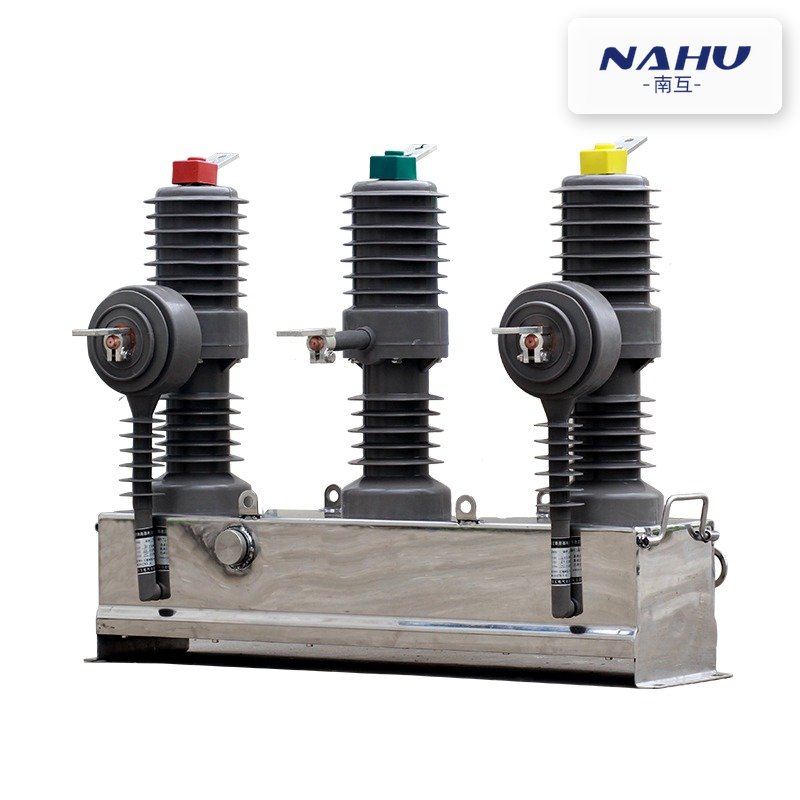
A pole-mounted vacuum interrupter shows the split plainly. The three epoxy poles and their current transformers are switchgear: they carry and interrupt line current and are type-tested as a breaker. The weatherproof box beside them — motor, controller, secondary wiring, remote terminal — is control gear. Both are bought as one unit and approved as two.
Indoors the logic is unchanged: in a KYN28A-12 armored cubicle the 12 kV compartment follows IEC 62271-200 while the relay and control compartment follows IEC 60947 — the arrangement set out in the metal-enclosed switchgear cabinet guide.
Does the Split Change on Pole-Mounted Switchgear?
No. The 1 kV line holds outdoors, and the evidence splits the same way. What changes is the enclosure and the interface: ingress protection, pollution level, UV exposure and animal contact join the switchgear specification, while the control box is often a separate assembly with its own cable and connector. The standards question becomes a scope question — which party declares that box, and against which standard.
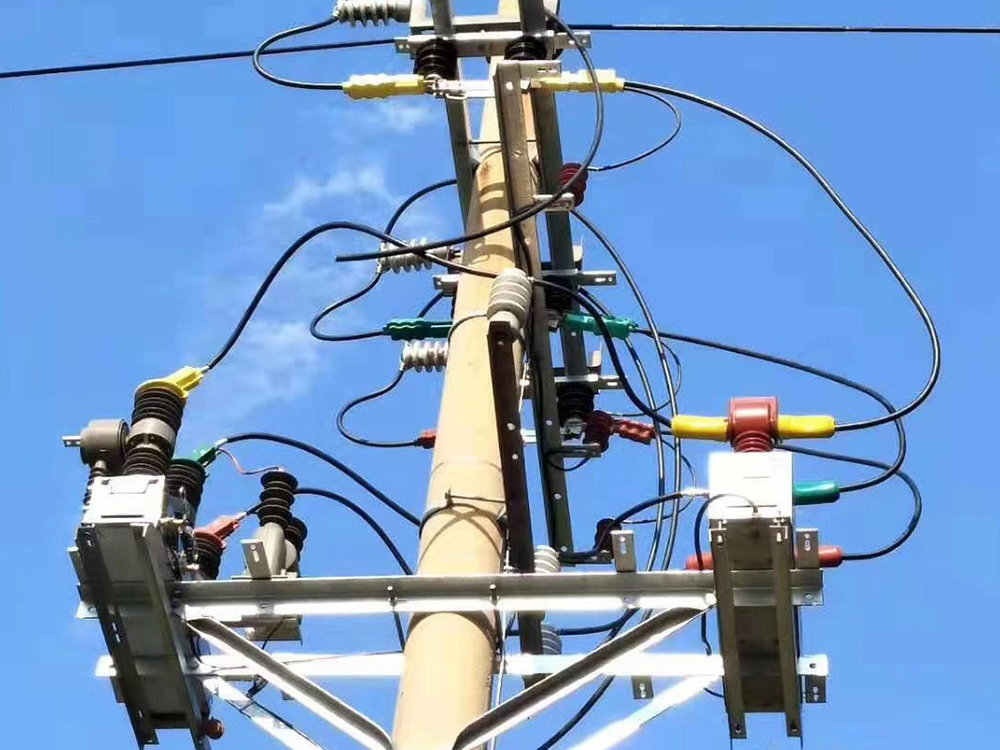
At handover that decides who tests it: a loose control box must be covered by site acceptance, where a missing declaration becomes a hold point.
Selection Mistakes and Their Commercial Consequence
- Writing "switchgear" and stopping there. The quote covers the main circuit and leaves control and protection as options; the variation order arrives after award and pushes drawing approval back by weeks.
- A control supply nobody agreed. A 230 V AC scheme ordered for a station with a 110 V DC battery means new coils, lamps and relay plus a rebuilt loom — rework at the works or on site before energisation.
- No evidence for the IEC 60947 side. The cabinet passes its dielectric test and the control circuit is unproven; re-inspection is charged to the project and energisation moves.
- An LV device outside its rated voltage. A 400 V device on a 690 V auxiliary bus is outside its standard, and the substitution surfaces at approval rather than at design.
- Losing the classification at the border. When cabinet and control section ship separately, the customs description must match the standard actually declared — the difference the switchgear HS code breakdown sets out.
What to Write Into the RFQ
State the two sides separately. A supplier given one merged paragraph prices the part he knows and assumes the rest.
| Item to state | Main circuit side (IEC 62271) | Control side (IEC 60947 / IEC 61439) |
|---|---|---|
| Voltage basis | U_m, rated voltage, lightning and switching impulse level | Control and auxiliary supply voltage, AC or DC, tolerance |
| Current basis | Rated current, rated short-time withstand current and duration, peak withstand | Rated operational current and utilisation category of each control device |
| Duty | Breaking and making capacity required at the stated fault level | Operating duty, electrical life and duty cycle of contactors |
| Protection | CT ratios and classes, relay functions, trip logic | Overload range, control fuses or MCBs, interlocking scheme |
| Enclosure | IP rating, compartment arrangement, internal arc classification | Control compartment access, segregation, cable entry |
| Environment | Ambient maximum, altitude, pollution level, seismic requirement | Heater and thermostat requirement, condensation control |
| Documents | IEC 62271-200 and IEC 62271-1 type test reports, routine test report, approval drawings | IEC 61439-1 verification, component declarations, terminal and wiring schedule |
| Marking and packing | Nameplate data, rating plate language, sea-worthy packing | Spare control devices, labelled spare cores, test certificates |
Add one sentence that removes most of the argument later: state the standard each item is declared against. A supplier who cannot answer per line has built to a drawing, not to a standard.
Frequently Asked Questions
Is a circuit breaker switchgear or control gear?
Switchgear. It carries main current and makes and breaks load or fault current, type-tested to IEC 62271-100 at a stated rating. The relay that tells it to trip, and the trip circuit, are control gear. The breaker without the relay protects nothing; the relay without the breaker interrupts nothing.
Does the 1 kV boundary apply to DC circuits too?
The ceiling for IEC 60947-1 is 1,000 V AC or 1,500 V DC; DC switchgear above that falls under IEC 62271. The practical case is the station battery and its distribution, inside the IEC 60947 range — but state the DC ratings: a device rated for AC will not necessarily break DC.
Which control voltage should be specified?
Whatever the station actually provides. With a battery, 110 V DC is common and 220 V DC in larger substations; without one, 230 V AC from the auxiliary supply is usual. State the voltage, the tolerance and whether the supply is backed up — all three change relay, coil and lamp selection.
What proves the low-voltage side of a medium-voltage cabinet?
Two documents. The assembly is verified to IEC 61439-1 by design and routine verification; each device inside is declared against its own IEC 60947 part. Ask for both by name in the RFQ with the wiring schedule, and the control circuit stops being the unexamined part of a tested cabinet.
Can one cabinet be certified to both regimes?
Yes, and most medium-voltage cabinets are. The main circuit is type-tested to IEC 62271-200; the auxiliary and control section follows IEC 61439-1 and IEC 60947. The files are separate and the buyer should expect both — one certificate covering "the switchgear" is a description, not evidence.
Where Nahu Group Fits
Nahu Group builds the cabinet families that carry both sides of this split: the KYN28A-12 armored withdrawable cabinet for 3.6, 7.2 and 12 kV systems, the HXGN15-12 ring network unit built to IEC 62271-200 with IP3X enclosure and manual or electric operation, and the GGD low-voltage distribution cabinet at 380 V and up to 3,150 A on the auxiliary side.
To get a configuration, send the single-line diagram, system voltage and insulation level, busbar and feeder currents with the short-time withstand value, the fault level in kA, the control supply voltage, IP and ambient requirements, the quantity of each cubicle type, and the standards your approval requires on each side. The high-voltage distribution cabinet lists the three families these inputs are matched to.
Sources and Further Reading
- IEC 62271-1:2017 — High-voltage switchgear and controlgear, Part 1: Common specifications — the common rules above 1 kV
- IEC 62271-200:2021 — AC metal-enclosed switchgear and controlgear above 1 kV up to 52 kV — the enclosure type tests
- IEC 61439-1:2020 — Low-voltage switchgear and controlgear assemblies, Part 1: General rules — verification of the low-voltage assembly
- IEC 60947-1:2020 — Low-voltage switchgear and controlgear, Part 1: General rules: the requirements for the devices and control circuits discussed here, with parts 60947-3, 60947-4-1 and 60947-5-1 covering the specific families
Published Nov 16, 2026 · Nahu Group (NAHU Electric Technology)