
A ring main unit exists so that a distribution substation can be fed from two directions and any one cable section can be isolated without switching customers off. Everything else the equipment does — the compact enclosure, the interlocked earthing switch, the fused tee-off — follows from that single requirement. If your network is radial and will stay radial, an RMU buys you very little; if a cable fault must not take a whole street block down, it is the cheapest device that delivers it.
Why Two Sources Beat One Radial Feeder
On a radial feeder, every cable joint and every cable section is a single point of failure. A fault anywhere between the source and the last transformer trips the upstream breaker and everything downstream goes dark until a crew finds, isolates and repairs the fault. On a ring, the same fault removes one section from service while the substations on either side of it keep their supply from the other direction.
That is the whole commercial case. The ring costs more cable and one extra switching device per substation, and it buys a network that survives one cable failure without an outage. Utilities that run 11 kV and 33 kV distribution in dense urban areas almost always make that trade; the RMU is the standard device they use to make it.
How the Transfer Works Without Interrupting Supply
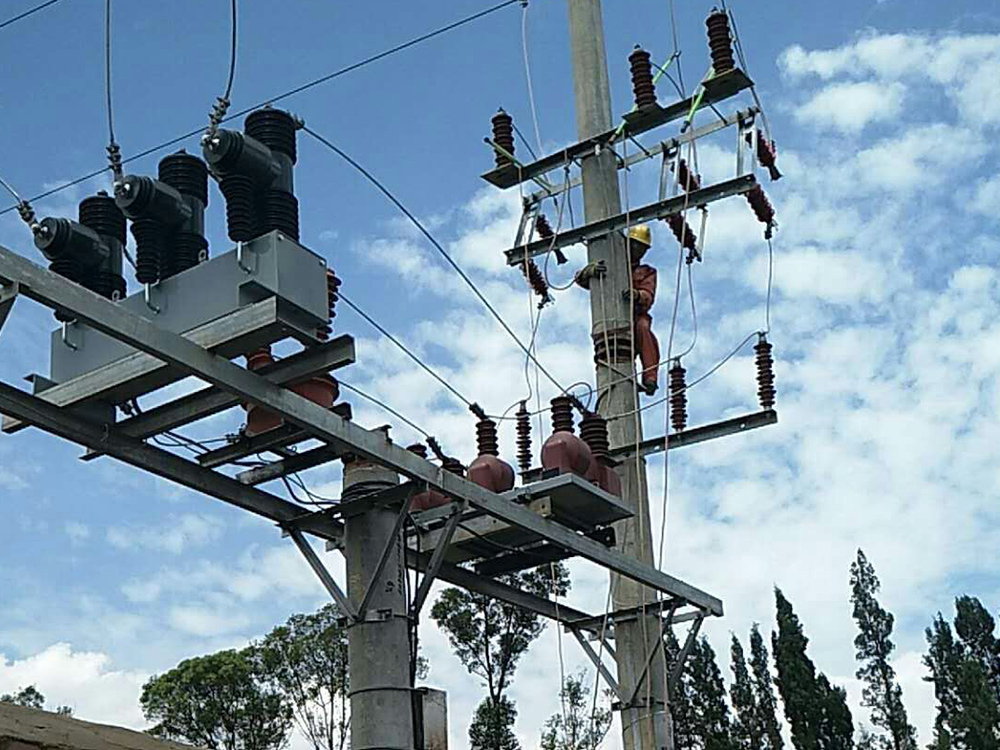
The substation sits on the ring with two ring ways, one to each neighbour, plus a tee-off to its own transformer. Normal operation has both ring ways closed and the ring itself closed at every other substation, so the transformer is fed from two directions in parallel through the ring cable. When a section has to be worked on, the crew does not open the tee-off and leave the transformer dead; it first makes sure the transformer is being carried by the healthy direction, then opens the two ring ways that bound the faulty or work section.
| Step | Action | What is still energised | If the order is wrong |
|---|---|---|---|
| 1 | Confirm the healthy ring way is closed and carrying the transformer | Transformer on both directions | Opening first leaves the transformer dead and customers off |
| 2 | Open the ring way at the far end of the section to be worked | Transformer still fed from the near side | Backfeed into the work section from the far end |
| 3 | Open the ring way at the near end | Transformer still fed through the tee-off | — |
| 4 | Close the earthing switch on the isolated section | Section earthed and proved dead | Earthing a live section is the classic fatal error |
| 5 | Work; then reverse the sequence and reclose the ring | Ring restored, transformer unchanged | Reclosing into a fault trips the source breaker |
The interlock is what makes this sequence safe rather than a matter of memory. On a mechanically interlocked RMU the earthing switch cannot be closed while the associated disconnector is closed, and the cable compartment door cannot be opened while the earthing switch is open. When a buyer asks for "five-prevention" interlocks, this is the mechanism being specified, not an administrative procedure; the earthing switch guide covers the interlock logic and the ratings that go with it.
Where the Fault Is Isolated
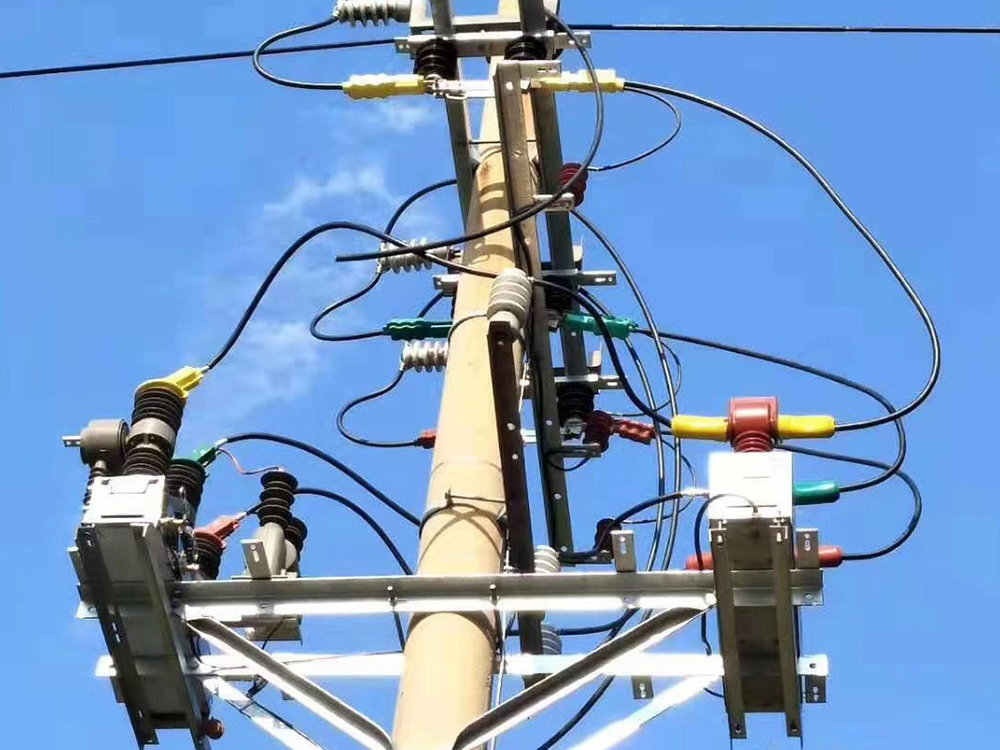
Take a fault on the cable between substation A and substation B. The protection at the source trips, or the fault is cleared by the nearest upstream device, and A and B both lose the section between them. The crew opens A's ring way towards B and B's ring way towards A, earths that section, and then restores the ring by closing the path around the other side. A and B are back on supply with the faulted section isolated in the middle.
This is why the way count matters more than the model number. A two-way unit plus a tee-off (often written 2+1) can do the transfer described above. A three-way unit with a spare way lets you split a long ring into shorter sections, which shortens the length of cable that goes out with each fault — and the number of customers affected while the crew works. Buy the way count your network diagram needs, not the cheapest configuration on the quotation; reading the single line diagram is where that count comes from.
What an RMU Does Not Do
- It does not clear every fault by itself. A ring way is a load-break switch, not a circuit breaker. Fault current is cleared by the upstream breaker or by a fuse in the tee-off, and the RMU has to be able to close onto and carry that fault until the protection operates.
- It does not protect the transformer on the LV side. The tee-off protects the transformer and its HV cable; LV faults belong to the LV board.
- It does not remove the need for an arrester. Surge protection at the transformer is a separate device.
- It does not make a radial network redundant. If the ring is open at a normal point and never closed, two ring ways buy nothing but cable.
What to Put in the Specification
The medium voltage switchgear range covers metal-enclosed ring main units, armored metal-clad withdrawable gear and fixed panels for 12 kV and 40.5 kV systems, so the configuration has to be stated rather than assumed. These are the lines that decide whether the unit does the job:
| Item | What to state |
|---|---|
| Way configuration | Number of ring ways, tee-off ways and spare ways, drawn on the single line diagram |
| Rated voltage and current | 12 kV or 40.5 kV class for the highest system voltage; busbar and way ratings stated separately |
| Switching medium | SF6 load-break switches, vacuum, or air, with the reason recorded |
| Fault level | Short-time withstand current and duration the assembly must carry until the upstream device clears |
| Interlocks | Mechanical interlocking between disconnector, earthing switch and cable compartment access |
| Earthing switch | Short-circuit withstand rating of the earthing switch, not just its presence |
| Enclosure | IP rating, indoor or outdoor, cable entry direction, and the footprint you can actually give it |
| Operation | Manual, or motorised with remote control and status contacts |
| Tests and documents | Type test report to IEC 62271-200, routine test report, interlock test record, outline drawing |
Mistakes That Delay Energisation
- Specifying a two-way unit for a ring that needs a tee-off. The transformer ends up fed from a way that was meant for the ring, and the transfer procedure no longer has a spare path.
- Leaving the interlock type vague. "With interlocks" gets you what the factory happens to fit; the drawing has to show which operations are blocked.
- Ignoring the cable box. Cable entry direction, gland plate size and bending radius decide whether the unit fits the pit you have already dug.
- No earthing switch rating. An earthing switch that cannot carry the fault current for the clearing time is a false sense of safety at the moment it matters most.
- Commissioning without an interlock test. The defect surfaces on the first live operation, which is the worst possible time.
Where Nahu Group Fits
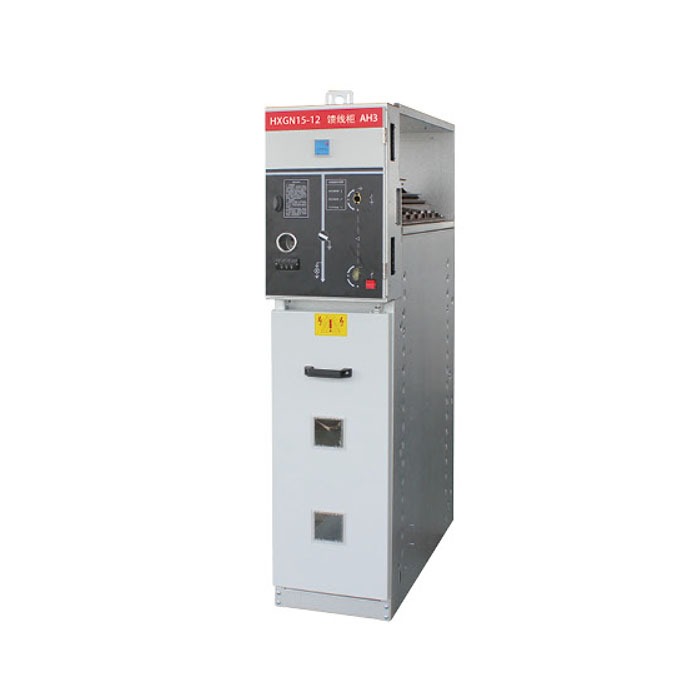
Nahu Group manufactures the HXGN15-12(SF6) unit-type AC metal-enclosed ring main unit, built to IEC 62271-200 with SF6 load-break switches, mechanical interlocking and an IP3X enclosure, in manual or motorised operation. The wider distribution cabinet range adds armored metal-clad withdrawable switchgear for 12 kV and 40.5 kV systems.
To get a configuration back, send the ring single line diagram with way counts, the system and highest system voltage, the prospective fault level and its duration, whether the unit is indoor or outdoor, the cable type and entry direction, and the interlock logic your utility requires. We will return the outline drawing, the way arrangement and the routine test plan for approval. The ring main unit types guide covers the configuration choices in more detail.
Frequently Asked Questions About Ring Main Unit Purpose
What problem does a ring main unit solve?
It lets a substation be supplied from two directions and lets any one cable section be isolated without switching customers off. On a radial feeder a single cable fault takes out everything downstream; on a ring, the fault is isolated between two open ring ways and the rest of the ring keeps working.
How many ways does a ring main unit need?
Two ring ways plus a tee-off is the minimum for a substation on a ring that must transfer load. Add a spare way where the ring is long enough to justify splitting it into shorter sections, because each fault then affects less cable and fewer customers while the crew works.
Can an RMU break fault current?
No. A ring way is a load-break switch and clears load current, not fault current. Faults are cleared by the upstream circuit breaker or by the fuse in the transformer tee-off, and the RMU must be rated to carry the fault current for the clearing time and to close onto it where the design requires.
What does the earthing switch interlock protect?
It prevents the earthing switch being closed onto a live section and prevents the cable compartment being opened while the section is not earthed. That is the mechanism behind the operator's "five-prevention" requirement, and it has to be demonstrated in a routine interlock test before the unit is energised.
Is an SF6 ring main unit still the right choice?
SF6 units remain the compact default for indoor distribution substations where footprint is tight. Vacuum and air-insulated alternatives avoid SF6 handling and gas monitoring, but take more space. The decision is usually driven by the room you have, the utility's gas policy and the maintenance organisation, not by the switching medium alone.
Sources and Further Reading
- IEC 62271-200:2021 — High-voltage switchgear and controlgear, Part 200: AC metal-enclosed switchgear and controlgear for rated voltages above 1 kV and up to and including 52 kV — the assembly standard behind internal-arc classification, loss-of-service continuity categories and the type tests a ring main unit must pass
- IEC 62271-1:2017 — High-voltage switchgear and controlgear, Part 1: Common specifications — service conditions, ratings and dielectric requirements shared by all MV switchgear, including the insulation levels quoted in this article
Published Nov 5, 2026 · Nahu Group (NAHU Electric Technology)