
Insulator creepage distance is not chosen from the system voltage alone: it is set by the pollution severity of the site, converted into a specific creepage in millimetres per kilovolt, and multiplied by the highest voltage for equipment — U_m, the phase-to-phase value, not the phase-to-earth value. Get that multiplier wrong and a 33 kV insulator specified for heavy pollution comes out roughly 40 percent short of the creepage the site needs.
This guide does the conversion for the four IEC 60815 pollution classes, shows where the numbers break down on desert, coastal and industrial sites, and lists what to put in the RFQ so the figure can be checked rather than trusted.
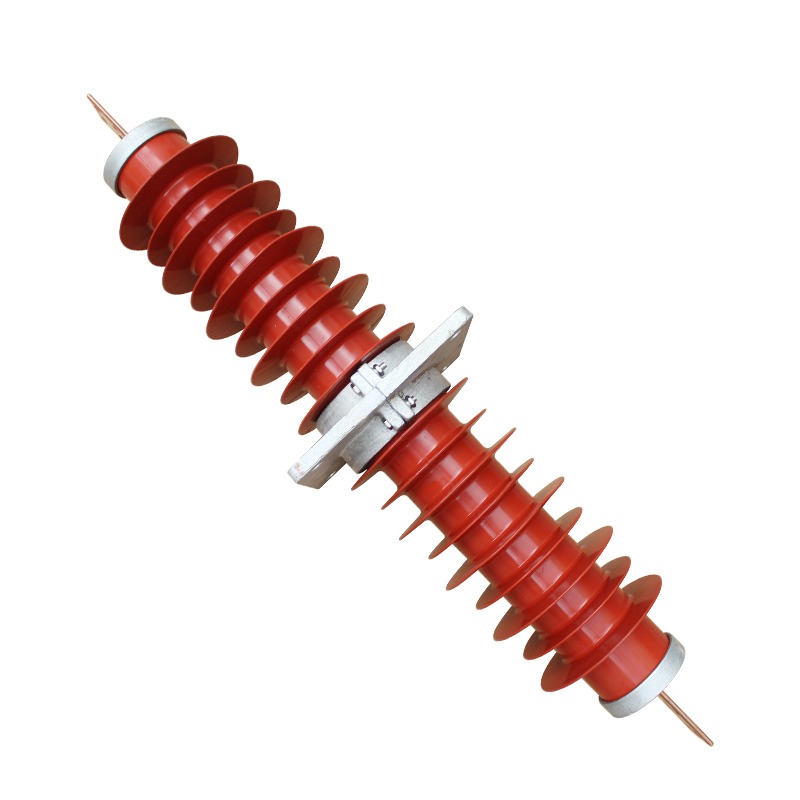
What Insulator Creepage Distance Actually Measures
Insulator creepage distance is the shortest path along the external surface between the two metal fittings. It is the surface, not the air gap, that fails first on a polluted site: a dry, dust-laden layer becomes conductive in fog, dew or light rain, and the resulting leakage current either burns a track across the sheds or triggers a flashover.
Three distances appear on an insulator drawing and they are not interchangeable:
- Creepage distance — the surface path, the number that governs pollution performance.
- Arcing distance — the shortest path through air between fittings, which governs impulse withstand.
- Section length — the metal-to-metal build height, which decides whether the unit fits the structure.
A datasheet that gives only the section length says nothing about pollution performance. Ask for the creepage distance and the drawing dimension that shows how it was measured.
Mapping IEC 60815 Pollution Classes to mm/kV
IEC 60815 divides site pollution severity into four classes and links each to a nominal specific creepage. The values below are the ones most utility specifications and IEC 60815-based practice apply; treat them as the starting point and confirm which edition your specification references, because the current edition (IEC TS 60815-1:2025) replaced the 2008 text and its approach to correction factors.
| Pollution class | Nominal specific creepage | Site description | Typical regions |
|---|---|---|---|
| Light | about 16 mm/kV | Clean rural, low industrial activity, moderate rainfall | Inland agricultural areas away from industry |
| Medium | about 20 mm/kV | Industrial areas with moderate emissions, some agriculture, medium traffic | Mixed-use districts, light manufacturing zones |
| Heavy | about 25 mm/kV | Dense industry, cities with heavy traffic, coastal strips with salt but regular rain | Industrial belts, coastal cities, cement and steel areas |
| Very heavy | about 31 mm/kV and above | Salt spray with little rain, desert dust, chimney plumes, chemical plants | Gulf coast, arid inland deserts, monsoon-free coastal deserts |
Two notes for buyers in the Gulf, South Asia and Southeast Asia. The class is set by the worst season, not the annual average: a site that is dusty for four months and humid for two is a heavy site even if the rest of the year is clean. And where a site sits between two classes, specify the higher one and put the reasoning in the datasheet — the cost difference is small, the flashover risk is not.
The Calculation: From mm/kV to a Required Creepage
The conversion is a single multiplication, and the only trap is the voltage you multiply by.
Required creepage (mm) = specific creepage (mm/kV) × U_m (kV), where U_m is the highest voltage for equipment — the phase-to-phase value from the IEC 60038/IEC 62271-1 series, not the system nominal voltage and not the phase-to-earth voltage.
| System | U_m | Heavy class, 25 mm/kV | Very heavy class, 31 mm/kV |
|---|---|---|---|
| 11 kV | 12 kV | 300 mm | 372 mm |
| 22 kV | 24 kV | 600 mm | 744 mm |
| 33 kV | 36 kV | 900 mm | 1,116 mm |
Using phase-to-earth voltage instead of U_m divides the answer by the square root of three — on a 33 kV heavy-pollution site a 900 mm requirement becomes 520 mm. That unit passes its routine test, fits the structure, and flashes over in the first fog after a dry spell. If a quoted creepage looks generous against the system voltage, check which voltage was used as the multiplier.
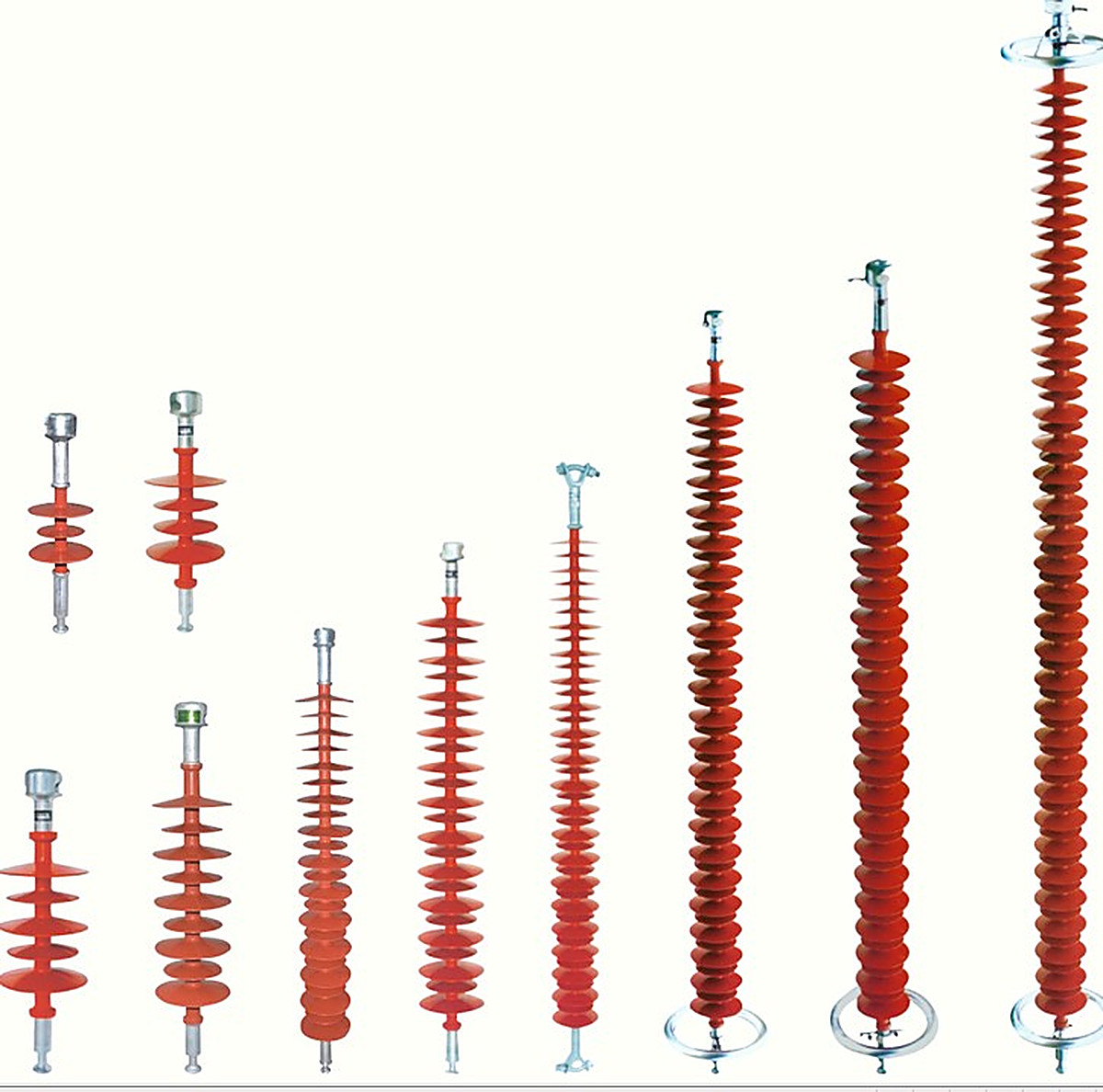
The composite bushing and pin insulator above shows what the creepage distance is spent on: every shed adds surface path without adding metal-to-metal height. That is the design trade an insulator buyer is actually making — more sheds and deeper under-ribs give more creepage in the same section length, but they also collect more pollution and are harder to clean, which is why shed geometry is specified alongside the mm/kV figure rather than left to the supplier.
Shed Profile, Diameter and the Unified Specific Creepage
Insulator creepage distance measured along the surface overstates performance when sheds are deep and closely spaced, because pollution bridges the gaps and the leakage current takes a shorter path than the drawing suggests. IEC 60815 handles this through the unified specific creepage distance, which applies correction factors for pollution severity, insulator diameter and profile: the wider the insulator, the more pollution it intercepts per unit of surface.
- Diameter matters. A 400 mm bushing needs more specific creepage than a 100 mm pin insulator in the same pollution class. One mm/kV figure applied to every insulator on a project is a specification error.
- Profile matters. Alternating sheds, open profiles and under-rib spacing change how much pollution the surface retains; a compact profile at 31 mm/kV can perform worse than an open profile at 27 mm/kV.
- Material changes the maintenance case. Silicone surfaces are hydrophobic and recover water-repellency after a pollution layer builds, which is why composite is often chosen for coastal and desert sites.
Altitude, Ambient and Other Site Corrections
Altitude reduces the withstand of the air gap, so clearances are corrected for height above sea level; the correction belongs to insulation coordination, not to the creepage figure. What the buyer must do is state the site altitude, because a supplier quoting a catalogue item has no way of knowing whether the unit goes to 200 m or 2,000 m.
Temperature and solar exposure act differently. They do not change the required creepage, but they change the material: silicone rubber under continuous ultraviolet and 50 °C ambient ages faster than the same compound in a temperate site, while porcelain is unaffected but heavier and more fragile in handling. For a hot arid site, ask for ultraviolet and tracking resistance evidence rather than a longer creepage figure alone.
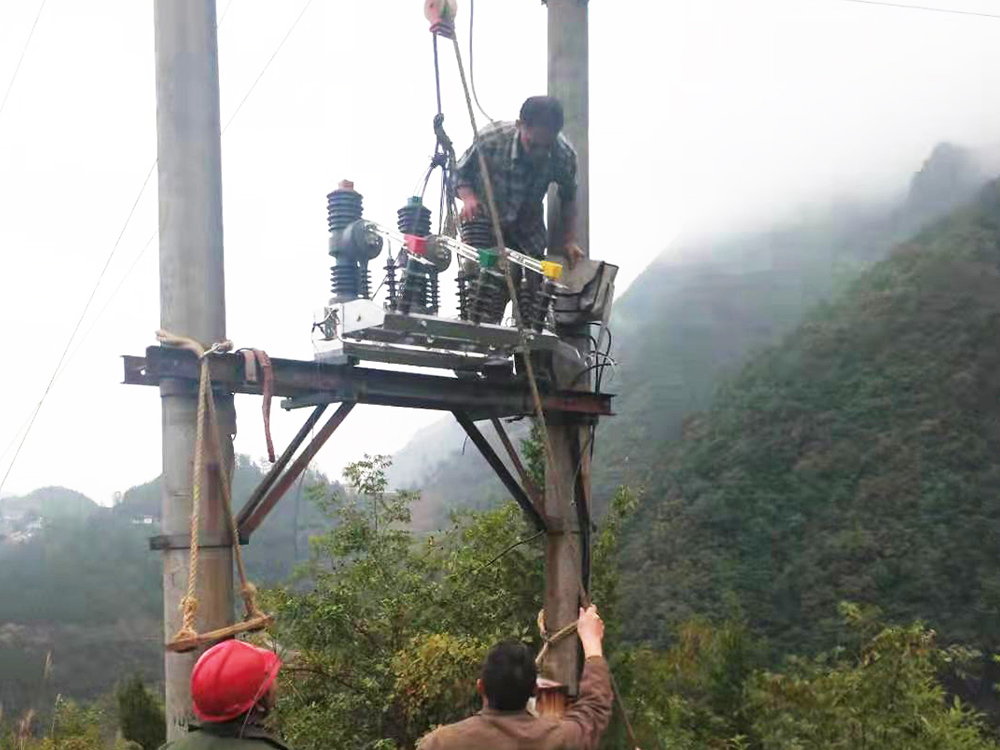
Sites like the one above — pole-top work in humid, mist-prone terrain — are where a creepage figure earns or loses its keep. The fog that forms after a dry spell is the test the site applies every season, and it appears in no routine test report, which is why the creepage class belongs in the enquiry with the site description.
Verifying the Number: Tests and Documents
A creepage distance is easy to claim and easy to check, so it should not be accepted on trust. Ask for three things, and query the offer if any is missing.
| Evidence | What it must show |
|---|---|
| Dimensioned drawing | Creepage distance per unit, arcing distance, shed profile, and the measurement points at both fittings |
| Type test report | Tests for the insulator family and material you are buying, with the pollution or wet-test conditions stated, not a generic certificate |
| Routine test report | Per-unit mechanical and electrical routine checks, with the serial numbers that will ship |
At goods inspection, measure the creepage on one unit with a flexible tape along the surface and compare it with the drawing. It takes ten minutes and catches the most common substitution on this product: a shorter shed stack supplied because the original profile was out of stock. The same check applies to bushings fitted to switchgear, where the creepage follows the insulator and bushing specification rather than the cubicle outline.
Selection Mistakes and Their Commercial Consequence
- One mm/kV figure for the whole project. Coastal and inland sites end up with the same insulator, so either the coast flashes over or the inland site is over-specified and loses on price.
- Creepage quoted against phase-to-earth voltage. Compliant on paper, short in service, and the argument afterwards is about who read the standard — a delay to energisation in the worst case.
- Catalogue profile substituted at shipment. Nothing fails until the first polluted fog, and by then the units are on an energised line and the replacement needs an outage.
- Creepage without mechanical rating. The same unit carries conductor load and wind or short-circuit force; a profile chosen purely on creepage can come with a lower specified mechanical load than the structure needs.
What to Write Into the RFQ
| Requirement | Value to state |
|---|---|
| Highest voltage for equipment | U_m in kV, phase-to-phase — state it so the supplier cannot choose |
| Pollution class | Light, medium, heavy or very heavy, with the site description behind it |
| Required creepage | Minimum total creepage in mm per unit: specific creepage × U_m |
| Profile and diameter | Shed type and diameter, and whether unified specific creepage was applied |
| Mechanical rating | Specified mechanical load, plus cantilever or tensile duty from the structure |
| Environment | Altitude, ambient maximum, ultraviolet, coastal salt, dust, seismic |
| Documents | Type test report, routine test report, dimensioned drawing, handling instructions |
Where the creepage argument has already been settled and the question is how the insulator behaves in a hot arid site over ten years, the material discussion in the guide to insulator coatings in hot arid climates is the next read; the wider comparison of porcelain, glass and composite sits in the high-voltage insulator selection guide.
Frequently Asked Questions About Insulator Creepage Distance
Should creepage be calculated on phase-to-phase or phase-to-earth voltage?
On phase-to-phase. Specific creepage in mm/kV is multiplied by U_m, the highest voltage for equipment, which is a phase-to-phase value. Using phase-to-earth voltage divides the requirement by about 1.73 and under-specifies the insulator. State U_m explicitly in the RFQ.
How much creepage does a 33 kV line need in a dusty desert site?
For U_m of 36 kV at the very-heavy class of about 31 mm/kV, the minimum is roughly 1,116 mm total creepage per unit. Desert sites are often classed very heavy because dust deposits build up and are only partly washed off by rain, so confirm the class from local experience rather than the national average.
Does more creepage always mean a better insulator?
No. Creepage gained through deep, tightly spaced sheds collects more pollution and is harder to clean, so effective performance can fall while the quoted number rises. Shed profile, diameter and surface material all change the outcome, which is why IEC 60815 applies correction factors rather than relying on the raw distance.
How is creepage distance verified at goods inspection?
Measure one unit along the surface with a flexible tape and compare it with the dimensioned drawing, then check the arcing distance and shed diameter against the same drawing. Compare the type test report against the family and material supplied. The tape check takes minutes and catches profile substitutions before the units go on the structure.
Which IEC 60815 part applies to composite insulators?
Part 1 gives the definitions, the evaluation of site pollution severity and the general principles; part 3 covers polymer insulators and part 2 covers ceramic and glass. Specify the part that matches the material you are buying, because the profile and correction guidance differs between them.
Where Nahu Group Fits
Nahu Group manufactures composite crossarm insulators (FS series) and composite dry-type bushings and pin insulators (FCGW series) for distribution and sub-transmission voltages, alongside porcelain-insulated isolating switches, drop-out fuses and surge arresters that carry their own creepage requirements. The composite crossarm insulator and the composite bushing and pin insulator ship with dimensioned drawings so creepage can be checked at inspection.
To get a configuration, send U_m, the pollution class, the required creepage in mm, the mechanical load, the mounting arrangement and the site altitude. If the site is coastal, desert or industrial, say so — that line decides whether the answer is a standard profile or a longer shed stack.
Sources and Further Reading
- IEC TS 60815-1 — Selection and dimensioning of high-voltage insulators intended for use in polluted conditions, Part 1: Definitions, information and general principles — site pollution severity classes, specific and unified specific creepage, and the correction principles used above
- IEC TS 60815-2 — Selection and dimensioning of high-voltage insulators intended for use in polluted conditions, Part 2: Ceramic and glass insulators for a.c. systems — profile and creepage guidance for the porcelain and glass units on switches, fuses and arresters
- IEC TS 60815-3 — Selection and dimensioning of high-voltage insulators intended for use in polluted conditions, Part 3: Polymer insulators for a.c. systems — how composite shed profiles and hydrophobic surfaces are dimensioned for the same pollution classes
Published Nov 16, 2026 · Nahu Group (NAHU Electric Technology)