
A high voltage insulator coating decides whether the creepage distance you paid for still means anything after five summers of ultraviolet light and dust. On a composite insulator that coating is the silicone housing itself; on porcelain it is an RTV layer applied over the glaze. Either way it is the part that controls how water behaves on the surface, and surface behaviour is what pollution flashover actually depends on.
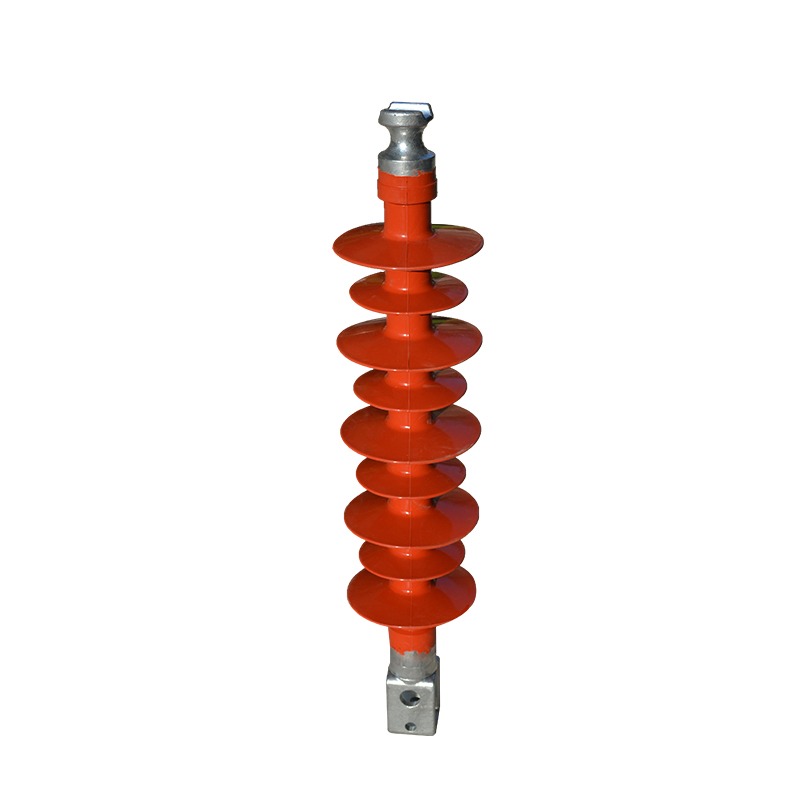
The specification usually fixes creepage in millimetres per kilovolt and stops there. This note covers the other half: which coating or housing you are buying, what it does under a Gulf or Thar Desert sun, and how to word the requirement so a supplier cannot answer with a catalogue figure.
Why Does a High Voltage Insulator Coating Decide the Creepage You Actually Get?
Creepage is a dry-path measurement. It assumes an insulating surface. Once a conductive water film bridges the sheds, the same insulator behaves as if most of that path has been shorted out, and the effective creepage collapses towards the arcing distance. A hydrophobic surface — one that makes water bead instead of wet out — keeps the film broken up, so the sheds keep doing their job.
That is why two insulators with identical shed profiles and identical creepage can perform very differently on one pole line. One stays hydrophobic between cleanings; the other wets out at the first fog and relies on the pollution level being lower than the design assumed. In a hot arid site, dust settles dry and harmless, then a heavy dew or a washing cycle turns it into the electrolyte that starts the flashover.
HTV Silicone Housing vs RTV Coating: Two Different Purchases
A composite insulator is a fibre-reinforced epoxy or vinyl-ester core rod, a metal fitting crimped or wedged at each end, and a high-temperature-vulcanised (HTV) silicone housing moulded or extruded over the rod. The housing is not a coating in the paint sense; it is the outer body, several millimetres thick, with the sheds formed in it. Hydrophobicity comes from low-molecular-weight silicone chains migrating from bulk to surface, so a scratched or eroded shed can be re-supplied from below.
An RTV coating is a room-temperature-vulcanised silicone layer, a fraction of a millimetre thick, sprayed or painted onto porcelain or glass. It is a maintenance product as much as a design choice: renewable, but also worn through, washed off or damaged by grit. The commercial difference is that the composite route buys the hydrophobic surface once in the factory, while the RTV route buys it repeatedly over the life of the line.
For a buyer the practical question is where the interfaces sit. On a composite unit they are the housing-to-rod and rod-to-fitting bonds, where water ingress produces the brittle fracture failures discussed at every utility maintenance meeting. On a coated porcelain unit they are the coating-to-glaze bond and the shed edges, where the layer is thinnest.
Hydrophobicity and Its Transfer: The Property Behind the Specification
Silicone surfaces are assessed on a seven-class scale, from HC 1, where water spreads in continuous films, to HC 7, where droplets stay round. A new composite housing sits at the hydrophobic end. Under heavy pollution it can be masked by a dry contaminant layer and read as wettable, then recover as silicone chains migrate through that layer — the transfer effect. That recovery is why silicone outperforms its dry-state measurements, and why a single factory reading proves very little.
| Option | How it behaves when wetted | How it ages in hot, dusty, high-UV sites | What maintenance it implies |
|---|---|---|---|
| Composite insulator, HTV silicone housing | Hydrophobic; transfer through the pollution layer restores beading | UV and heat harden the surface slowly; sand abrasion removes the hydrophobic layer on windward sheds | Visual and hydrophobicity checks; replacement rather than repair of a damaged shed |
| Porcelain with RTV coating | Hydrophobic while the layer is intact and clean | Coating erodes at shed edges and under abrasion; recoating interval shortens with dust load | Washing, recoating, and periodic hydrophobicity classification |
| Uncoated porcelain or glass | Wets out; relies on creepage and on washing | Glaze stays sound but pollution performance depends on a cleaning regime that is often the first budget cut | Greasing or washing cycles, both labour-intensive on remote lines |
Creepage: Turning Site Pollution Severity Into a Shed Profile
The selection route runs from the site to the shed. First the pollution severity is established, from deposit density measurements, nearby operating experience or the utility's own classification. Then the required unified specific creepage distance is read for that class from the applicable part of the insulator selection standard, and only then is a shed profile chosen that reaches the figure without sheds so deep they trap dust.
The arithmetic is simple once the class is agreed: a 33 kV system at 36 kV highest voltage, with a requirement of 31 mm/kV, needs about 1,116 mm of creepage along the surface. Whether that is delivered on 900 mm or 1,200 mm of insulator depends on shed geometry and core diameter, so do the sum rather than accepting a "high creepage" claim. The 33 kV switchgear selection notes cover the same clearance-and-creepage reasoning from the switch side.
Two constraints work against each other. Deep, closely spaced sheds raise creepage on a given height but trap dust and are hard to clean, which in a sand-laden site can be worse than slightly lower creepage with an open profile. The standard treats shed profile separately from the creepage number, and a supplier who answers only with the number has not answered the question.
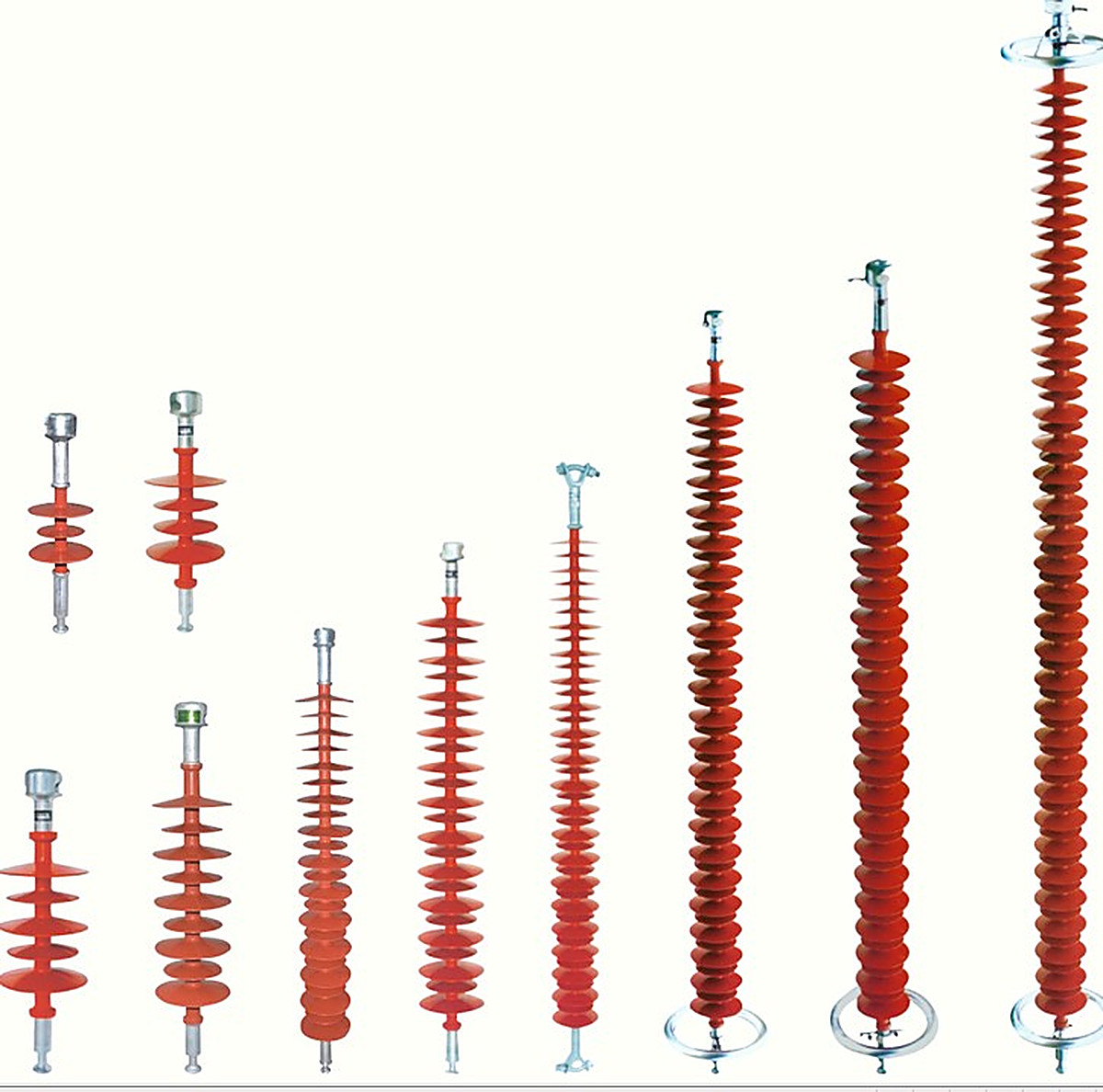
What Ages a Composite Insulator Fastest in a Hot Arid Climate
Four mechanisms do most of the damage, and they are not equally visible from the ground.
- Ultraviolet exposure hardens the silicone surface and slows the migration that restores hydrophobicity, so the surface becomes wettable between rain events.
- Continuous high ambient temperature accelerates the same hardening and degrades the polymer interfaces at the fittings.
- Wind-driven sand polishes the windward sheds, removing the hydrophobic layer and, in bad cases, thinning the housing over the rod.
- Thermal cycling between a 50 degree afternoon and a cool night works the bonded interfaces, which is where moisture eventually enters.
None of these produce an obvious failure at inspection. A high voltage insulator coating can be fully intact and still have lost its hydrophobicity, so the first evidence is a flashover during a dust storm followed by dew. That is why the specification asks for ageing evidence — UV exposure, tracking-and-erosion tests on the housing, a water-diffusion test on the rod — rather than a photograph of the finished unit.
Which Tests and Documents Show Ageing Resistance
Ask for the design test report on the insulator family, not a certificate of conformity, and read the clauses covered: tracking and erosion on the housing, UV exposure, mechanical load, interface tests on rod and fittings. For coated porcelain, ask the thickness, the recoating interval under the site's dust load, and whether the coating was evaluated after washing.
At inspection, record three things even when nothing looks wrong: the hydrophobicity class on a sample of sheds, windward shed surface condition, and any chalking or colour change at the fitting end. Photographs from the same position each visit turn that into a trend — the only way to justify replacing a unit before it flashes over.
Selection Mistakes That End in Flashover or Rework
Specifying creepage without a pollution class. The number is copied from a project in a different environment and no one can say what severity it was meant for. When the line trips, there is no basis to argue the design was met.
Using an indoor profile outdoors. A compact, deep-shedded design that works in a switch room traps sand on a pole and cannot be cleaned. The rework is a line section replacement, not a shed adjustment.
Treating a high voltage insulator coating as permanent. RTV layers are consumables in a dusty site. A maintenance plan that assumes twenty years of service from a single application will discover the error at the first wet-season flashover.
Mixing families on one structure. Different shed profiles and mechanical ratings on one crossarm make load sharing unpredictable and complicate the spare-parts list — the cost that returns after a single unit fails.
What to Put in the Datasheet and RFQ
- System highest voltage, rated mechanical load (SML and RTL), and the creepage required with the pollution severity class it is derived from.
- Housing material and process (HTV silicone moulded or extruded), or coating type and nominal thickness for a coated porcelain option.
- Shed profile drawing with shed diameter, spacing and overhang, and the arcing distance.
- End fitting material, galvanising or hot-dip coating, and the coupling dimensions that must match existing hardware.
- Design test reports: tracking and erosion, UV exposure, mechanical load, interface and water-diffusion tests.
- Routine test records per unit, marking method, and packing that survives sea freight and open storage.
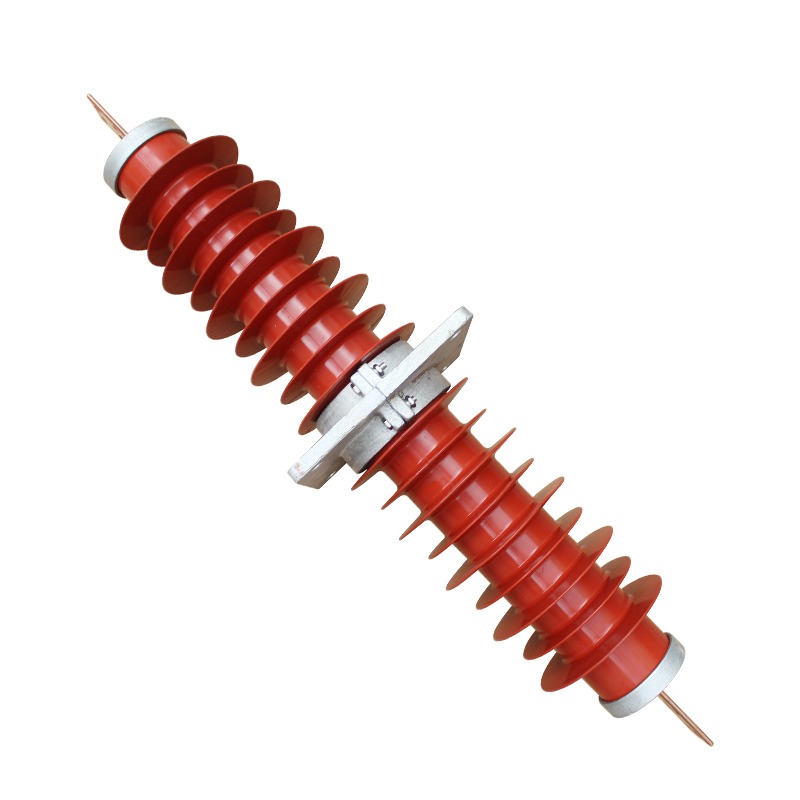
The datasheet list above is what an RFQ should carry for either route. The photograph below shows the same material system as a bushing, where sheds sit either side of a mounting flange. The surfaces that matter are identical: a silicone body bonded to metal at both ends, with every interface a potential moisture path.
Frequently Asked Questions
Does a high voltage insulator coating replace the need for creepage?
No. It protects the creepage you specified by keeping the surface hydrophobic. A short insulator with a good coating still has a short arcing distance and fails when the pollution layer becomes continuous, which is why the two are specified separately.
How often should an RTV coating be renewed in a dusty site?
There is no universal interval. Renewal is driven by the hydrophobicity reading and by surface damage, and in heavy dust it can be a few years rather than a decade. Ask the supplier for the recoating criterion and measure against it rather than following a calendar.
Can a silicone coating be applied to an existing porcelain line in service?
Yes, and it is a common retrofit where outage time is limited. It needs a clean, dry surface and a cure window without rain or blowing sand. The units that gain most already show wettable surfaces, so survey before coating rather than coating everything.
Which is more durable in 50 degree heat, composite or porcelain?
Porcelain tolerates heat and UV without changing chemically but relies on profile and cleaning. Composite resists pollution better, yet its silicone surface hardens over time. The choice turns on maintenance access: remote lines favour composite, substations with washing programmes can justify porcelain.
What mechanical data should be on the nameplate?
The specified mechanical load and the routine test load, rated voltage, creepage and arcing distance, housing or coating material, date and batch code. If the nameplate carries only a model number, the acceptance record cannot be tied to the design test report.
Sources and Further Reading
- IEC TS 60815-1:2025 — Selection and dimensioning of high-voltage insulators intended for use in polluted conditions, Part 1: Definitions, information and general principles — how site pollution severity is defined and how it converts into a required creepage distance
- IEC TS 60815-3:2025 — Selection and dimensioning of high-voltage insulators intended for use in polluted conditions, Part 3: Polymer insulators for AC systems — the polymer-specific route from pollution class to shed profile and creepage, including the profile constraints that dust and sand impose
Where Nahu Group Fits
Nahu Group supplies composite crossarm insulators, composite pin insulators and dry-type bushings, listed on the high-voltage insulator page, including the composite crossarm insulator and the composite dry-type bushing and pin insulator. All are silicone-housed designs intended for pollution-resistant outdoor service.
To get a configuration, send the system voltage, the pollution severity or the creepage figure you must meet, the mechanical load, the coupling dimensions of the hardware you are matching, and the quantity per structure. For comparisons across porcelain, glass and composite, the insulator type and material guide covers the wider family.
Published Nov 10, 2026 · Nahu Group (NAHU Electric Technology)