
Choose a cable branch box when the node only has to split a cable run, and an RMU when it has to switch, isolate and protect. That test settles most of the argument: the price gap is not supplier margin but the cost of the interrupting devices, interlocks and protection only one of them contains.
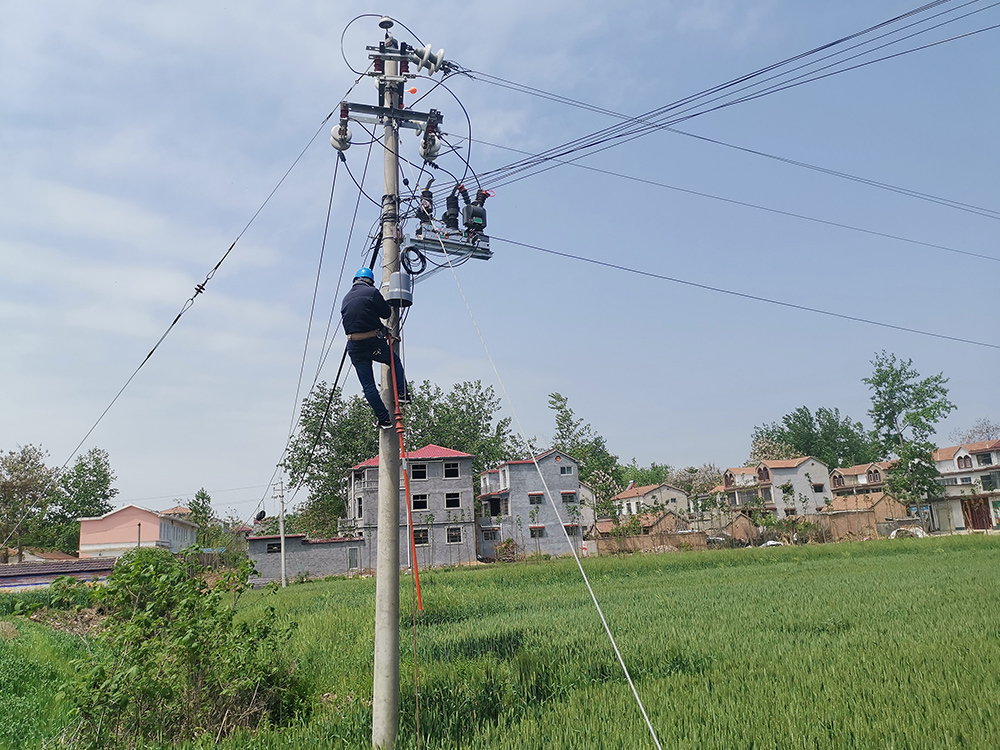
This is a selection note, not a description of what a branch box is; the European-style branch box guide covers construction and connectors. What follows is the decision an engineer must defend in a design review, and where the money goes.
What Decides It: Switching Duty Before Price
A branch box is a busbar in an enclosure with separable cable connections: it splits a run, gives a place to terminate, and with load-break elbows lets a crew break load at the connector. It does not interrupt fault current and does not sectionalise a ring. An RMU contains load-break switches, earthing switches and interlocks, so it breaks load, makes and carries fault current briefly, earths a section and — with fuses or a relay — clears a fault downstream.
If nothing at the node has to interrupt current or isolate a section, the branch box is not a cheaper compromise but the correct device, and an RMU would add cost and maintenance for a duty nobody performs. If something does, no cost pressure turns a branch box into switchgear, and the attempt returns as a change order after the protection study.
Cable Branch Box or RMU: The Decision in One Table
| Requirement at the node | Cable branch box | Ring main unit |
|---|---|---|
| Split a run to feed a second load | Yes — its purpose | Yes, as a tee-off |
| Break load current | At the connector only | Yes, full switch rating |
| Clear a downstream fault | No; upstream device does it | Yes, fuse or relay |
| Sectionalise or transfer on a ring | No | Yes |
| Earth a section for work | Not a designed function | Yes, integral earthing switch |
| Remote control | Add-on only | Optional, motorised |
| Footprint and civil work | Small pad | Larger pad, trench, access |
Where the Cost Difference Actually Sits
A four-way branch box for 12 kV is an enclosure, a busbar and a set of bushings and connectors. The RMU adds three or four switching devices, their mechanisms, earthing switches, interlocks and usually a fuse or relay with a DC supply. That is where the money and the maintenance obligation sit.
| Cost line | Branch box | RMU | What moves it |
|---|---|---|---|
| Switching devices | None | Two to four | Way count, SF6 or vacuum, manual or motorised |
| Protection and control | None | Fuse, relay, CTs, DC supply | Remote control in scope or not |
| Enclosure and busbar | Main cost | Secondary | IP rating, finish |
| Connectors and terminations | Main cost | Also required | Cable count, elbow or bolted |
Read the table as a ratio, not a price list. On a like-for-like four-way node the RMU is commonly a multiple of the branch box, and the multiplier grows with protection and automation content, not with the enclosure. Compare cost per function: one function against five is not a like-for-like choice.
When a Cable Branch Box Is the Right Answer
Three cases justify it. A tee on a radial feeder where the upstream RMU or breaker already protects and switches, so the node does what a joint would, but testable. A termination point with no ring continuity. A space-limited site where a pad-mounted RMU will not fit and the load needs no switching.
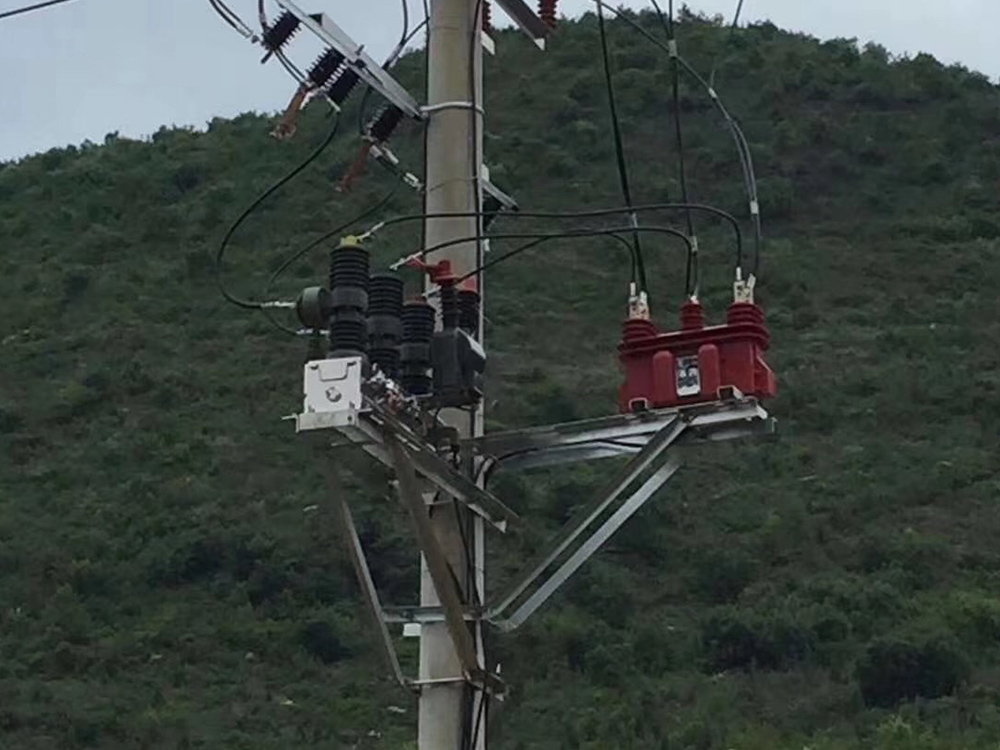
In all three the criteria shift from switching duty to connection quality: interface type and rating, busbar current, IP rating, extensibility. The photo below shows a pole-mounted branch node of this kind, where nothing is designed to interrupt fault current.
When It Is Not: Fault Current, Protection and Transfer
A cable branch box must not stand in for switchgear where a downstream fault has to be cleared, a ring must be sectionalised to restore healthy sections, two sources meet and transfer is part of the operating procedure, the control room must see or operate the node, or a crew must earth a section before working.
In each case the omission returns as a scope change: an RMU added to a compound sized for a branch box, tails re-terminated, protection re-studied, commissioning moved. That costs more than the price difference that motivated it.
Footprint, Cable Entry and Site Constraints
Branch boxes win on space: a four-way unit sits on a small pad or against a wall, entry from below, no operating aisle. An RMU needs room in front of it and a trench that respects bending radius. On a congested block that decides the layout before any electrical argument.
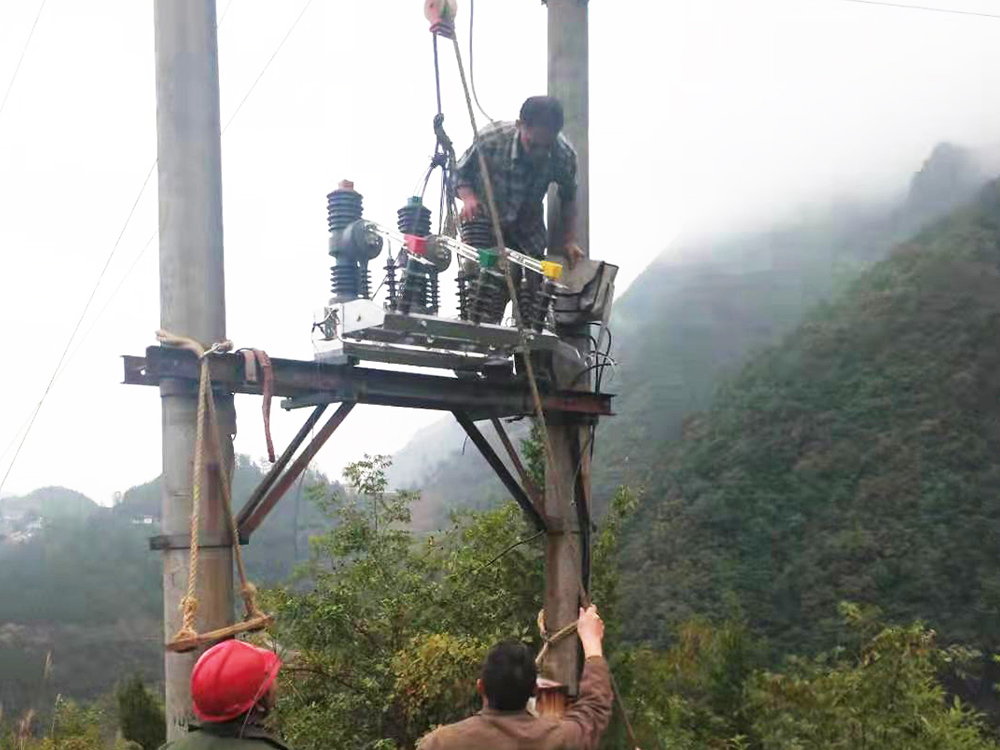
Check two constraints before the pad is cast. Flood level: a bottom-entry branch box sits lower than an RMU on a plinth, so its cable boxes must clear the design flood line. Access: an RMU needing a truck is not viable where crews reach the equipment on foot — the arrangement below is what those sites use.
What to Put in the RFQ Either Way
- System voltage, busbar current, short-time withstand current and duration — identical for both, often what eliminates a cheap offer.
- Way count, cable sizes, and whether each way is load-break or dead-break, with the interface rating (630 A bolted or 200 A elbow).
- IP rating, indoor or outdoor, corrosion category.
- For an RMU: switch and earthing ratings, fuse or relay scheme, CT ratios, control voltage, remote control scope.
- For a branch box: busbar material and current, connector standard, extensible or not, earth bar arrangement.
- Type test reports, routine records, approval drawings, operating instructions in English.
Mistakes That Hand the Saving Back
Comparing unequal scopes. A bare branch box against a fully equipped RMU covers different work; the saving shrinks once protection, CTs and DC supply are added.
Forgetting terminations. A branch box needs more terminations than a joint, an RMU more than a branch box; on short runs that can outweigh the switchgear difference.
Buying a non-extensible enclosure. When a third feeder arrives, a welded box with no extension provision is scrap. Extensibility is cheap at order stage.
Frequently Asked Questions
Can a cable branch box replace an RMU on a ring?
No. A ring needs two switching points that can isolate a section while the rest stays energised, which requires load-break switches and earthing. A branch box has no such function, so the ring cannot be operated as designed.
How much cheaper is a branch box in practice?
It depends on way count, protection scope and enclosure. On a like-for-like four-way node it is commonly a fraction of the RMU cost, but the gap narrows once terminations, pads and extension are priced.
Do load-break elbows make a branch box switchgear?
No. A load-break elbow breaks load current within its rating and can make onto a fault, but cannot break fault current. It isolates a cable; it is not a protective device.
Can a branch box be upgraded to an RMU later?
Not by conversion — enclosure, busbar and earthing arrangement are different products. What can be planned is space: specify the pad and trench for the larger device if the network will need switching within the planning period.
Which one needs more maintenance?
The RMU. Mechanisms, interlocks, fuses and any DC supply need inspection on the utility programme. A branch box needs little beyond visual inspection, termination torque checks and cleanliness.
Sources and Further Reading
- IEC 62271-200:2021 — High-voltage switchgear and controlgear, Part 200: AC metal-enclosed switchgear and controlgear for rated voltages above 1 kV and up to and including 52 kV — the assembly standard behind the RMU enclosure, its interlocks and the withstand current both declare
- IEC 62271-105:2021 — High-voltage switchgear and controlgear, Part 105: Alternating current switch-fuse combinations for rated voltages above 1 kV up to and including 52 kV — what a fused tee-off is rated to break
Where Nahu Group Fits
Nahu Group supplies both sides. The cable branch box range covers European-style 12–15 kV units including the DFW-12KV branch box with 630 A bolted connections; the distribution cabinet range covers the nodes that need switching.
For a node comparison, send the single-line diagram, way count, cable sizes, short-circuit level, enclosure requirement and remote control scope. The cost drivers behind an RMU quotation are in the ring main unit cost breakdown, and the functions an RMU adds are summarised in what a ring main unit is for.
Published Nov 10, 2026 · Nahu Group (NAHU Electric Technology)