
A voltage transformer is an instrument transformer that reduces a high primary voltage to a lower, standardised secondary voltage, so meters, monitoring devices and protective relays can read the voltage of a power system safely and accurately. Choosing the right one is essential for electrical safety, accurate measurement, reliable power distribution and efficient equipment operation. Whether you are upgrading an industrial facility, installing a power distribution system, or sourcing electrical components for a commercial project in the Philippines, understanding transformer specifications can help you make an informed purchasing decision.
Voltage transformers are widely used in electrical substations, manufacturing plants, commercial buildings and power distribution networks. They can reduce high electrical voltages to measurable levels, provide signals for protective relays, and support electrical monitoring and control systems.
However, not every electrical transformer serves the same purpose. Selecting the appropriate type requires understanding your operating voltage, application, load requirements, accuracy needs and installation environment.
In this guide, we explain what a voltage transformer is, explore different types and configurations, compare voltage transformers with current transformers, and outline the key factors to consider when selecting equipment for your project.
If you are sourcing electrical equipment for your business, NAHU Electric provides a starting point for exploring electrical equipment and discussing your project requirements with a manufacturer.
Have a voltage transformer specification ready?
Send us your primary and secondary voltage, configuration, accuracy class and burden — we will confirm a suitable model and the drawings your engineers need. Browse the voltage transformers for electrical measurement range first if you are still comparing options.
Understanding Voltage Transformers
What Is a Voltage Transformer?
A voltage transformer (VT), also known as a potential transformer (PT) in instrument-transformer applications, is an electrical device that transforms voltage from one level to another.
In electrical measurement and protection systems, a voltage transformer typically reduces a high primary voltage to a lower, standardized secondary voltage suitable for meters, monitoring devices and protective relays.
A conventional voltage transformer operates through electromagnetic induction. It generally consists of primary and secondary windings wound around a magnetic core. Alternating current in the primary winding produces a changing magnetic field, which induces a voltage in the secondary winding.
The voltage ratio depends primarily on the number of turns in each winding.
Vp / Vs = Np / Ns
Where Vp is the primary voltage, Vs is the secondary voltage, Np is the number of primary winding turns, and Ns is the number of secondary winding turns.
For example, a voltage transformer designed for a 10,000 V primary voltage and a 100 V secondary voltage has a nominal transformation ratio of 100:1. This allows connected instruments to measure a scaled representation of the primary system voltage.
Important: Instrument voltage transformers are designed for measurement and protection circuits. They are different from power transformers designed to transfer substantial electrical power to distribution or industrial loads.
Importance of Choosing the Right Voltage Transformer
Selecting an appropriate voltage transformer is important for several reasons.
- Electrical safety. Correctly specified equipment helps isolate measurement circuits from high-voltage systems and provides suitable electrical insulation for the intended application.
- Measurement accuracy. Voltage transformers used for metering must provide an appropriate accuracy class across their specified operating conditions. Incorrect selection can affect voltage measurements and energy-monitoring results.
- Protection system reliability. Protective relays depend on voltage signals to detect abnormal electrical conditions. An unsuitable transformer may compromise the performance of protection and control systems.
- Equipment compatibility. The primary voltage, secondary voltage, frequency, burden, insulation level and connection arrangement must match the requirements of the connected equipment.
- Long-term operating performance. Proper selection, installation and maintenance can help reduce equipment problems and support reliable operation over the intended service life.
For industrial facilities and utility projects in the Philippines, these considerations are particularly important when integrating voltage transformers into substations, switchgear and electrical distribution systems.
Types of Voltage Transformers
Different transformer technologies are designed for different voltage ranges, applications and operating conditions.
1. High Voltage Transformer
A high voltage transformer is designed to operate at elevated voltage levels and may be used in electrical transmission, substations, industrial power systems or high-voltage testing applications.
The term can refer to different transformer categories, so it is important to distinguish between a high-voltage power transformer and a high-voltage instrument voltage transformer. A high-voltage instrument transformer reduces system voltage to a lower value for measurement, monitoring and protection.
Typical applications include:
- Electrical substations
- High-voltage switchgear
- Transmission and distribution systems
- Voltage measurement and protection
- Industrial electrical testing
When selecting a high voltage transformer, consider its rated primary voltage, insulation level, frequency, secondary voltage, accuracy class and installation environment.
For outdoor applications, additional considerations may include environmental exposure, creepage distance, pollution conditions and lightning-related insulation requirements.
2. AC Voltage Transformer
An AC voltage transformer operates with alternating current (AC) and is commonly used in power systems, electrical measurement and industrial control applications.
Conventional electromagnetic voltage transformers rely on a changing magnetic field to induce voltage in the secondary winding.
AC voltage transformers are available in different designs, including:
- Single-phase instrument voltage transformers
- Three-phase voltage transformer arrangements
- Indoor and outdoor voltage transformers
- Inductive voltage transformers
- Capacitive voltage transformers
Their specifications depend on the intended use. For example, an instrument voltage transformer connected to a medium-voltage switchgear panel may require a particular primary voltage, secondary voltage, accuracy class and insulation rating, while a transformer used in a low-voltage control circuit may have substantially different requirements.
When purchasing an AC voltage transformer, confirm the operating frequency, rated voltage, transformation ratio, insulation requirements and compatibility with the connected equipment.
3. DC Voltage Transformer
The term "DC voltage transformer" is commonly used in searches, but it requires an important technical distinction.
A conventional transformer cannot directly transform steady direct current (DC) through electromagnetic induction, because its magnetic flux must change to induce a voltage in the secondary winding. For DC applications, the appropriate device is generally a DC-DC converter or a suitable DC voltage transducer, depending on the intended function.
DC-DC converters are used to increase, decrease or regulate DC voltage in electronic and electrical systems. Typical applications include:
- Battery-powered equipment
- Solar power systems
- Industrial control circuits
- Telecommunications equipment
- Electronic power supplies
- Battery energy storage systems
For example, a DC-DC converter may reduce a battery's DC voltage to a lower level required by electronic control equipment. If your project requires DC voltage measurement rather than power conversion, a DC voltage transducer may be more appropriate.
Buyer tip: Do not specify a conventional AC instrument voltage transformer for a DC application without confirming the actual measurement or conversion requirements.
4. Capacitive Voltage Transformer
A capacitive voltage transformer (CVT), also called a capacitive potential transformer (CCVT) in certain applications, uses a capacitive voltage divider together with an electromagnetic transformer and associated components to provide a reduced voltage signal.
CVTs are commonly used in high-voltage power systems, particularly at transmission-level voltages. They can provide voltage signals for measurement, protection and other power-system functions. Depending on their design, they may also be used with power-line carrier communication equipment.
Typical applications include:
- High-voltage transmission substations
- Voltage measurement and monitoring
- Protective relay systems
- Power-system communication applications
CVTs may offer practical advantages in certain high-voltage applications compared with conventional electromagnetic voltage transformers. However, their suitability depends on the voltage level, required accuracy, transient performance, protection requirements and installation conditions.
When evaluating a capacitive voltage transformer, review the manufacturer's technical documentation and confirm that its performance is suitable for the intended metering or protection function.
Voltage Transformer Configurations
Voltage transformers are available in different configurations depending on the electrical system and measurement requirements.
Single-Phase vs. Three-Phase Configurations
Single-phase and three-phase voltage transformer arrangements serve different electrical system requirements.
| Single-phase configuration | Three-phase configuration | |
|---|---|---|
| Typical use | Single-phase systems or individual phase measurement | Three-phase power systems |
| Measurement | One voltage circuit or phase reference | Multiple phase voltages |
| Installation | One transformer or one phase-specific unit | Multiple units or an integrated arrangement |
| Applications | Metering, monitoring, protection | Switchgear, substations, industrial power systems |
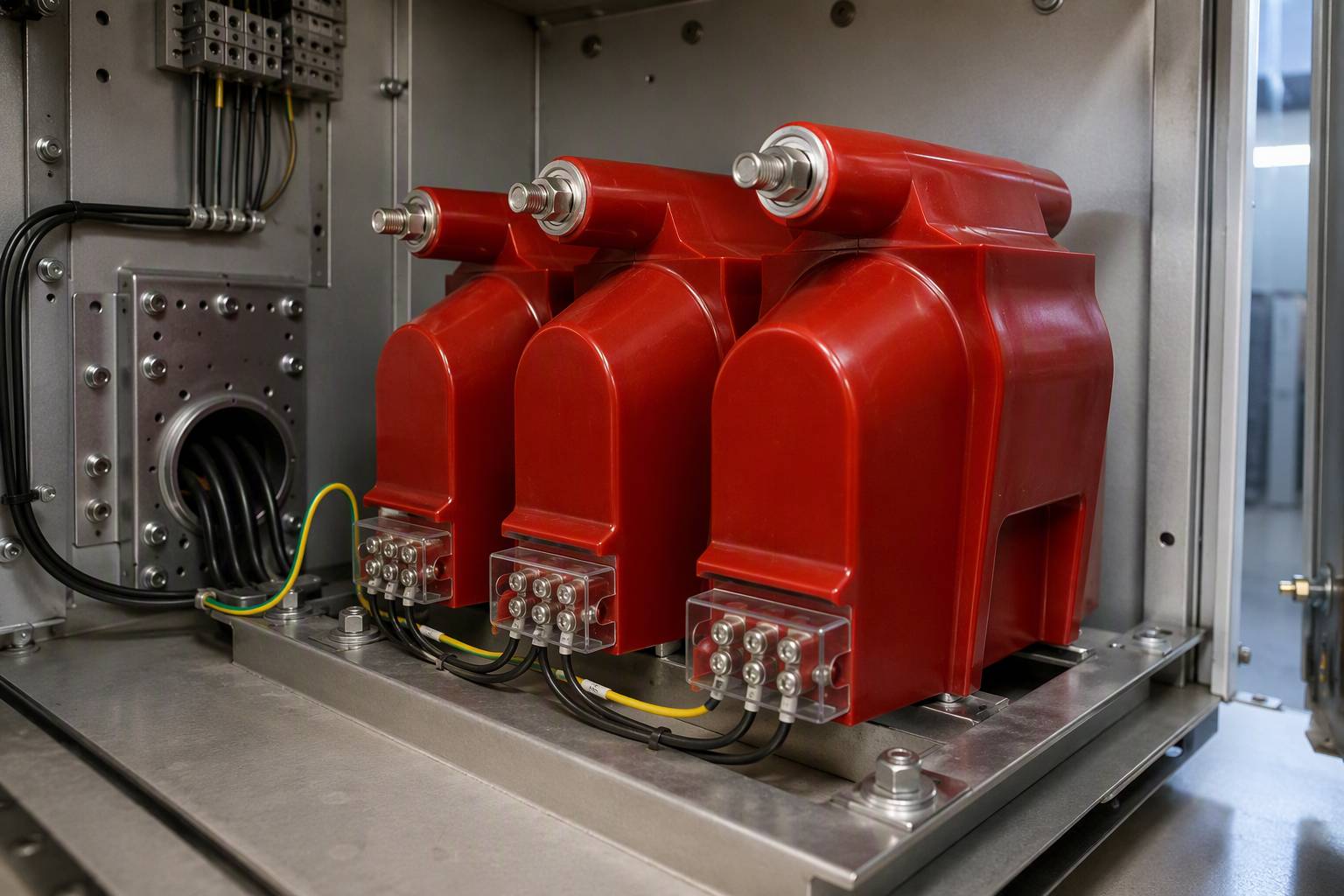
A three-phase system may use three single-phase voltage transformers or a suitable three-phase transformer arrangement. The appropriate design depends on the system's grounding method, required voltage measurements, protection scheme and available equipment.
Common Voltage Transformer Connections
Voltage transformer configurations determine how primary and secondary windings are connected and which voltage signals are available. Common arrangements include:
- Phase-to-ground connection. A transformer measures the voltage between one phase and ground. Three transformers may be used to obtain phase-to-ground voltage measurements in a three-phase system.
- Phase-to-phase connection. A voltage transformer can be connected between two phases to measure line-to-line voltage, depending on the system design and transformer rating.
- Open-delta connection. Two voltage transformers can be connected in an open-delta arrangement for specific measurement and protection functions, including certain residual-voltage applications.
- Star and delta arrangements. Star and delta connections are used in different transformer systems and instrument-transformer configurations. The appropriate arrangement depends on the electrical network and the required measurement or protection functions.
The selected connection must be compatible with the system's grounding, insulation and protection design.
Different Types of Transformers in Context
The term "electrical transformer" covers several equipment categories. Understanding their differences helps prevent purchasing the wrong product.
| Transformer type | Main function | Typical application |
|---|---|---|
| Power transformer | Transfers electrical power between voltage levels | Transmission and distribution |
| Distribution transformer | Supplies electrical distribution networks | Commercial and residential power |
| Voltage transformer (VT/PT) | Provides reduced voltage signals for measurement and protection | Metering and switchgear |
| Current transformer (CT) | Provides scaled current signals | Current measurement and protection |
| Isolation transformer | Provides electrical isolation between circuits | Industrial and specialized equipment |
| Autotransformer | Changes voltage using a shared winding | Voltage adjustment and selected power applications |
These devices may share electromagnetic operating principles, but their designs, ratings and intended functions differ.
For electrical contractors, panel builders and equipment distributors in the Philippines, understanding these differences can help ensure that procurement specifications match the project's actual requirements.
Rated Voltage of Transformer Considerations
The rated voltage of a transformer is one of the most important specifications to verify before purchasing.
For a voltage instrument transformer, the primary rated voltage must match the electrical system and its intended connection. The secondary rated voltage must be compatible with the connected meters, relays and monitoring equipment.
When reviewing rated voltage, consider:
- Primary rated voltage
- Secondary rated voltage
- Voltage transformation ratio
- System frequency
- Insulation level
- System grounding
- Required accuracy class
- Applicable technical standards
For example, a voltage transformer specified for a particular medium-voltage switchgear system cannot automatically be substituted with another transformer simply because the physical dimensions appear similar. Its electrical ratings, insulation coordination and intended connection must also be compatible.
For three-phase systems, confirm whether the stated rated voltage refers to phase-to-phase voltage or phase-to-ground voltage. This distinction is particularly important when preparing technical specifications and requesting quotations.
Comparing Voltage and Current Transformers
Voltage transformers and current transformers are both instrument transformers used in electrical measurement and protection systems. Although they share some operating principles, they perform different functions and must be selected according to different electrical requirements. Our guide to the basics of current transformers covers the CT side of that pairing in more detail.
Current Transformer vs. Voltage Transformer
A voltage transformer measures system voltage indirectly by providing a scaled voltage signal. A current transformer measures system current indirectly by providing a scaled current signal. Both can provide electrical isolation between high-voltage power circuits and connected instruments, subject to their design and ratings.
| Voltage transformer (VT/PT) | Current transformer (CT) | |
|---|---|---|
| Main purpose | Voltage measurement | Current measurement |
| Primary circuit | Connected across the voltage being measured | Connected in series with the current-carrying circuit |
| Output | Reduced secondary voltage | Reduced secondary current |
| Typical applications | Voltage metering and voltage protection | Current metering and overcurrent protection |
| Common specifications | Voltage ratio, accuracy class, burden, insulation | Current ratio, accuracy class, burden, insulation |
Functional Differences
Voltage transformer operation. A voltage transformer is typically connected in parallel with the circuit whose voltage must be measured. Its secondary winding supplies a reduced voltage signal to suitable instruments or protective relays. It is generally designed to operate within specified voltage and burden limits.
Current transformer operation. A current transformer is installed so that the primary conductor carries the current being measured. Its secondary winding provides a scaled current signal to connected instruments or protective relays.
A conventional current transformer with a current-carrying primary must not have its secondary circuit left open while energized, unless the device is specifically designed for that operating condition. Dangerous secondary voltages can develop. This is a key safety distinction when installing or maintaining instrument transformers.
Practical Applications
Voltage transformers and current transformers are often used together in electrical distribution and protection systems. For example, a medium-voltage switchgear installation may use voltage transformers to monitor bus voltage and current transformers to measure feeder current.
The signals can be supplied to compatible meters, power monitoring equipment and protective relays. Depending on the system design, these measurements may support:
- Voltage monitoring
- Current monitoring
- Energy measurement
- Power calculations
- Electrical fault detection
- Protection and control functions
For a project requiring both voltage and current measurement, specify the VT and CT separately and verify that their secondary ratings and accuracy characteristics match the connected equipment.
You can explore NAHU Electric's electrical equipment range at nahugroup.com when researching components for electrical distribution and measurement applications.
Factors to Consider When Choosing a Voltage Transformer
Selecting a voltage transformer involves more than matching the primary voltage. The complete electrical application, installation conditions and connected equipment must be considered. If you are already clear on ratios, secondaries and accuracy classes, our voltage transformer selection guide covers those specifics in greater depth.
1. Application Requirements
Begin by identifying exactly what the voltage transformer needs to do. Is it intended for voltage measurement, revenue or energy metering, protective relay operation, industrial monitoring, high-voltage testing, or power-system control?
Different applications require different transformer characteristics. For example, a metering application may prioritize a specified accuracy class across its operating burden range, while a protection application may require characteristics suited to the relevant relay and fault conditions.
If the transformer will be installed inside switchgear, confirm that its mounting dimensions, terminals, insulation requirements and connection arrangement are compatible with the panel design.
2. Voltage Regulation of Transformer
Voltage regulation describes how a transformer's secondary voltage changes between specified operating conditions, commonly comparing no-load and loaded operation. It is influenced by winding resistance, leakage reactance, load characteristics and power factor.
A simplified expression for voltage regulation is:
Voltage regulation (%) = (V no-load − V full-load) / V full-load × 100
This expression uses the full-load secondary voltage as the reference. The precise definition and test conditions should be confirmed against the applicable standard and manufacturer's documentation.
For instrument voltage transformers, it is also important to distinguish conventional power-transformer voltage regulation from measurement accuracy under specified burden conditions. A VT used for metering or protection must satisfy its required accuracy and performance specifications over the intended operating range. When reviewing a datasheet, check the rated burden, accuracy class and applicable performance limits rather than relying on a general statement that the transformer has "good voltage regulation."
3. Load Requirements and Burden
For a voltage instrument transformer, the secondary burden is the electrical load connected to its secondary winding. The burden may include meters, protective relays, wiring and other connected devices. It is commonly expressed in volt-amperes (VA), with the applicable power factor specified where relevant.
A transformer must be selected for a burden compatible with its rated performance. When the connected burden exceeds the specified range, measurement accuracy and operating performance may be affected.
To assess burden requirements:
- Identify all devices connected to the secondary circuit.
- Obtain their burden specifications.
- Include the effect of secondary wiring where applicable.
- Check the total against the transformer's rated burden and accuracy requirements.
- Confirm the manufacturer's permitted operating conditions.
Do not confuse a voltage transformer's VA burden rating with the power rating of a conventional power transformer. They describe different operating requirements.
4. Accuracy Class
Accuracy class is particularly important when selecting voltage transformers for measurement and protection. For metering applications, the required accuracy depends on the measurement purpose and applicable standards. For protection applications, performance requirements depend on the type of protective relay and the electrical conditions the transformer must reproduce.
Ask the manufacturer to confirm the applicable accuracy standard, the metering or protection class, the rated burden, the relevant operating range and any required transient performance. A transformer designed for one function should not automatically be assumed suitable for another.
5. Safety Standards and Certifications
Electrical equipment should be selected according to the applicable electrical codes, technical standards and project requirements. Depending on the equipment type and intended application, relevant standards may include the IEC 61869 series for instrument transformers, IEC 60044 legacy standards where referenced by existing specifications, applicable IEC or IEEE standards for power transformers and related equipment, and relevant Philippine electrical and project requirements.
The exact standard depends on the transformer category, voltage level, application and project specification. When evaluating suppliers, request the applicable datasheet, test documentation, insulation ratings and any required conformity or certification documents.
For projects in the Philippines, confirm requirements with the responsible electrical engineer, utility, project owner or authority having jurisdiction. A supplier's general statement of compliance should not replace verification of the exact model and its documentation.
6. Installation Environment
The installation location can influence transformer design and selection. Consider whether the transformer will be installed:
- Indoors or outdoors
- In a switchgear cabinet or a substation
- In a humid or coastal environment
- In an area exposed to dust or pollution
- At an elevated installation altitude
- Where temperature variations are significant
The Philippines includes tropical and coastal environments where humidity, corrosion and pollution may be important design considerations.
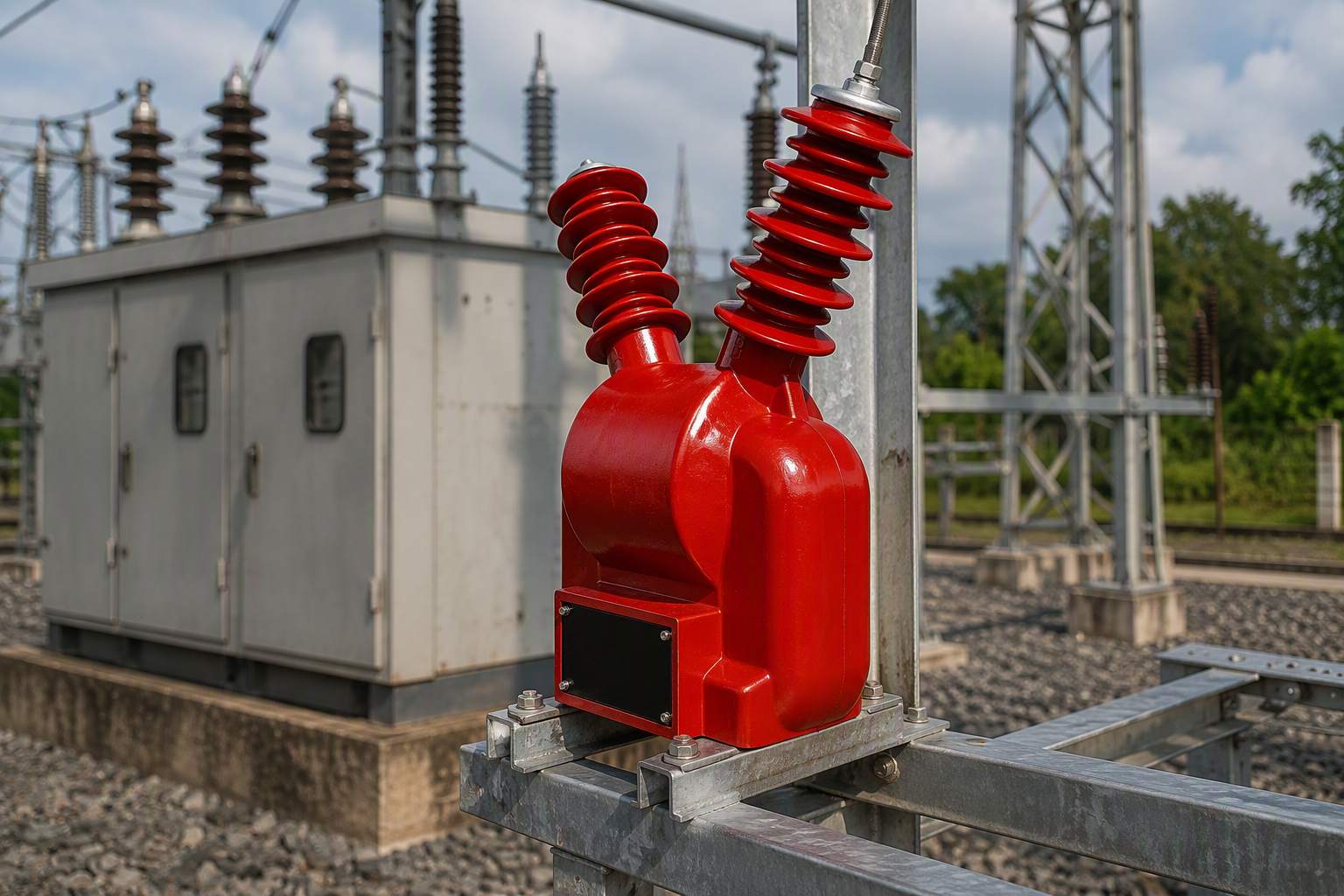
Check the manufacturer's specified operating temperature, enclosure or housing protection, insulation requirements and suitability for the installation environment. For outdoor equipment, confirm that the product is designed and rated for the intended exposure.
7. Supplier Reliability and Technical Support
Selecting the right voltage transformer also involves evaluating the supplier's ability to provide accurate technical information and suitable documentation. Before placing an order, confirm:
- Product datasheets and drawings
- Manufacturing specifications
- Quality-control procedures
- Routine test documentation
- Applicable certifications
- Delivery lead time
- Packaging and shipping requirements
- Technical support and after-sales arrangements
For international procurement, ensure that the quotation clearly identifies the exact model, technical ratings, quantity, delivery terms and required documentation. This helps reduce misunderstandings between buyers, manufacturers, contractors and project engineers.
How to Request a Voltage Transformer Quotation
If you are purchasing voltage transformers for a Philippine electrical project, preparing a clear request for quotation (RFQ) can help suppliers identify suitable equipment. Include the following information whenever available:
| Required information | Example or explanation |
|---|---|
| Application | Metering, protection, monitoring, or another purpose |
| Transformer type | Inductive VT, capacitive VT, or other specified design |
| Primary rated voltage | System voltage and connection |
| Secondary rated voltage | Required output voltage |
| System configuration | Single-phase or three-phase |
| Frequency | Required operating frequency |
| Accuracy class | Required metering or protection class |
| Rated burden | Connected equipment requirements in VA |
| Insulation level | Required insulation and withstand ratings |
| Installation | Indoor or outdoor |
| Quantity | Number of units required |
| Applicable standards | Project-specific IEC, IEEE, or other requirements |
| Delivery destination | City or project location in the Philippines |
If you do not know all the technical details, provide the available system information and the project drawings or specifications. A qualified manufacturer or electrical engineer can help clarify the remaining requirements before a final model is selected.
Conclusion
Choosing the right voltage transformer requires a clear understanding of its function, electrical ratings, configuration, accuracy, burden, safety requirements and installation environment. The main considerations include:
- Identifying whether the application requires a voltage instrument transformer, power transformer, or DC conversion device.
- Matching the primary and secondary rated voltages to the electrical system.
- Selecting an appropriate single-phase or three-phase configuration.
- Checking accuracy class, burden, insulation and applicable standards.
- Confirming environmental suitability and installation requirements.
- Reviewing supplier documentation and technical support before ordering.
For electrical contractors, distributors, panel builders and industrial buyers in the Philippines, a well-prepared technical specification can make the sourcing process clearer and help avoid incompatible equipment.
Explore Electrical Equipment with NAHU Electric
Looking for electrical equipment for your next project?
Visit NAHU Electric at nahugroup.com to explore its product range and contact the company regarding your electrical equipment requirements.
Whether you are researching instrument transformers, current transformers for metering and protection, or high-voltage switchgear solutions, provide your project specifications so the appropriate equipment can be identified.
Contact NAHU Electric through its official website to discuss your requirements and request further product information.
Frequently asked questions about voltage transformers
What is a voltage transformer?
A voltage transformer (VT), also called a potential transformer (PT) in instrument-transformer applications, is an electrical device that transforms voltage from one level to another. In measurement and protection systems it reduces a high primary voltage to a lower, standardised secondary voltage suitable for meters, monitoring devices and protective relays. It operates by electromagnetic induction through primary and secondary windings wound around a magnetic core, and the voltage ratio depends primarily on the number of turns in each winding.
What is the difference between a voltage transformer and a power transformer?
They are different instruments with different jobs. A power transformer is designed to transfer substantial electrical power to distribution or industrial loads. A voltage instrument transformer is designed for measurement and protection circuits, supplying a reduced voltage signal. The two categories have different ratings, insulation coordination and intended connections, so a voltage transformer cannot be substituted by a power transformer simply because the physical dimensions appear similar.
Can a conventional transformer convert DC voltage?
No. A conventional transformer cannot directly transform steady direct current, because its magnetic flux must change to induce a voltage in the secondary winding. For DC applications the appropriate device is generally a DC-DC converter, or a DC voltage transducer if the requirement is measurement rather than power conversion. Do not specify a conventional AC instrument voltage transformer for a DC application without confirming the actual measurement or conversion requirements.
What is the difference between a voltage transformer and a current transformer?
A voltage transformer measures system voltage indirectly by providing a scaled voltage signal and is connected across the voltage being measured. A current transformer measures system current indirectly by providing a scaled current signal and is installed so the primary conductor carries the current being measured. Typical specifications also differ: voltage ratio for a VT, current ratio for a CT. Both are instrument transformers and are often used together, for example in medium-voltage switchgear where a VT monitors bus voltage and a CT measures feeder current.
What is the difference between a single-phase and a three-phase voltage transformer?
A single-phase configuration suits single-phase systems or individual phase measurement, giving one voltage circuit or phase reference. A three-phase configuration is used on three-phase power systems and provides multiple phase voltages, typically in switchgear, substations and industrial power systems. A three-phase system may use three single-phase voltage transformers or a suitable three-phase arrangement. The right choice depends on the system grounding method, the voltage measurements required, the protection scheme and the available equipment.
What does the burden rating of a voltage transformer mean?
For a voltage instrument transformer, the secondary burden is the electrical load connected to its secondary winding, which may include meters, protective relays, wiring and other connected devices. It is commonly expressed in volt-amperes (VA). The transformer must be selected for a burden compatible with its rated performance; when the connected burden exceeds the specified range, measurement accuracy and operating performance may be affected. A voltage transformer VA burden rating is not the same as the power rating of a conventional power transformer.
Why does accuracy class matter when choosing a voltage transformer?
For metering, the required accuracy depends on the measurement purpose and the applicable standards; for protection, performance requirements depend on the type of protective relay and the electrical conditions the transformer must reproduce. A transformer designed for one function should not automatically be assumed suitable for another. Ask the manufacturer to confirm the applicable accuracy standard, the metering or protection class, the rated burden, the relevant operating range and any required transient performance.
What information should I include in a voltage transformer RFQ?
Include the application, transformer type, primary rated voltage, secondary rated voltage, single-phase or three-phase configuration, frequency, accuracy class, rated burden, insulation level, indoor or outdoor installation, quantity, applicable standards and the delivery destination. If you do not know all the technical details, provide the available system information together with the project drawings or specifications, and a qualified manufacturer or electrical engineer can help clarify the remaining requirements before a final model is selected.
Sources and further reading
- IEC 61869-3:2011 — Instrument transformers, Part 3: Additional requirements for inductive voltage transformers — the IEC product standard for inductive voltage transformers used with electrical measuring instruments and protective devices
- IEC 61869-5:2011 — Instrument transformers, Part 5: Additional requirements for capacitor voltage transformers — the IEC product standard covering capacitive voltage transformers
- IEC 61869-1:2023 — Instrument transformers, Part 1: General requirements — the product family standard for instrument transformers above 1 kV AC, including error limits and type, routine and commissioning tests
Published September 21, 2026 · Nahu Group (NAHU Electric Technology)