
Wire gauge and amperage is one of those topics that feels "technical" until you realize it's really about one thing: heat. Pick the right electrical wire gauge for the current in your circuit, and the wire runs cool enough to last for decades. Get it wrong — undersize the conductor for the load — and you've built a space heater inside your wall. This guide breaks down wire gauge and amperage in practical terms, from how to determine wire gauge and read standard wire gauge charts to breaker matching, voltage-drop considerations, and real-world advice for household wiring, subpanels, and high-demand appliances.
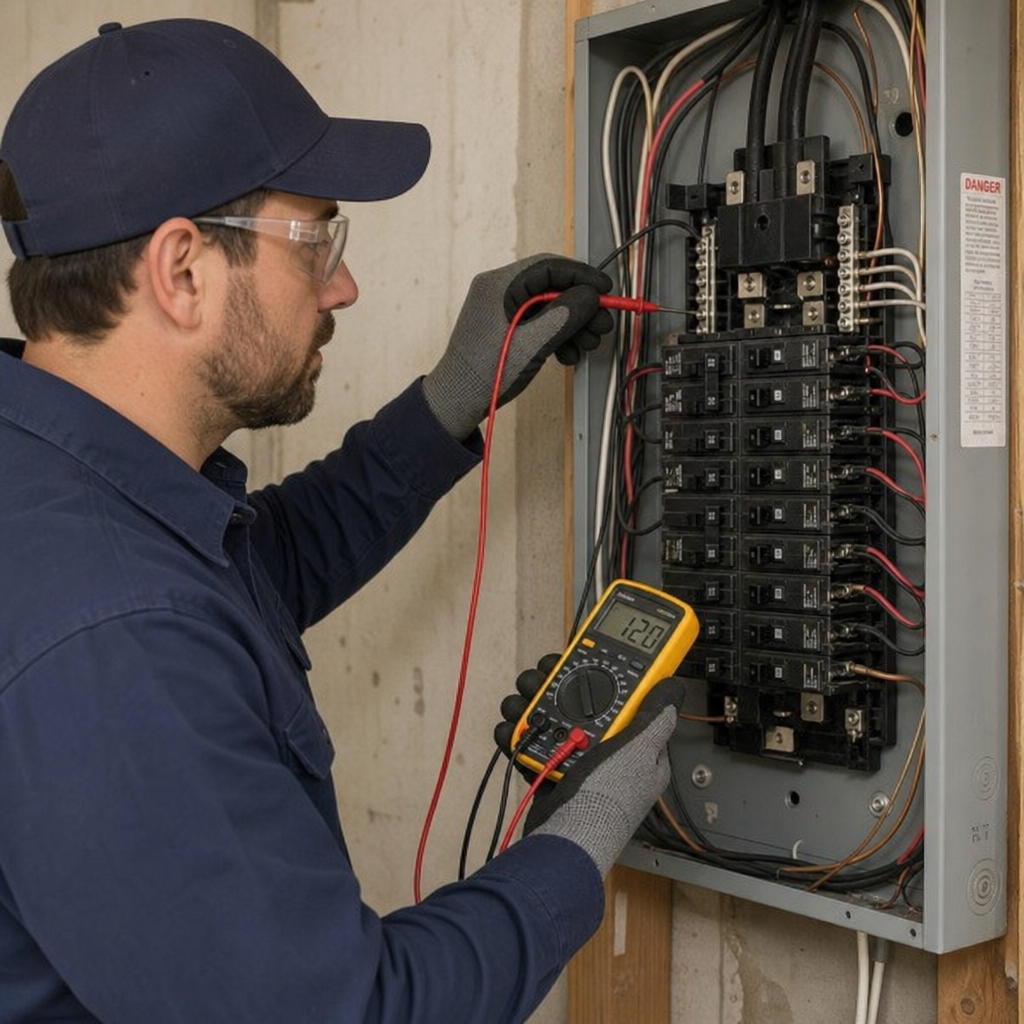
How Does Wire Gauge Work? (Wire Gauges Explained)
In North America, most building wire uses American Wire Gauge (AWG). The key idea behind how does wire gauge work is simple:
- Lower AWG number = thicker wire = more copper/aluminum = lower resistance
- Higher AWG number = thinner wire = higher resistance
That resistance matters because current (amperage) flowing through a wire creates heat. So when people compare wire gauge vs amperage (or wire gauge versus amperage), they're really comparing how much current a given wire size can carry before it begins to heat to an unsafe level.
The Relationship: Wire Gauge and Amperage Capacity (Ampacity)
Ampacity is the maximum continuous current a conductor can carry under specific conditions without exceeding its temperature rating. In plain language:
- Thicker wire (smaller AWG) can safely carry more amps
- Thinner wire (larger AWG) carries fewer amps
This is why sizing electrical wire isn't just a preference — it's a safety requirement. Ampacity is influenced by:
- Conductor material (copper vs aluminum wire ampacity differs)
- Insulation temperature rating (commonly 60°C / 75°C / 90°C)
- Installation (bundled cables, conduit fill, attic heat)
- Continuous load rules (often size to 125% of continuous loads)
Standard Wire Gauge Chart (and Where to Find Official Tables)
A standard wire gauge chart (sometimes searched as amplifier gauge chart or AWG wire ampacity chart) gives a quick view of typical ampacity ranges by size, but the authoritative reference is the NEC (National Electrical Code) or your region's equivalent.
You can consult:
- The NEC (Table 310.16) via codebooks or trusted electrical education sites
- Manufacturer spec sheets for the exact cable type (NM-B, THHN, etc.)
Many electricians also keep a laminated standard wire gauge chart on hand for field work.
Important: charts vary by insulation rating and installation method, so treat any "one-size-fits-all" chart as a starting point — not the final answer.
Breaker Size vs Wire Gauge: The Household Rules of Thumb
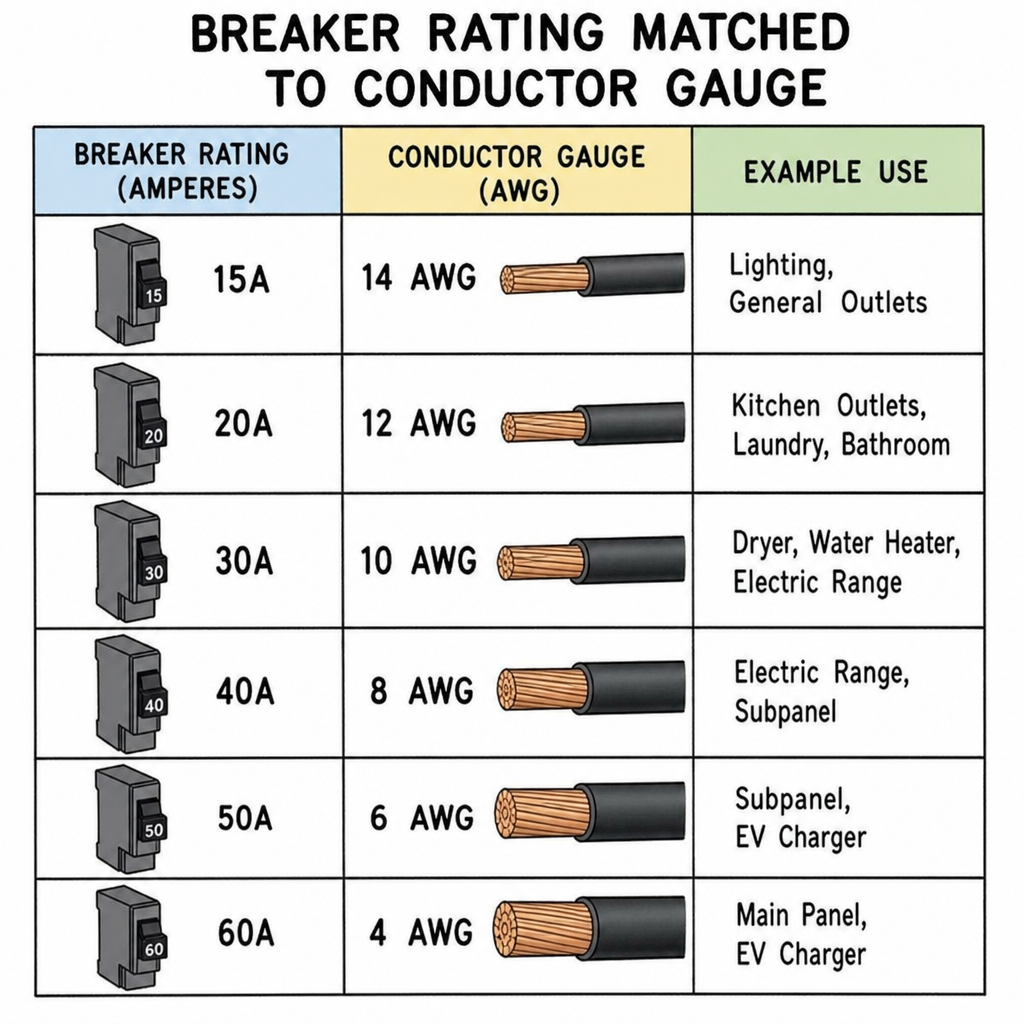
For wire gauge for house wiring, you'll commonly see these pairings in typical U.S. residential work (assuming copper conductors and common conditions):
- 14 AWG copper — 15 amps (common lighting and general outlets)
- 12 AWG copper — 20 amps (kitchen, bathroom, laundry, garage receptacles in many cases)
- 10 AWG copper — 30 amps (water heaters, dryers depending on nameplate)
- 8 AWG copper — 40–50 amps (ranges, subfeeds, some HVAC)
- 6 AWG copper — 55–65 amps (subpanels, larger loads; depends heavily on insulation rating)
This is what people mean when they ask: what gauge wiring for house, standard gauge wiring for house, standard gauge wire for home wiring, home wiring gauge, housing wire gauge, or household wire gauge.
And it ties directly to breaker size vs wire gauge: the breaker should protect the wire. If the breaker allows more current than the wire can safely carry, the wire becomes the fuse — which is a fire hazard.
12 AWG vs 14 AWG Current Capacity (Real-World Meaning)
The 12 AWG vs 14 AWG current capacity difference shows up in daily life:
- 14 AWG is usually fine on a 15A circuit for lights and basic loads.
- 12 AWG is preferred (and often required) where 20A circuits are used — like many kitchen countertop receptacle circuits.
If you're asking what wire gauge for 20 amps, the common answer in homes is 12 AWG copper (with proper terminals rated for it).
How to Determine Wire Size (and How to Read Wire Gauge)
If you're staring at a cable and wondering how can i tell what gauge wire i have or how do i know what gauge wire i have, start here:
1) Read the Cable Jacket (Easiest)
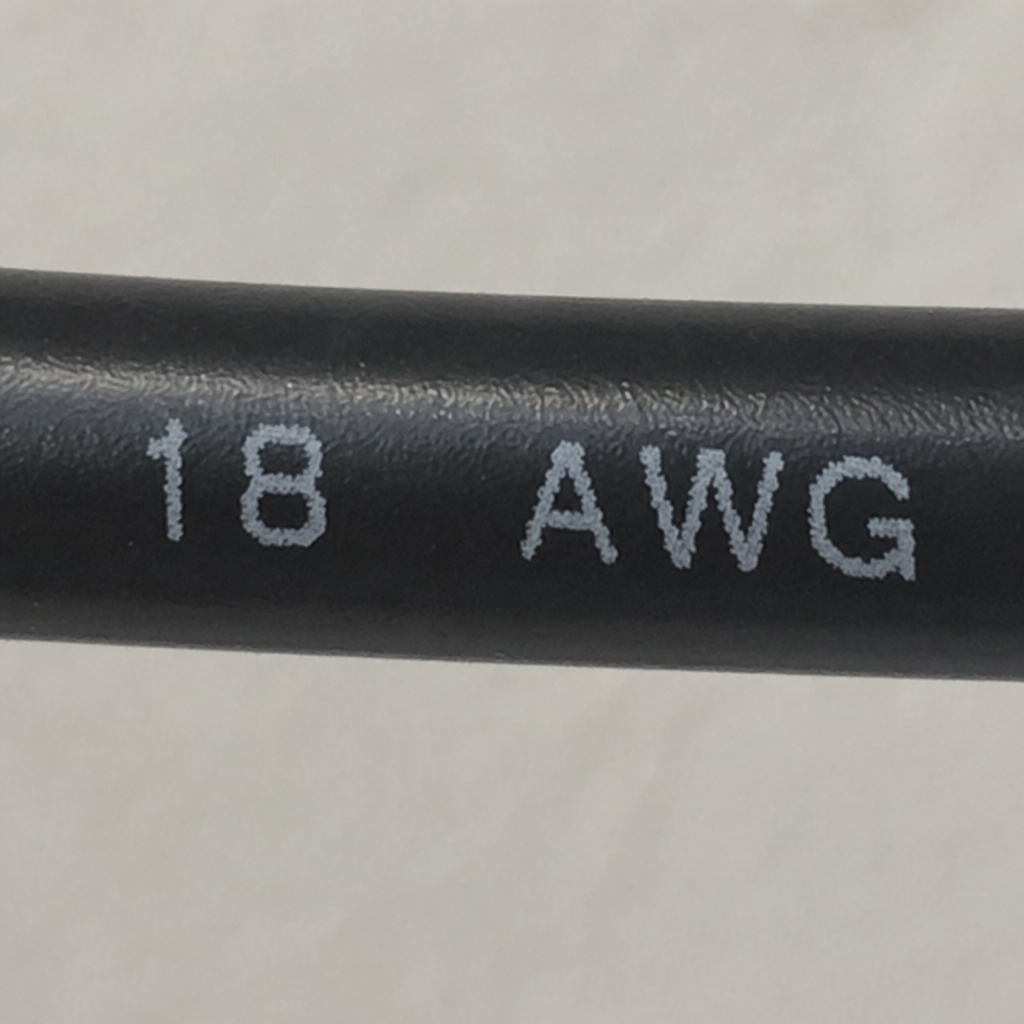
Most NM-B/Romex or THHN conductors have printing like: "12 AWG" or "14/2 with ground" (two insulated conductors plus ground). This is literally how to read wire gauge in the simplest way.
2) Measure the Conductor (If Markings Are Missing)
If the jacket is worn off, use a wire gauge tool or calipers. This is another practical method for how to determine wire gauge.
3) Confirm Circuit Rating at the Panel (But Don't Assume)
Knowing the breaker size helps, but people sometimes swap breakers incorrectly. Always verify the actual electrical wire gauge installed before changing a breaker.
How to Calculate Wire Size for Amps: Beyond the Simple Chart
When loads get bigger or runs get longer, you need more than a rule of thumb. Here's a practical process for how to calculate wire size for amps and how to determine wire size reliably:
- Find the load current (amps) from the nameplate or calculation.
- Identify continuous load (3+ hours). If continuous, multiply amps by 125% (common NEC approach).
- Choose conductor material (copper vs aluminum).
- Select insulation type and rating (NM-B, THHN, etc.).
- Use NEC ampacity table 310.16 (or manufacturer tables) to pick an ampacity that meets/exceeds your adjusted load.
- Check voltage drop for long runs (see next section).
- Match breaker/fuse to conductor (breaker size vs wire gauge).
- Confirm terminal ratings (some devices are rated 60°C only, which changes allowable ampacity).
This is the practical backbone of sizing electrical wire and selecting electrical cable size correctly.
Voltage Drop and Best Wire Size for Long Runs
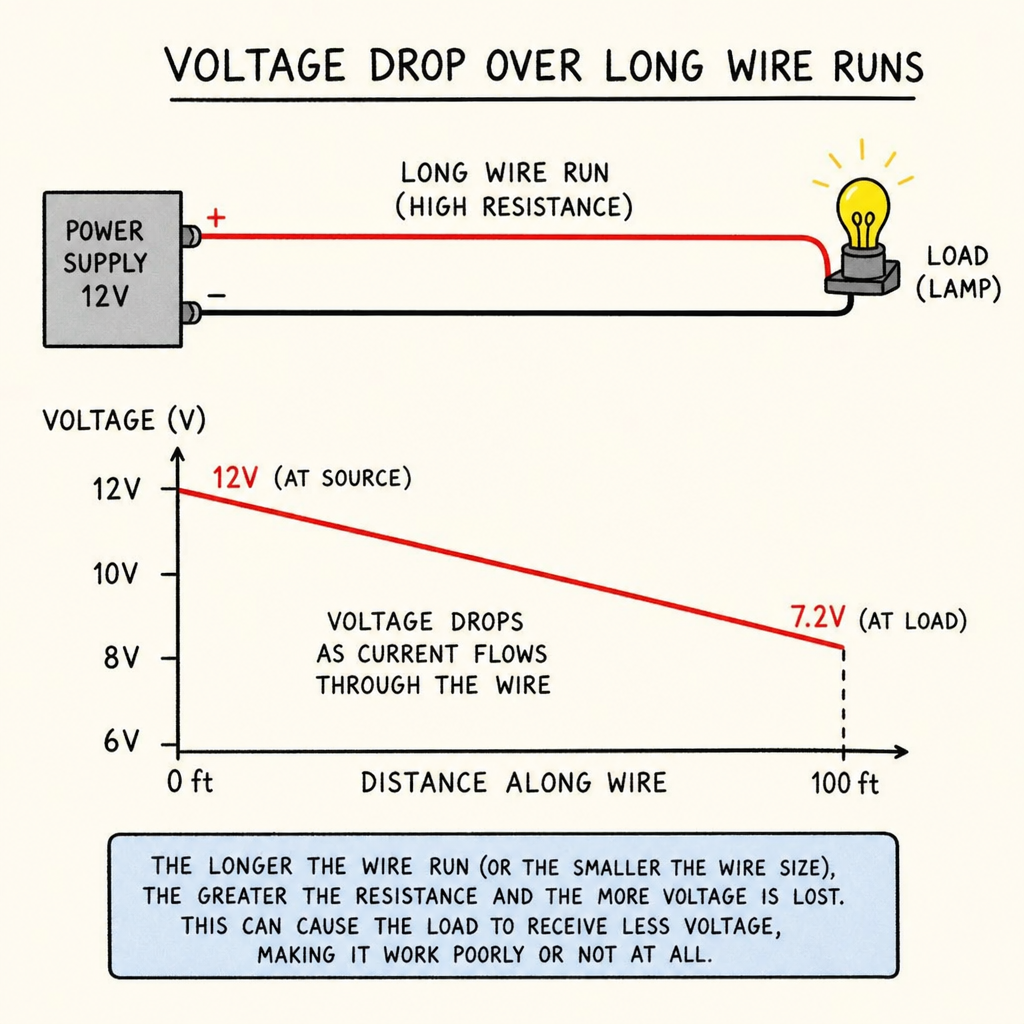
Even if a wire is "safe" for amps, a long distance increases resistance and can cause voltage drop — leading to dim lights, sluggish motors, and hotter conductors. A quick guideline many electricians use:
Aim for about 3% voltage drop on branch circuits (and ~5% total feeder + branch).
For planning, many people use a voltage drop wire sizing calculator (online tools) where you enter: Amps, One-way distance, Voltage (120V/240V/12V), Wire material and gauge.
Wire Gauge for 12V Circuits vs Wire Gauge for 240V Circuits
Voltage changes the current required for the same power (watts). That's why:
- Wire gauge for 12V circuits often needs to be much thicker than you'd expect — because 12V systems can draw high amps and are more sensitive to voltage drop.
- Wire gauge for 240V circuits can often be smaller for the same wattage compared to 120V, because the current is lower (power = volts × amps).
Common Questions People Ask (Answered Clearly)
How many amps can 20 gauge wire handle?
In general, 20 AWG is used for low-power electronics, not household branch circuits. Its safe ampacity is relatively low and depends heavily on insulation type and installation. It is not code-compliant for typical branch circuit wiring.
How many amps can 2 gauge wire handle?
2 AWG is a large conductor often used for high-current feeders, batteries, or service/large subpanel work depending on design. Its ampacity depends on insulation and installation conditions — consult NEC Table 310.16 for the specific case.
Extension Cord Wire Gauge Rating: Why It Matters
An extension cord wire gauge rating is critical because cords are often coiled, run under rugs, or used at the limit — conditions that trap heat. For high-draw tools and appliances:
- Use the shortest cord possible
- Prefer thicker wire (lower AWG)
- Avoid "light-duty" cords for heavy loads
- Uncoil cords under load to reduce heat buildup
Household Wiring Scenarios: Practical Picks and Safety Tips
Here's actionable guidance for wire gauge for house wiring decisions and how to choose wire gauge for subpanel planning:
Typical branch circuits (120V)
- 15A lighting/outlets: commonly 14 AWG copper (where allowed)
- 20A kitchen/bath/laundry receptacles: commonly 12 AWG copper
- Dedicated appliance circuits: follow nameplate + code (often 12 or 10 AWG)
Subpanels (feeders)
Choosing feeder cable size is more involved:
- Calculate load (or use a proper dwelling load calculation method)
- Consider distance (voltage drop)
- Consider future expansion
- Choose copper or aluminum appropriately
- Verify lugs/terminals are rated for the chosen conductor
High-demand appliances
For wire gauge for electric range, dryers, HVAC, and water heaters, always follow: the appliance nameplate, manufacturer instructions, and code requirements. Range circuits are commonly 240V and may require larger conductors depending on rating and distance.
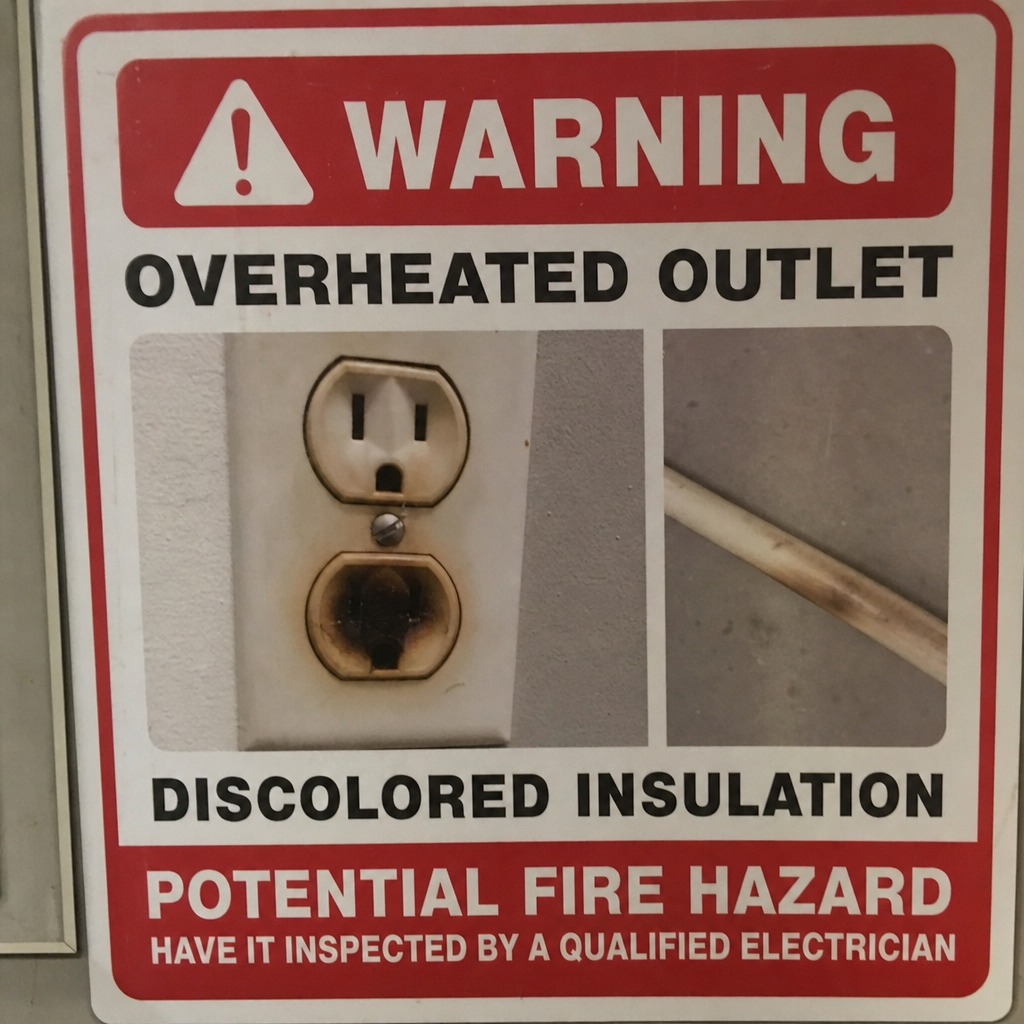
Red flags: symptoms of undersized wire overheating
Stop and investigate if you notice:
- Warm cover plates or receptacles
- Flickering under load
- Frequent breaker trips with normal usage
- Discolored insulation or a "hot plastic" smell
These can indicate incorrect electrical cable size, loose connections, or overloaded circuits.
A Note on Measuring Current and Using Transformers
If you're troubleshooting or monitoring loads, measuring current accurately is key — especially when validating assumptions about wire gauge and amperage. Current transformers (CTs) let you safely measure AC current without breaking the circuit, making them a go-to for submetering and diagnostics. For more, see our guide on current transformer modules for new installations and retrofitting.
Key Takeaways (Quick Checklist)
- Wire gauge vs amperage is mainly about heat and allowable ampacity.
- Use a standard wire gauge chart as a guide, but verify with NEC ampacity table 310.16 and your actual installation conditions.
- Match breaker size vs wire gauge so the breaker protects the conductor.
- For long distances, prioritize voltage-drop checks and consider upsizing (use a voltage drop wire sizing calculator).
- When in doubt about how to determine wire size or how to determine wire gauge, read the jacket markings first — then measure if needed — and consult a licensed electrician for any work beyond your comfort zone.
Published August 11, 2026 · Nahu Group (NAHU Electric Technology)