
Outages on a rural feeder have a simple, brutal arithmetic: a fault anywhere on 40 km of line means a patrol crew must drive, stop, climb and inspect until they find it. Every hour of searching is an hour of lost supply for everyone downstream — and for a utility, an hour of lost revenue and angry customers. This project story is about how one regional utility changed that arithmetic with NAHU pole-mounted vacuum circuit breakers, overhead fault indicators and revenue-grade metering on the same poles.
The brief was demanding: equipment that survives ten years outdoors with zero maintenance, holds metering accuracy while load swings between 5% and 120% of rating, and gives the operations team a way to locate faults without driving every kilometre of line. The result was a feeder automation scheme built around equipment that earns its keep from day one — no communication network required.
The Challenge
The utility operates a rural feeder network whose tap points sit up to 40 km from the nearest service centre. With spans crossing open farmland, every failure translated into hours-long outages: the control room knew a feeder had tripped, but nobody knew where. Fault location meant dispatching a crew with a test set, walking or driving the line section by section — an expensive truck roll that could consume most of a working day.
The utility set three hard requirements:
- Equipment that survives ten years outdoors with zero maintenance — no station buildings, no climate control, just poles and weather
- Metering that holds 0.5S accuracy while the load swings between 5% and 120% of rating, so every tap point bills correctly year-round
- A way for crews to know which section to patrol when a fault does happen — minutes, not hours, of searching
The engineering question was whether all three could be delivered on the same poles, within the tight clearances and budgets of a rural network. The answer was a combination of equipment that is standard in every NAHU catalogue — applied as a system.
The Solution
NAHU proposed a three-layer scheme, with each layer doing one job and no layer depending on a communication link that might not exist in the countryside:
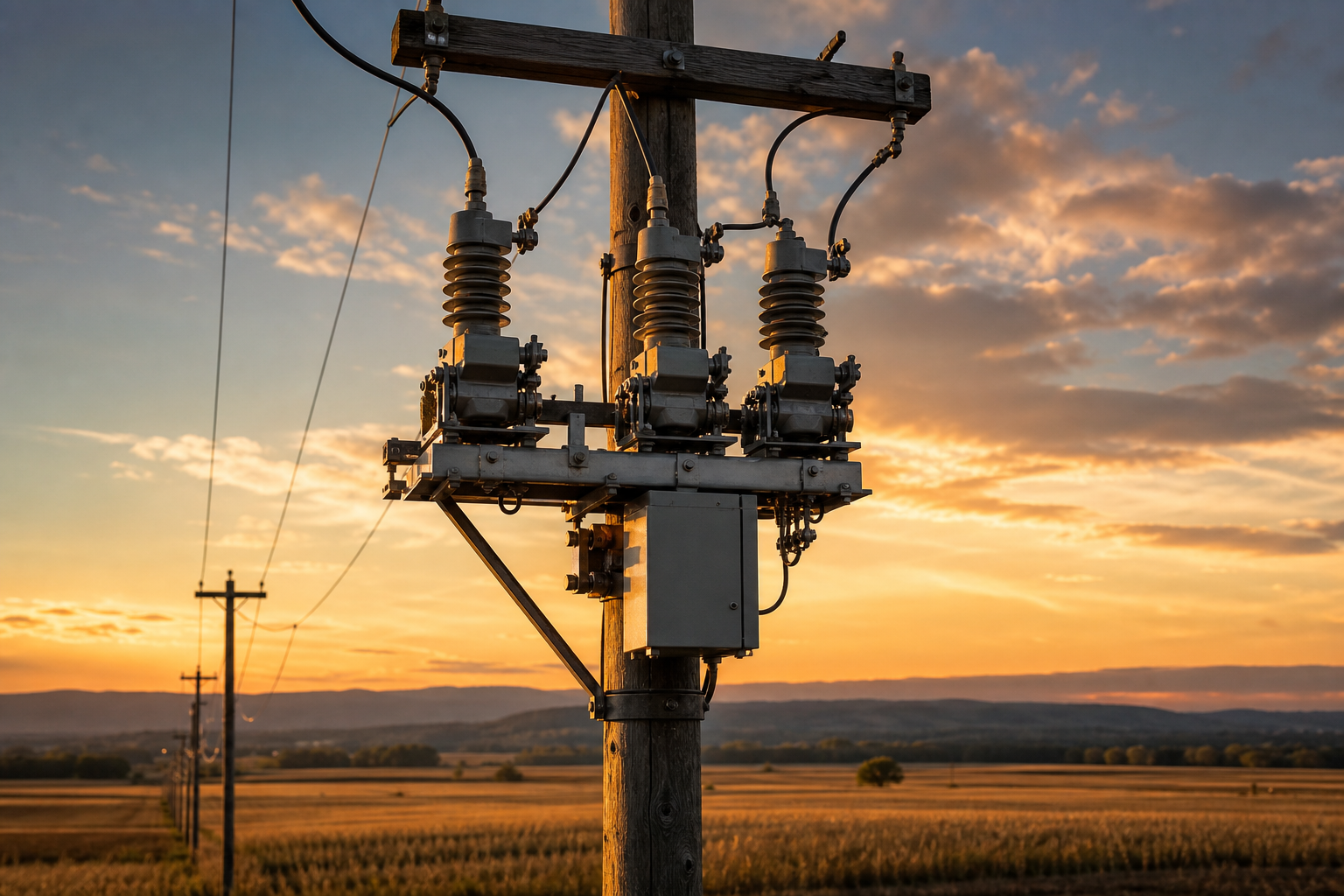
- ZW32-12F pole-mounted intelligent vacuum circuit breakers at each tap-off point, with fault-tripping logic so a downstream fault trips only the affected branch — selective tripping that leaves healthy sections energised
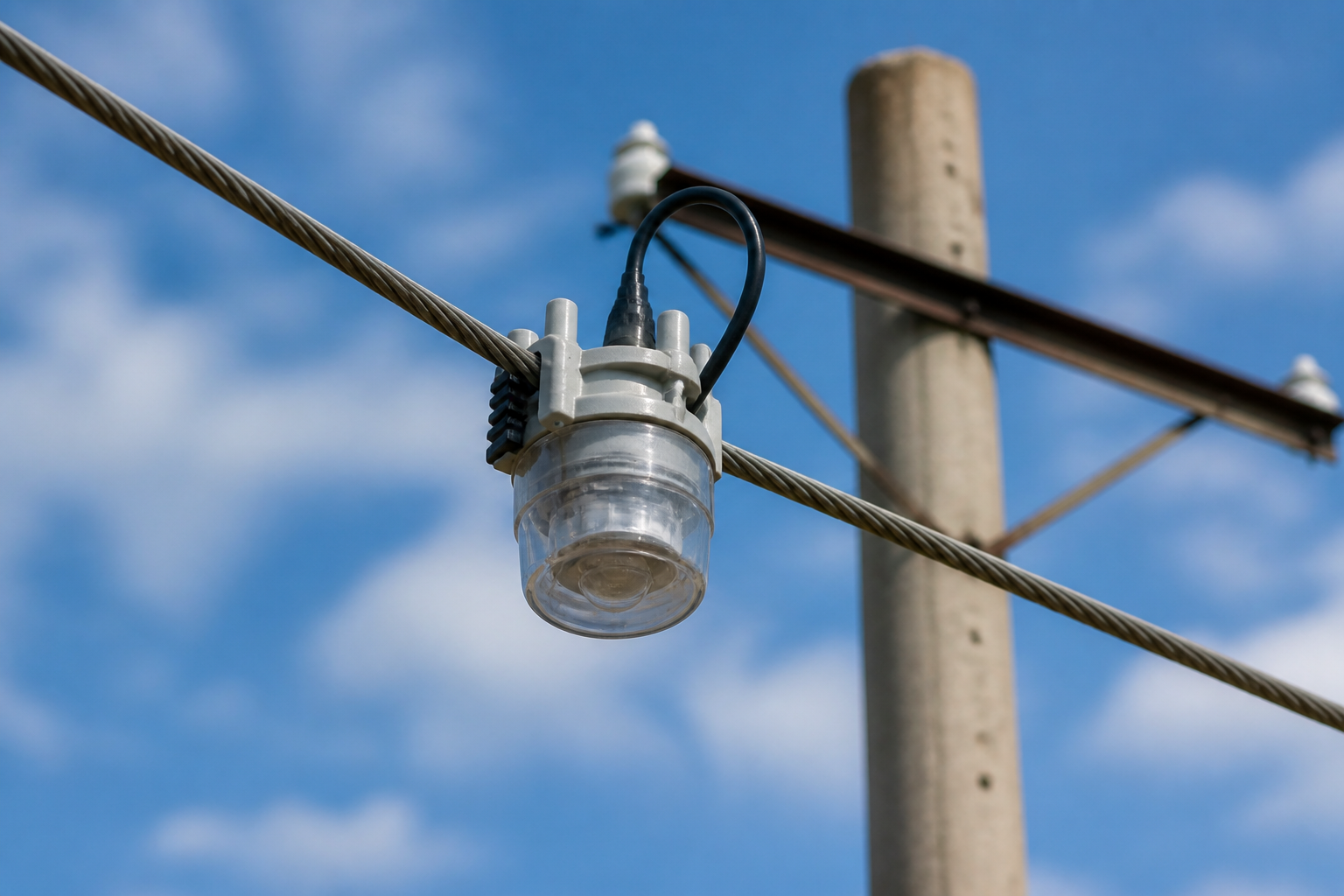
- JDG-Y multifunctional four-in-one overhead fault indicators at the sectionalising points, so patrol crews can drive the line and read, at a glance, which indicator has flagged the fault — and therefore which section to inspect
- Revenue metering on the same poles — combined current transformers with 0.5S metering cores, 10P10 protection cores and a zero-sequence output, epoxy-cast with umbrella skirts, feeding three-phase pole-mounted metering boxes with V/V connected CTs and VTs
The transformers were the piece that made everything else affordable. By combining metering, protection and zero-sequence sensing in a single epoxy-cast unit with dual-ratio 20/5 and 50/5 secondaries, one pole-top installation delivered the accuracy the billing office needed, the dynamic range the protection relays needed, and the flexibility to re-rate a tap point without ever opening the enclosure — the utility simply moves the metering box connection from one secondary tap to the other.
The scheme above shows the logic in one line: the substation feeds a main trunk, and each tap-off branch carries its own ZW32-12F pole-mounted breaker and JDG-Y fault indicator. When a branch faults, its breaker trips selectively — the trunk and the other branches stay energised — and the indicator on that branch flips to its flagged state. A crew driving the line reads the indicators like signposts and goes straight to the affected section.
Products Supplied
- ZW32-12F pole-mounted vacuum circuit breakers with fault-tripping logic and selective tripping coordination
- JDG-Y multifunctional four-in-one overhead fault indicators — phase-to-phase, earth-fault, short-circuit and load-current sensing in one clamp-on unit
- Combined bushing current transformers with 0.5S metering cores, 10P10 protection cores and zero-sequence output, epoxy-cast with umbrella skirts for outdoor pollution duty
- Three-phase pole-mounted metering boxes with V/V connected CTs and VTs for revenue billing at every tap point
- Hot-dip galvanised mounting frames and crossarms to match existing pole configurations
Outcome
After two full seasons of operation, the utility reported the results the scheme was designed to deliver:
- Faults are now located in minutes — patrol crews read the JDG-Y indicators and drive straight to the flagged section instead of searching the whole feeder
- Selective tripping isolates only the faulted section; healthy branches stay energised, so the outage footprint shrank dramatically
- Billing is accurate at every tap point, with meter readings held inside the 0.5S band across the full load swing
- Two load increases have been absorbed by switching the metering to the 50/5 dual-ratio secondary — no site visit, no outage, no enclosure opened
- No weather-related failures of the pole-mounted equipment across two seasons
The full engineering detail is documented in two case studies: the metering transformer specification on rural distribution line metering, and the bushing-mounted combined CTs used with the switchgear in pole-mounted switchgear metering.
Q&A
Question: How do the fault indicators help crews find faults faster?
Short answer: Each JDG-Y unit clamps onto the line and trips its flag when fault current passes. A crew driving the route reads the flags in sequence — the last indicator before the fault stays flagged — and patrols only the section between that pole and the next healthy one.
Question: Why do dual-ratio secondaries matter?
Short answer: A 20/5 and 50/5 dual-ratio CT lets the utility re-rate a tap point without touching the transformer — the metering connection just moves to the other secondary tap. When load grew twice, the utility absorbed both increases with no site visit and no outage.
Question: Do the VCBs need a communication network to work?
Short answer: No. The ZW32-12F breakers trip on local fault-detection logic, so selective isolation works with no SCADA and no communication links — an important advantage on rural feeders where connectivity is patchy. Communication can be added later if the utility wants remote status.
Question: How long before the pole-mounted equipment needs maintenance?
Short answer: The outdoor equipment was specified for ten years with zero maintenance, and the utility reported no weather-related failures over two seasons. The epoxy-cast transformers with umbrella skirts and the sealed metering boxes are the components that keep the interval long.
Nahu Group supplies pole-mounted vacuum circuit breakers, fault indicators and revenue metering for rural feeder automation — as individual products or as a coordinated scheme. See the pole-mounted VCB range and the fault indicator range, or talk to our engineering team about your feeder.
Published August 20, 2026 · Nahu Group (NAHU Electric Technology)