
Revenue metering is where a utility actually collects its income, and every weak point in that chain is money lost: a box that opens too easily, a seal that can be peeled, a meter that can be bypassed with a shorting link. This project story follows one overseas utility as it moved to prepaid and automated billing — and replaced its old, easily-opened metering points with NAHU high-voltage metering boxes engineered to survive the substation yard and resist tampering for years.
The project ran the full path from specification through factory testing to site commissioning, and the results show up in the utility's own numbers: tampering incidents dropped to zero, meter-reading time fell by more than half, and the cabinet design became the utility standard for every new metering point.
The Challenge
The utility was moving to prepaid and automated billing, which meant every metering point had to do more than measure — it had to be trustworthy. The existing points used meter boxes that were easy to open, and the audit trail showed the cost: several sites reported tampered seals, and in the worst cases meters had been bypassed entirely so the load ran unbilled.
The specification for the replacement hardware was strict:
- Sealable — every access point compatible with the utility's seal standards, so any intrusion leaves visible evidence
- Weatherproof to IP54 or better, standing for years in an exposed substation yard
- Large enough for two electronic meters plus a data concentrator, with room to work
- A secure way for meter readers to read the meters without opening the enclosure and exposing the terminals
The metering duty itself had to be revenue-grade: high-voltage metering boxes with V/V-connected CTs and VTs, accurate across the load range and stable outdoors for years.
Our Solution
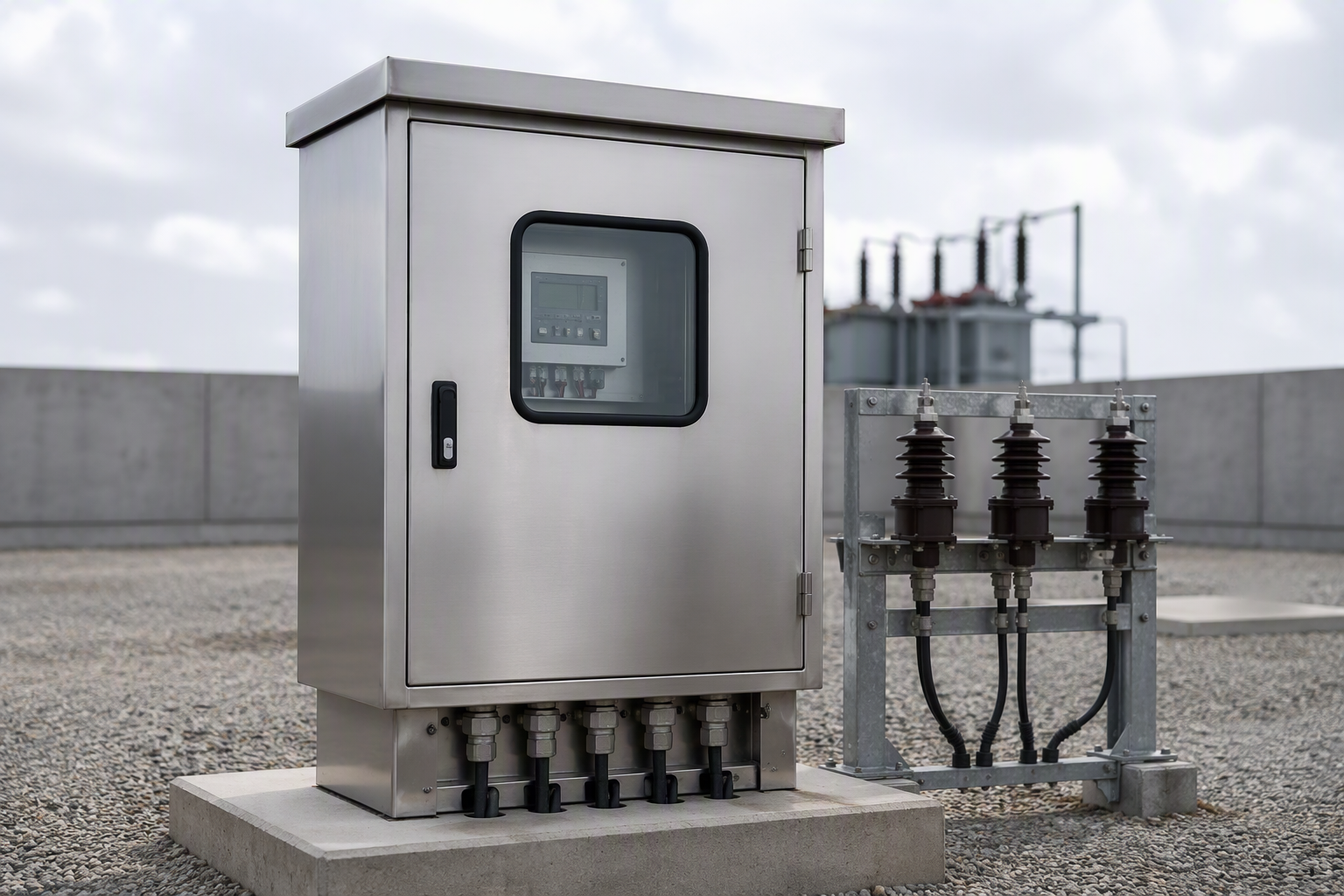
NAHU supplied stainless-steel outdoor metering cabinets engineered around one principle: every path to the meter should require breaking a seal. The design details mattered as much as the enclosure itself:
- A separate, sealable meter compartment — the meters live behind their own sealed door, isolated from the terminals and wiring behind them
- Armoured secondary cabling between the instrument transformers and the meter compartment, so the measurement path cannot be cut and bridged without visible damage
- An observation window sized for the meter displays, so readers record readings and check status without opening the door — no seal broken, no risk of interference
- Cable entries designed to resist bypass attempts — no open gland, no slack to reach a shorting link through
- Each cabinet shipped with a wiring diagram and a seal register, so the utility could record every seal number, verify the installation and audit it later
The metering duty was handled by JLS-series high-voltage metering boxes with V/V-connected CTs and VTs in 0.2S/0.5S accuracy — the same instrument-transformer technology the utility's engineers already knew, now packaged in a box that protected it properly.
The diagram shows the scheme's architecture: the three-phase line feeds V/V-connected CTs and VTs in the JLS-series metering box; armoured secondaries carry the measurement into the sealed compartment where the two kWh meters and the data concentrator live; the concentrator feeds billing and SCADA; and the whole meter side is earthed and enclosed behind the red dashed boundary — the sealed compartment that every design decision protects.
Factory Testing and Site Commissioning
Delivering a metering point is not complete when the crate leaves the factory — the utility's acceptance depended on what happened at both ends of the shipment:
- Ratio and accuracy verification on every unit against the nameplate class, before shipping
- Secondary wiring continuity and polarity checks, so the metering circuit was proven correct before energisation
- Seal registration — every seal number recorded against the cabinet, handed to the utility as a documented audit trail
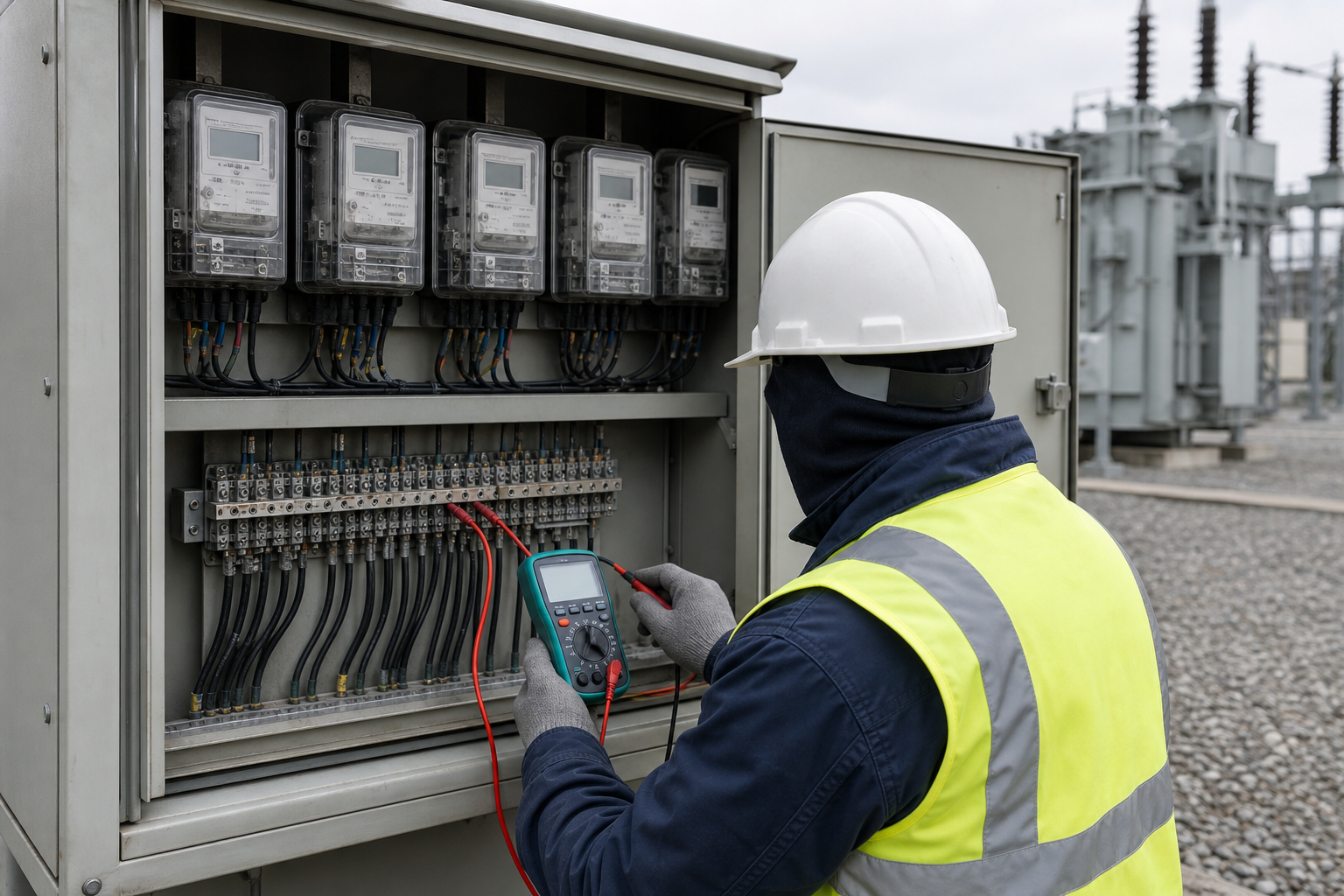
- Site commissioning support to walk the utility's crews through the wiring diagram and the sealing procedure
For crews doing this work in the field, the practical side of commissioning is covered in two NAHU guides: the instrument transformer site testing checklist and installing and wiring a high-voltage metering box.
Products Supplied
- Stainless-steel outdoor metering cabinets rated IP55, with separate sealable meter compartments
- JLSZY-10 and JLSG high-voltage metering boxes with V/V-connected CTs and VTs in 0.2S/0.5S accuracy
- V/V-connected CT/VT sets sized to each feeder's load and short-circuit duty
- Armoured secondary cable assemblies, pre-terminated and labelled for the wiring diagram
- Observation windows and locking systems compatible with the utility's seal standards
Outcome
The first year of operation gave the utility a clean before-and-after comparison:
- Tampering incidents at the retrofitted sites dropped to zero in the first year — no peeled seals, no bypassed meters, no unexplained losses
- The observation windows cut meter-reading time by more than half, because readers no longer opened the enclosure to read — and no seal was broken for a routine read
- The utility standardised the cabinet for all new metering points, so future sites order one proven configuration instead of bespoke enclosures
The two case studies behind this project are worth reading in full: the outdoor metering cabinet deployment covers the enclosure programme, and high-voltage substation metering commissioning covers the instrument-transformer and testing side.
Q&A
Question: Why a separate meter compartment inside the cabinet?
Short answer: Because the meters are the revenue device, and the terminals are the attack surface. A sealed compartment isolates the meters behind their own door, so reaching the measurement circuit requires breaking a visible seal — and the wiring and terminals stay out of reach during routine reads.
Question: What makes the cabinet tamper-resistant?
Short answer: Several layers: sealable locks on every access point, armoured secondary cabling that cannot be cut and bridged without visible damage, cable entries that leave no slack or open glands, and a seal register that documents every seal number so tampering is detected at the first audit.
Question: How is accuracy maintained after installation?
Short answer: The JLS-series metering boxes ship with ratio and accuracy verified, and the commissioning procedure checks secondary continuity and polarity before energisation. After that, the sealable compartment and observation window mean the meter installation is never disturbed — accuracy stays where it was proven.
Question: Can the cabinet hold a data concentrator?
Short answer: Yes — the cabinet is sized for two electronic meters plus a data concentrator, which is exactly what this utility needed for its prepaid and automated billing rollout. The concentrator sits inside the sealed compartment and feeds billing/SCADA.
Nahu Group manufactures JLS-series metering boxes and outdoor metering cabinets for utilities worldwide — from single metering points to standardised fleet programmes with factory testing and commissioning support. Browse the metering box range, or contact our engineering team to discuss your metering project.
Published August 20, 2026 · Nahu Group (NAHU Electric Technology)