
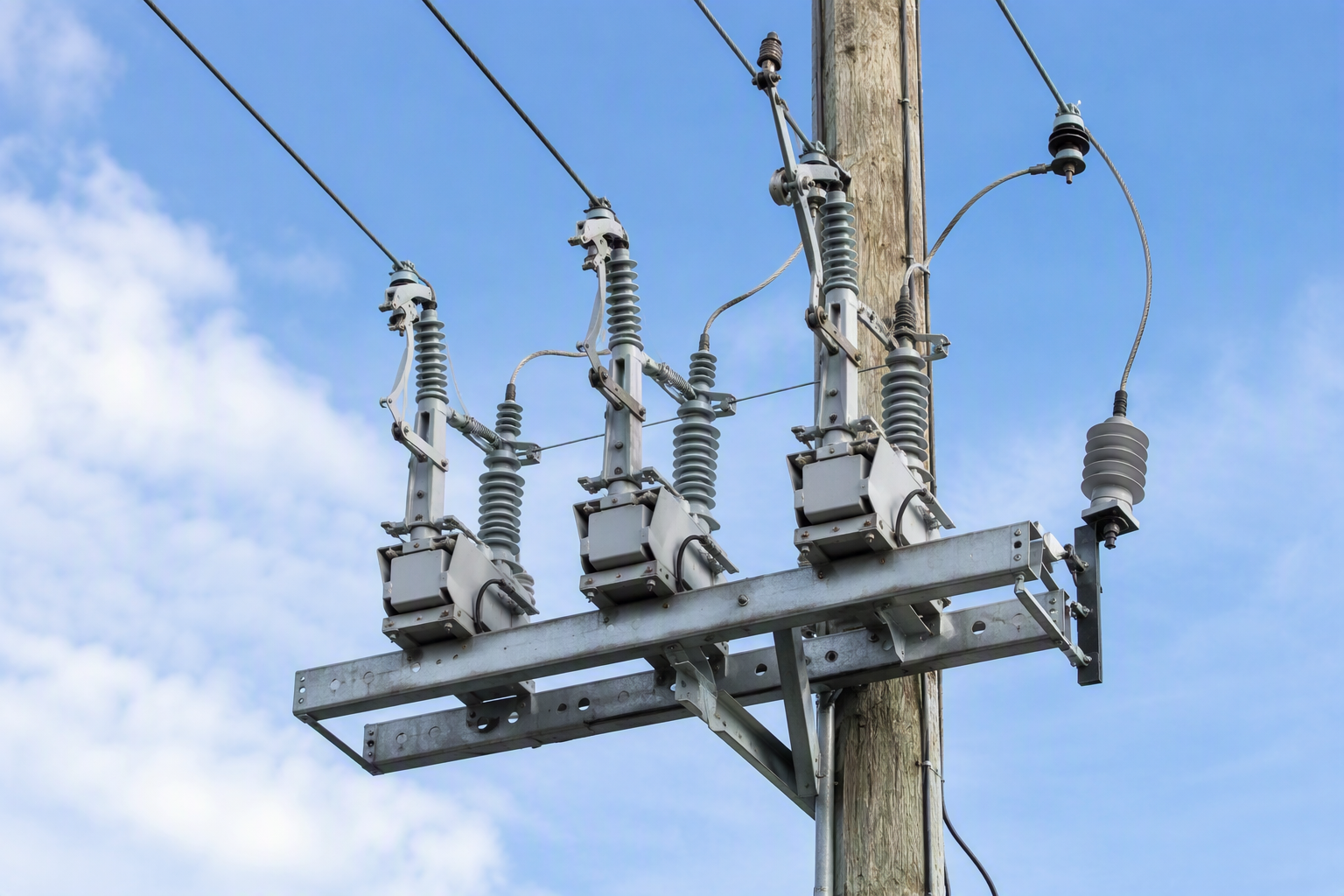
What instrument transformers are for
Two things above all: to insulate secondary equipment such as instruments and relays from the main circuit, and to extend the working range of that secondary equipment.
Installing a voltage transformer
Take care that the secondary side is not short circuited. One end of the secondary must be earthed. Terminal polarity must also be observed.
Installing a current transformer
Take care that the secondary side is not left open circuit. One end of the secondary must be earthed. Terminal polarity must also be observed.
Functions in service
A voltage transformer mainly supplies measuring instruments and protective relays, so that line voltage, power and energy can be measured, and so that valuable equipment, motors and transformers on the circuit can be protected when a fault develops.
Current transformers additionally serve as reference standards: a standard current transformer is used to verify current transformers two or more accuracy classes below it (meeting Class S requirements), and in combination with standard instruments — the current coils of ammeters, wattmeters and energy meters — to verify instruments two classes below the standard.
Polarity and markings
Terminal markings are not decoration — they define the phase relationship of the secondary signal. On a current transformer, P1 and P2 mark the primary direction and S1 and S2 the secondary terminals: current entering P1 produces current leaving S1. On a voltage transformer the same convention applies to the primary and secondary terminal pairs. If a CT is installed with the primary direction reversed, or a secondary pair is crossed, the protection and metering see a 180-degree phase shift — directional relays may operate wrongly and energy meters may register the wrong value. Follow the connection diagram for every unit, and complete a polarity check as part of commissioning.
Clearances, fusing and ventilation
Respect the air clearances of the voltage class — phase-to-phase, phase-to-earth and across the isolating distance — both to the live parts and to the enclosure. Inside a cubicle, keep the instrument transformers clear of cables and busbars so the insulation distance is never bridged. Fuse the VT primary with the rated HV fuse, protect the secondary with miniature breakers or fuses, and never install a fuse in the CT secondary circuit. In indoor installations, ensure ventilation so the enclosed unit stays within its ambient temperature rating, and always earth the transformer frame or base with a proper earthing conductor.
Frequently asked questions
Why does polarity matter on a current transformer?
Reversed polarity shifts the secondary signal by 180 degrees. Directional protection may misoperate and energy meters can register the wrong direction of flow.
What clearances should I leave around an instrument transformer?
Follow the minimum air clearances of the voltage class from IEC or GB — for example phase-to-earth and phase-to-phase distances per the insulation level of the system.
Can a CT be installed upside down?
Physically it can, but the primary direction (P1/P2) must still follow the current flow and the markings must remain readable. When in doubt, install per the drawing.
Is a fuse allowed in the CT secondary circuit?
No. A blown fuse would open the CT secondary — the one condition that must never occur. Use shorting links and bolt-on connections instead of fuses.