High-Voltage Lightning Arrester
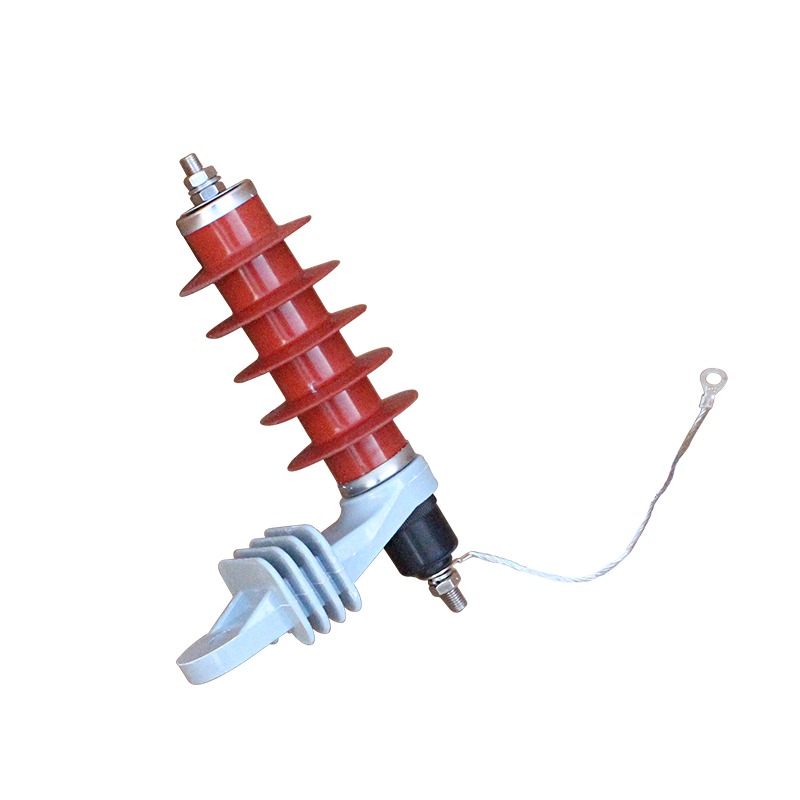
The piercing-type external gap surge arrester is suitable for 10kV overhead insulated conductors in power distribution. It employs a patented piercing-type arc-starting head structure, which can penetrate the insulation layer of the induction conductor to form an electrical connection. The lower end of the arc-starting head and the upper end of the surge arrester form a series external discharge gap with a spacing of 60~130mm. The spacing is adjusted by the relative movement of two mounting plates at the bottom of the surge arrester. Under normal conditions, the high-resistivity arrester resistor and the discharge gap do not operate. Only when a specified lightning overvoltage occurs can the discharge gap be broken down, forming a short-circuit path. The subsequent power frequency arc then burns in the external gap, releasing voltage energy to protect the conductor from burns. After the voltage is released, the arrester resistor returns to its high-resistivity state.
Manufacturer data — model designation, technical parameters, dimensions and installation details.
The piercing-type external gap surge arrester is suitable for 10kV overhead insulated conductors in power distribution. It employs a patented piercing-type arc-starting head structure, which can penetrate the insulation layer of the induction conductor to form an electrical connection. The lower end of the arc-starting head and the upper end of the surge arrester form a series external discharge gap with a spacing of 60~130mm. The spacing is adjusted by the relative movement of two mounting plates at the bottom of the surge arrester. Under normal conditions, the high-resistivity arrester resistor and the discharge gap do not operate. Only when a specified lightning overvoltage occurs can the discharge gap be broken down, forming a short-circuit path. The subsequent power frequency arc then burns in the external gap, releasing voltage energy to protect the conductor from burns. After the voltage is released, the arrester resistor returns to its high-resistivity state.
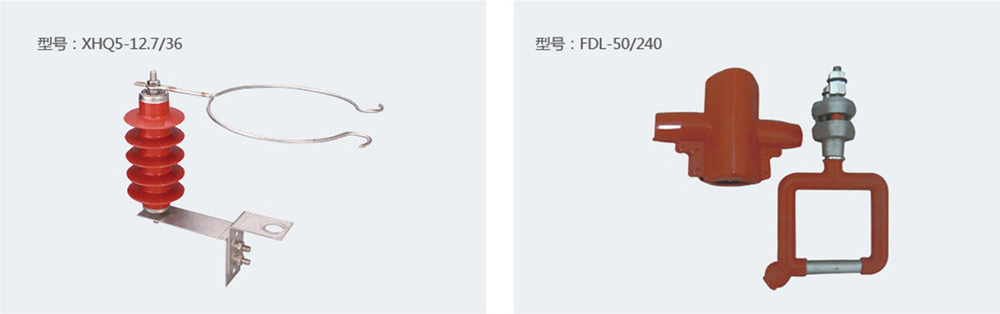
Line overvoltage protector Voltage testing grounding ring
| Product Model | System nominal voltage kV | Surge arrester rated voltage kV | DC reference voltage kV | Power frequency withstand voltage kV | Lightning impulse 50% discharge voltage kV | Wire clamping range (mm) | Applicable conductor specifications | Conductor diameter (mm) | Outer diameter of insulation layer (m) | Applicable torque (N*m) |
|---|---|---|---|---|---|---|---|---|---|---|
| FHY5C-10C-1 | 10 | 13 | ≥ 20 | ≥ 80 | ≤ 160 | Φ16~22 | JKLY-50~120 | 8.8~13 | 16.1~21 | 23 |
| FHY5C-10C-1 | 10 | 13 | ≥ 20 | ≥ 80 | ≤ 160 | Φ16~22 | JKGY-35/6~95/20 | 7.75~13.18 | 16.6~22 | 23 |
| FHY5C-10C-2 | 10 | 13 | ≥ 20 | ≥ 80 | ≤ 160 | Φ22~28 | JKLY-120~240 | 14.6~18.4 | 22.6~26.4 | 26 |
| FHY5C-10C-2 | 10 | 13 | ≥ 20 | ≥ 80 | ≤ 160 | Φ22~28 | JKGY-120/7~185/45 | 13.718~18.62 | 22.6~27.4 | 26 |
| FHY5C-10C-3 | 10 | 13 | ≥ 20 | ≥ 80 | ≤ 160 | Φ26~30 | JKLY-300 | 20.6 | 28.6 | 28 |
| FHY5C-10C-3 | 10 | 13 | ≥ 20 | ≥ 80 | ≤ 160 | Φ26~30 | JKGY-240/30~240/40 | 20.52~20.58 | 29.3~29.4 | 28 |